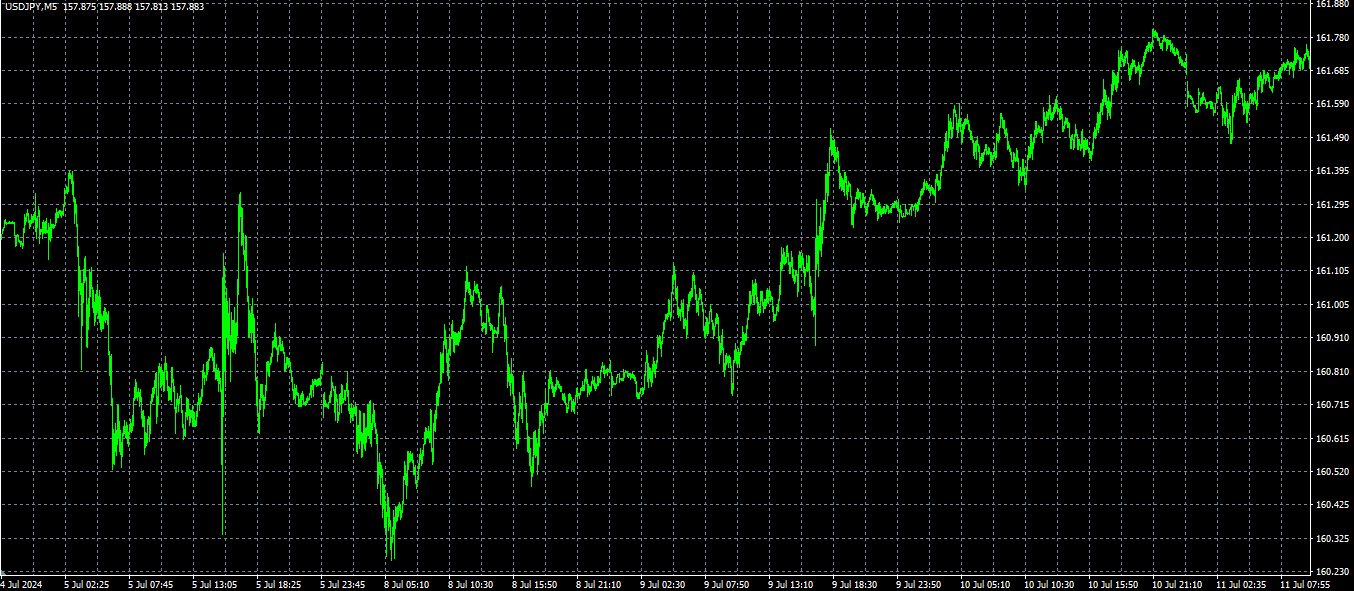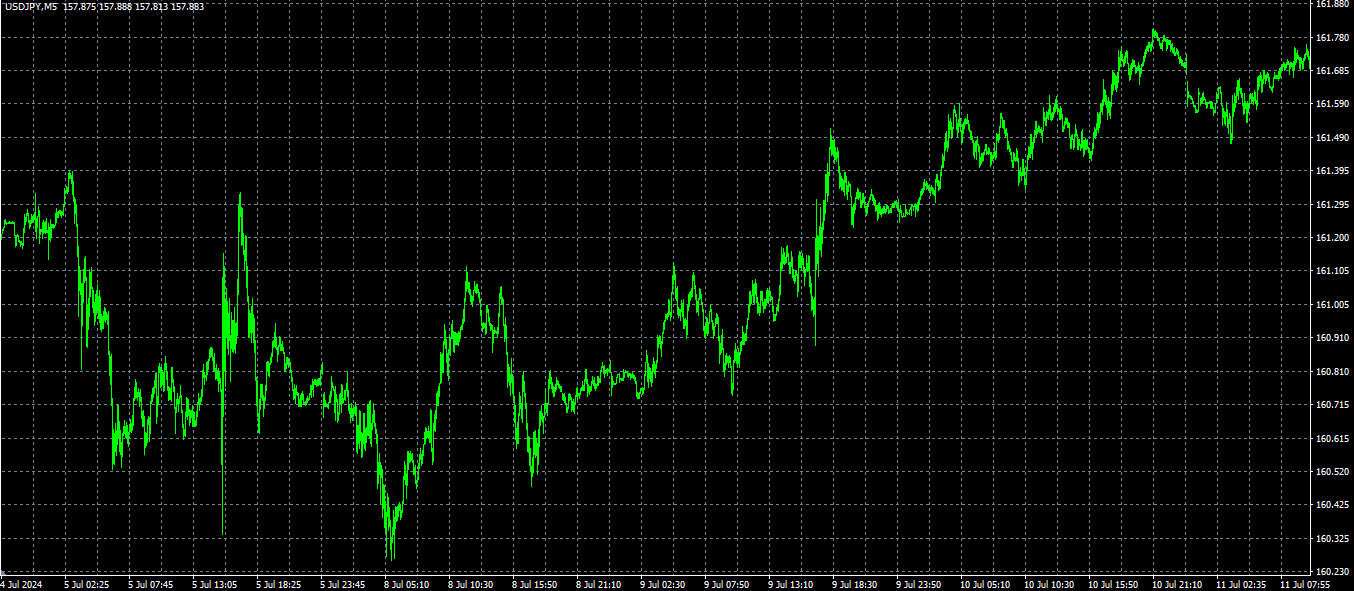

Trend optimization
The market only has trends
If there is no momentum, it just means that a range market, a coined term, is appearing
When that market is strong, a trend will come
There are just degrees of strength: strong trend and weak trend
In other words, regarding this trend market phenomenon
you need to keep up with it effectively
To keep up effectively, you need an analysis that can properly follow it
At this time, the Envelope is convenient to use
With the Envelope, by using the band width
you can ride this trend effectively
It’s hard to use for full-time traders
Because full-time traders feel they must make money
If you don’t reset your mindset as a part-timer
it isn’t a proper trading style
Optimization of trend-following
Envelope
Optimization of the trend
Envelope
All based on the 25-period moving average
Any other analysis only delays and reduces accuracy
Other analyses appear as level numbers on a sub-chart
The sub-chart and the main chart are not related at all
With main-chart indicators you will analyze the main chart
I think using Envelope or Williams Percent Range is good
Or RSI
Fundamentally, strongly recommend using only one indicator
Because any one indicator has a weakness it can be exploited
That’s why you should limit to one indicator
So if you think in terms of trend indicators
Williams or Envelope are generally good options
RSI can be used for both trends and ranges, but
probably it will just cause more confusion with market concepts, so it’s better to stop
In reality, RSI often hits ranges,
and you may end up unable to handle when a trend appears
So ultimately it is better to stay with Williams Percent Range for a pure trend-following approach
Envelope can enter into the trend, and
Williams allows a trend-following specific analysis
Neither should be used as a contrarian concept
Anyway, no one knows whether a trend will come
If that is the case, using contrarian methods is very risky
Indeed there are many such situations, but
you will regret it a lot when a big trend appears
Therefore, generally Williams-like trend-following is easier to implement
Just one thing I want to say
When using Williams, please use it with a trend concept in mind
If you treat it as a momentum indicator, you’ll be swayed by ranges
If you treat it as a contrarian indicator, you’ll be swayed by trends
So, please narrow your use to a trend-focused concept
In the end, a trend will emerge
Put another way, trade by judging the strength of that trend
The peak of a weak trend arrives within a day
The peak of a strong trend does not come within a single day, right?
When a trend is present and the re-emergence is unclear
If you look with MACD, it’s clear
Such re-emergences can also be confirmed with Williams
On re-emergence, a breakout is easy to treat as an entry timing
Even if it re-enters after being deceived, there will be an entry with Williams
On re-emergence, a break of 20, 80 is the signal
In the end, the market is in a weak-trend mode (range mode) or a strong-trend mode (trend mode)
This is simply a trend-leaning movement versus a range-leaning movement
However, what tends to deceive you here is
getting fixated on the notion of a range market
Let’s avoid that—never forget that it is a trend
We will enter with Williams
※ For those who want to keep earning from FX, see below
× ![]()