
Today (8/9)’s “1-minute chart” – Enter only by capturing the winning pattern.
0
Today (8/9)
"1-Minute Chart"“Winning Pattern”Capture it and enter!
(GBPJPY)
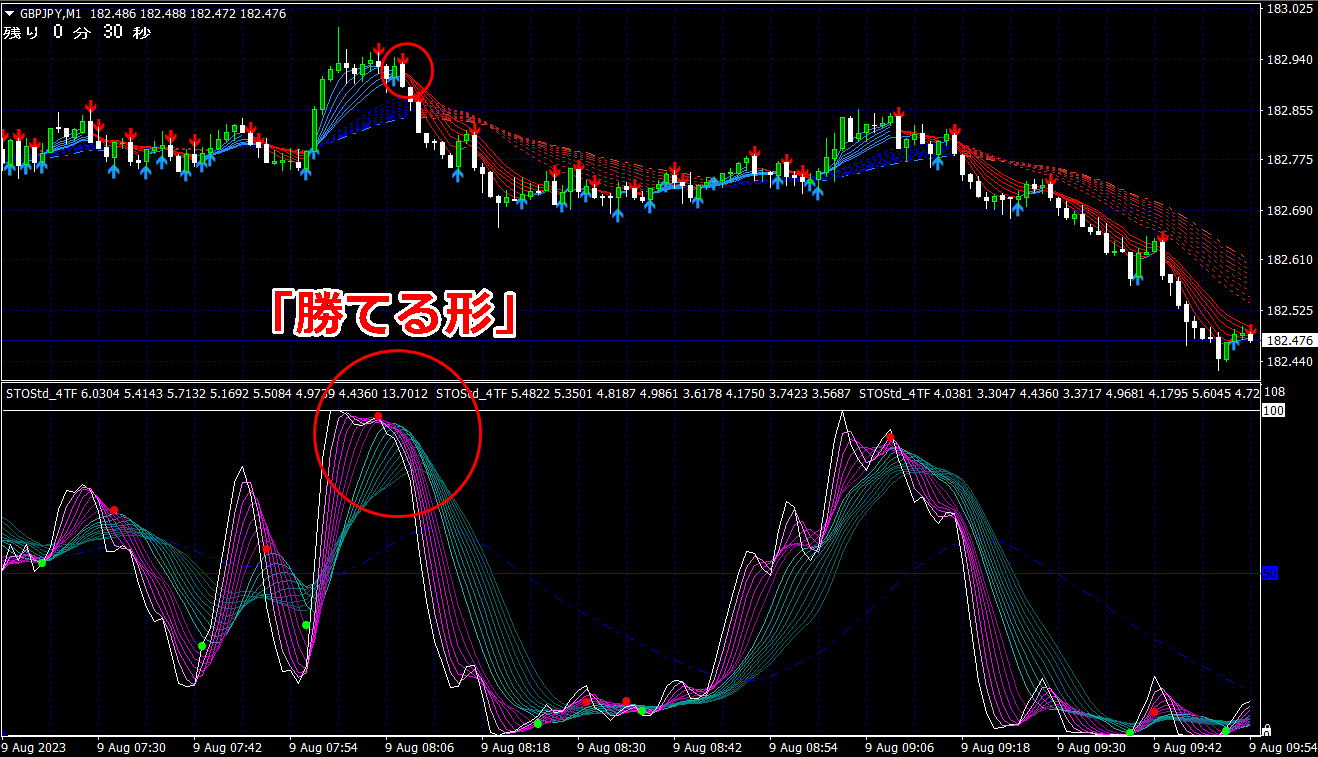
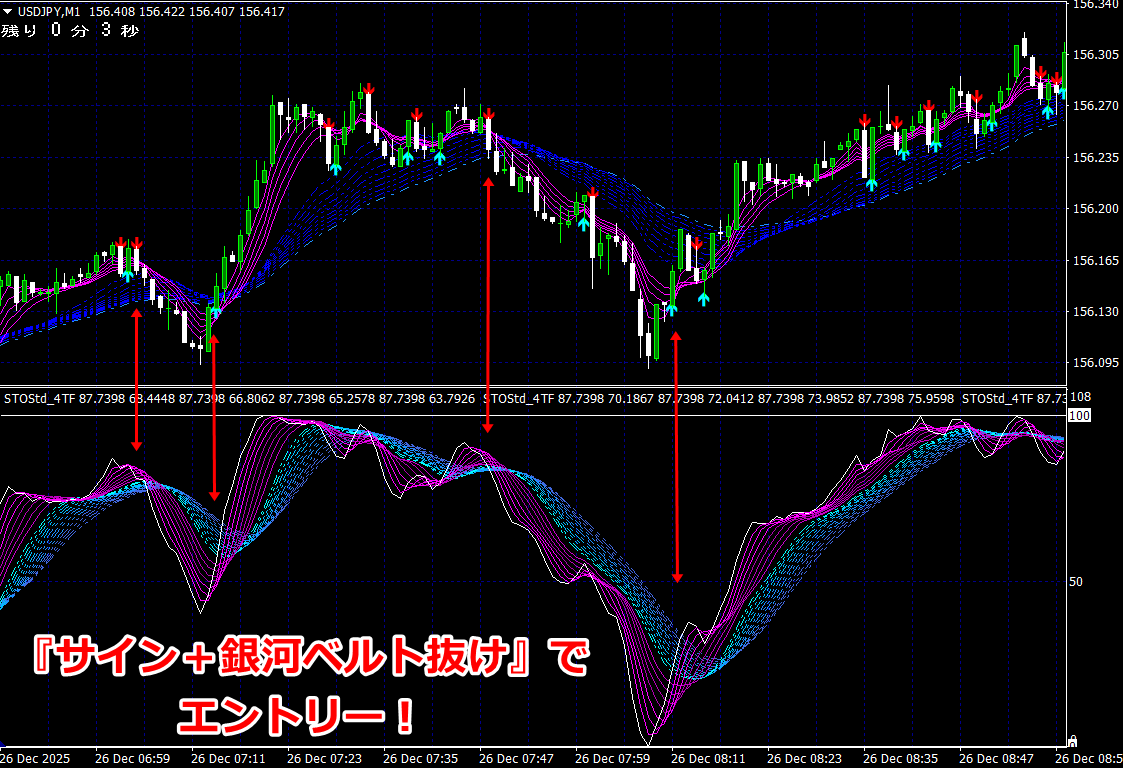
★After the signal lights up, enter with a high-probability setup where the pink band covers the green band.The shape is
(Click image to enlarge)
An indicator that lets you learn the entry point by sight
Specialized for short-term trading in binary options or forex
We will disclose the ironclad entry method with the “1-Minute Indicator.”
<Entry steps are①② simple! >
In an uptrend,

①Turn on the arrow signal to prepare for entry.
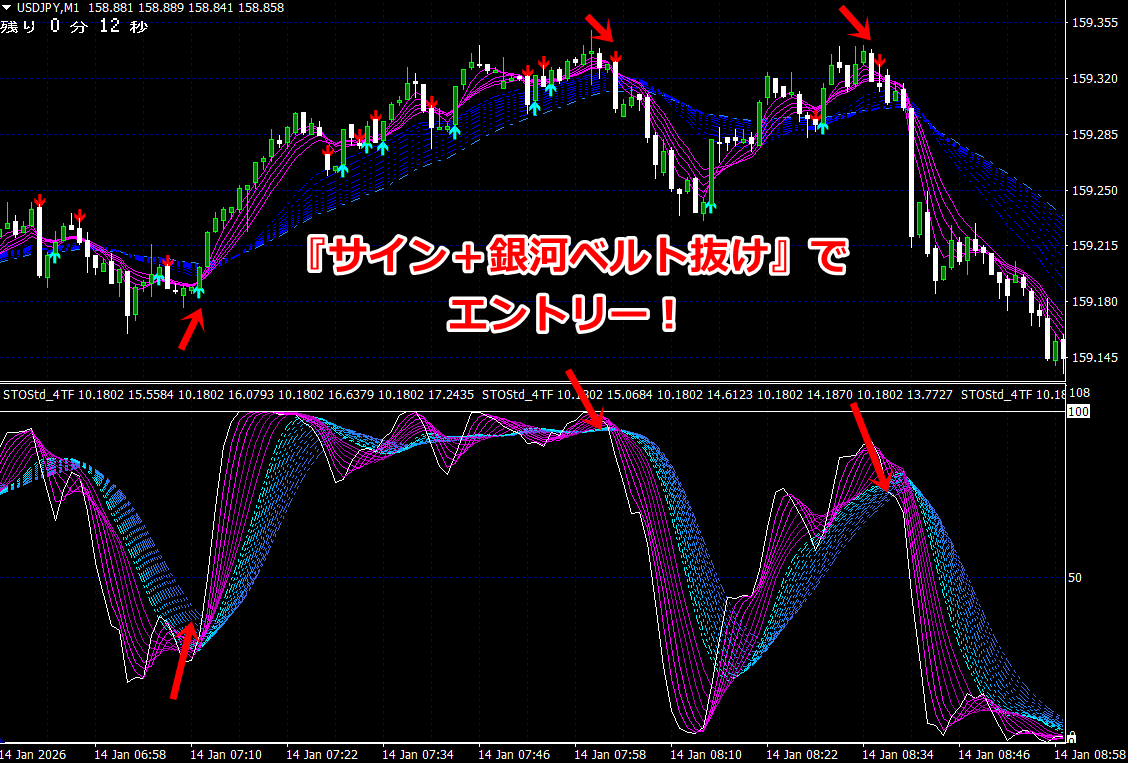
②With the arrow signal lit,the pink band of the indicator rises up over the green bandfrom the bottomin a scooping shape,and within a few seconds before the current candle closes or right after it closes, enter High on a 1-minute or 3-minute basis.
※Signal lighting does not equal entry, so if the indicator does not scoot up the green band in a scooping shape, do not enter (entries from signal lighting occur only a few times per cycle).
※On a 1-minute chart, there are dozens to up to 100 entry opportunities per day
“Enter by catching only the winning pattern!”
<Shape that scoops up the green band=What is the winning pattern? >
Points where similar entries are possible are the indicator shapes shown in the image below.

In a downtrend,
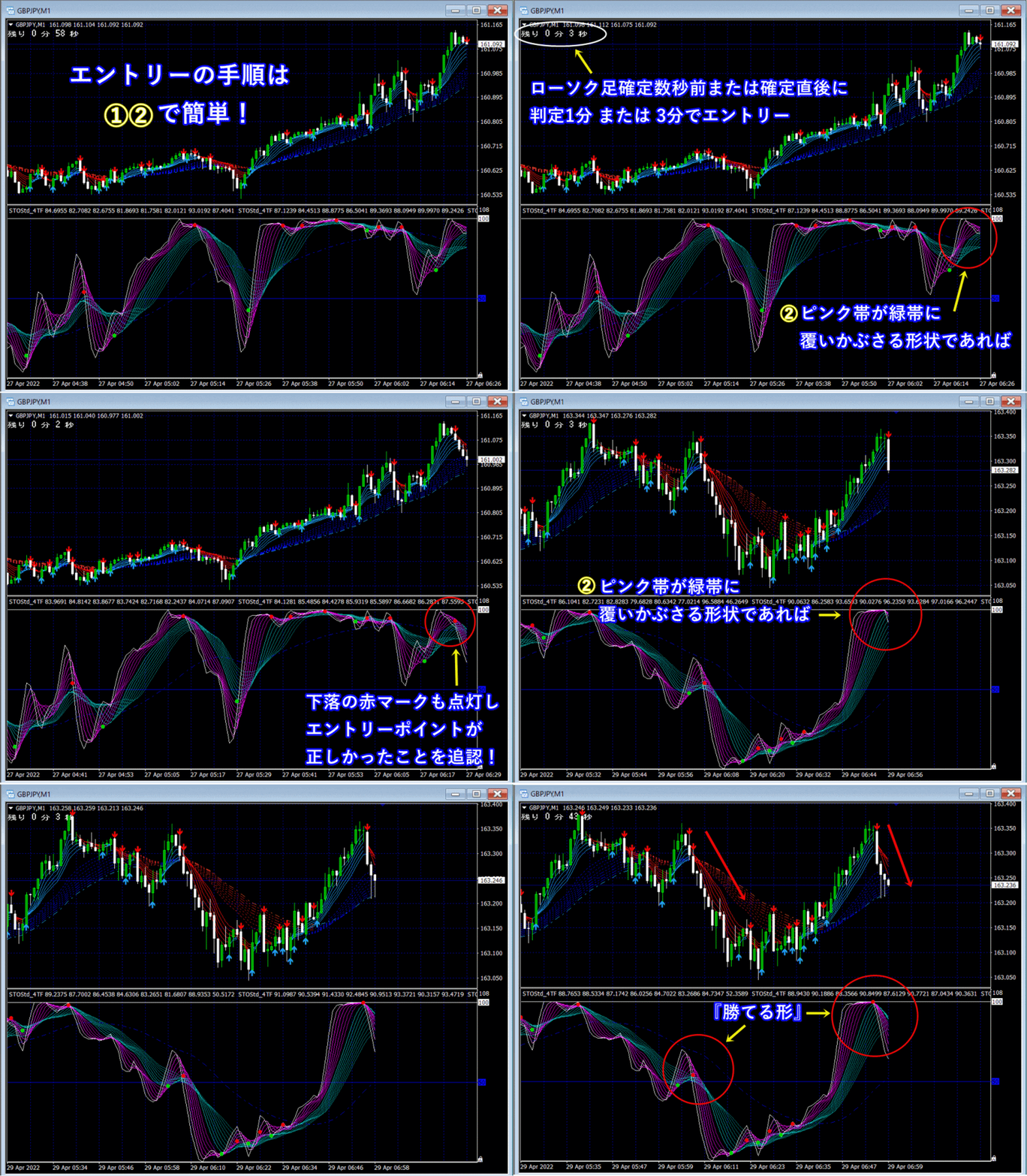
①Turn on the arrow signal to prepare for entry.
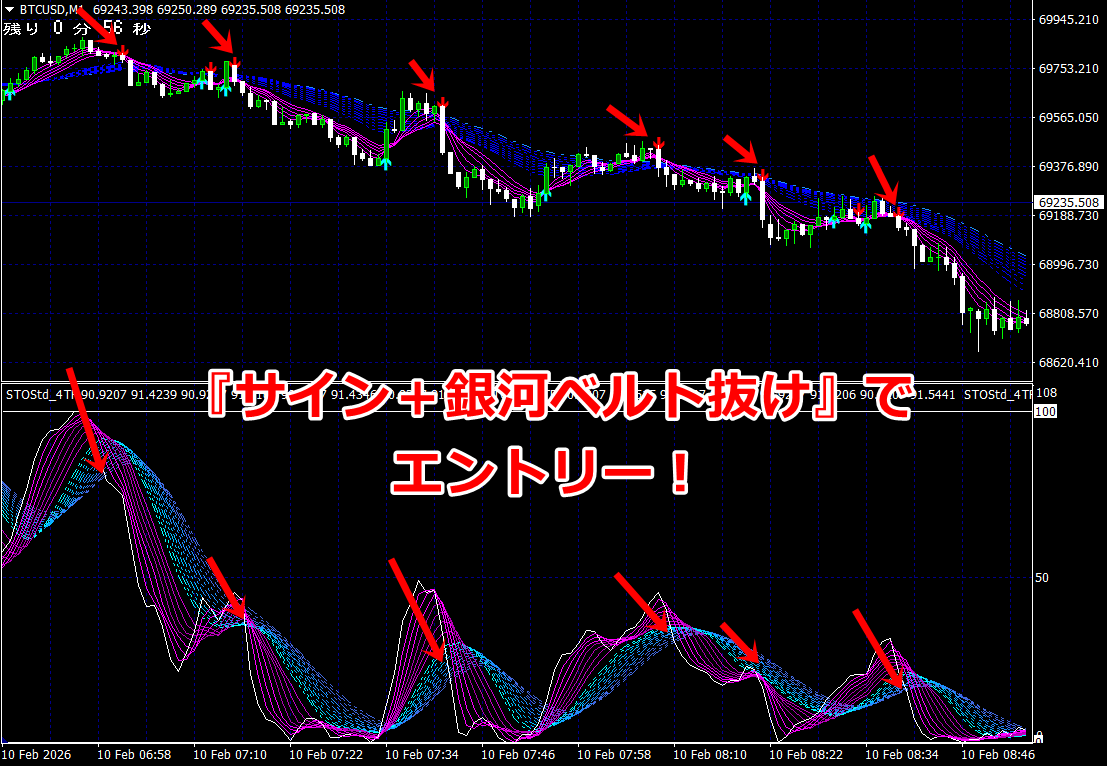
②With the arrow signal lit,the pink band rises over the green bandfrom abovein a covering shape,and within a few seconds before the current candle closes or right after it closes, enter Low on a 1-minute or 3-minute basis.
※Signal lighting does not equal entry, so if the indicator does not cover the green band, do not enter (entries from signal lighting occur only a few times per cycle).エントリーしません(サイン点灯でエントリーできる頻度は、数回に1度くらいです)。
※On a 1-minute chart, there are dozens to 100 entry opportunities per day
“Enter by catching only the winning pattern!”
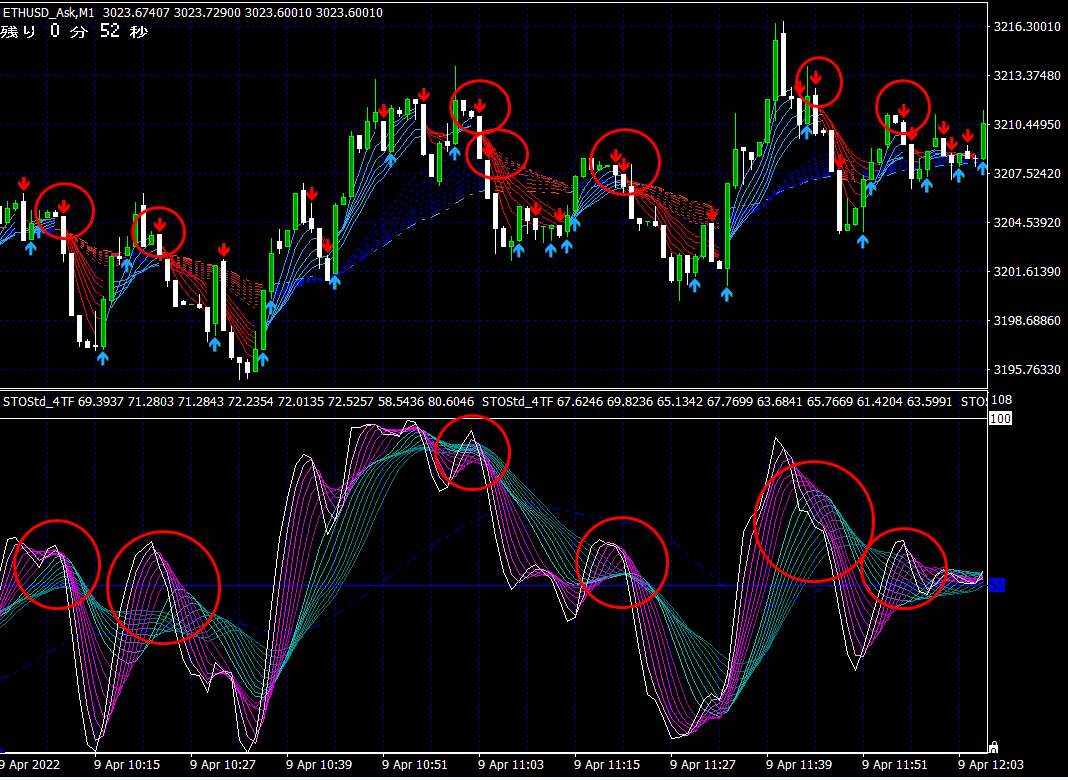
<Shape that covers the green band=What is the winning pattern? >
Points where similar entries are possible are the indicator shapes shown in the image below.
× ![]()