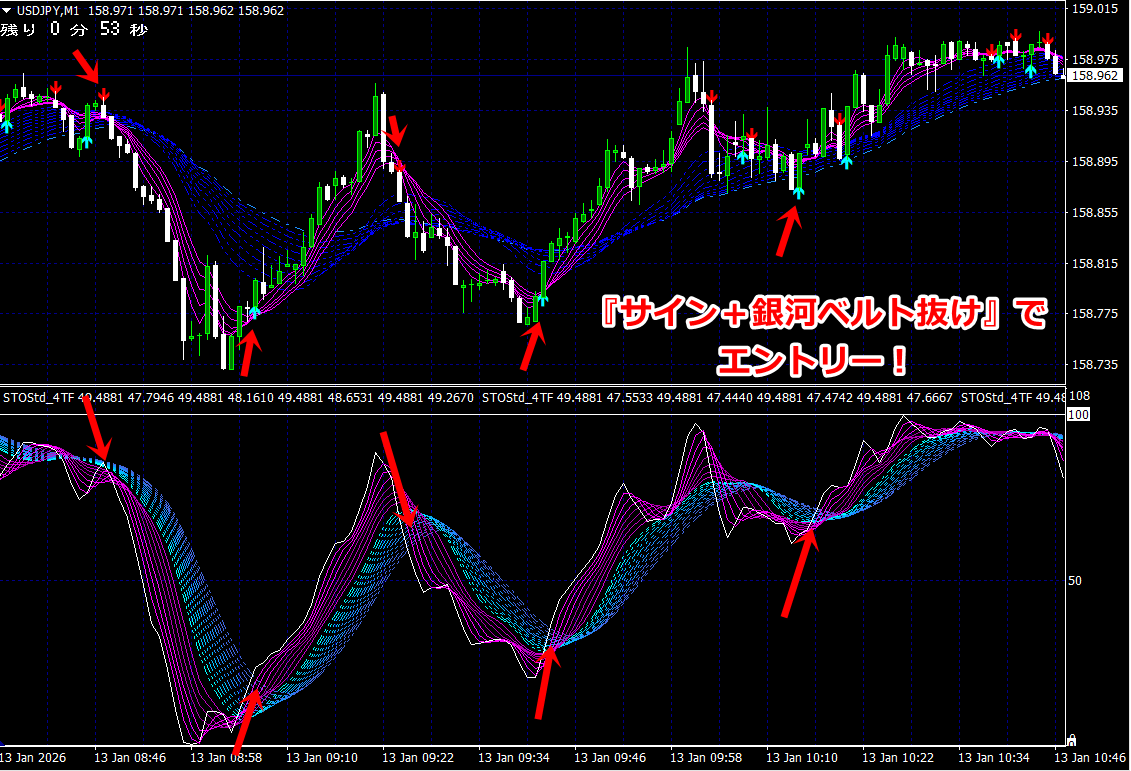

Today (7/9)’s '1-minute chart' - Capture only the 'winning pattern' and enter!
Today (7/9)
“1-minute chart”【Winning Pattern】Capture only this and enter!
(BTCUSD)
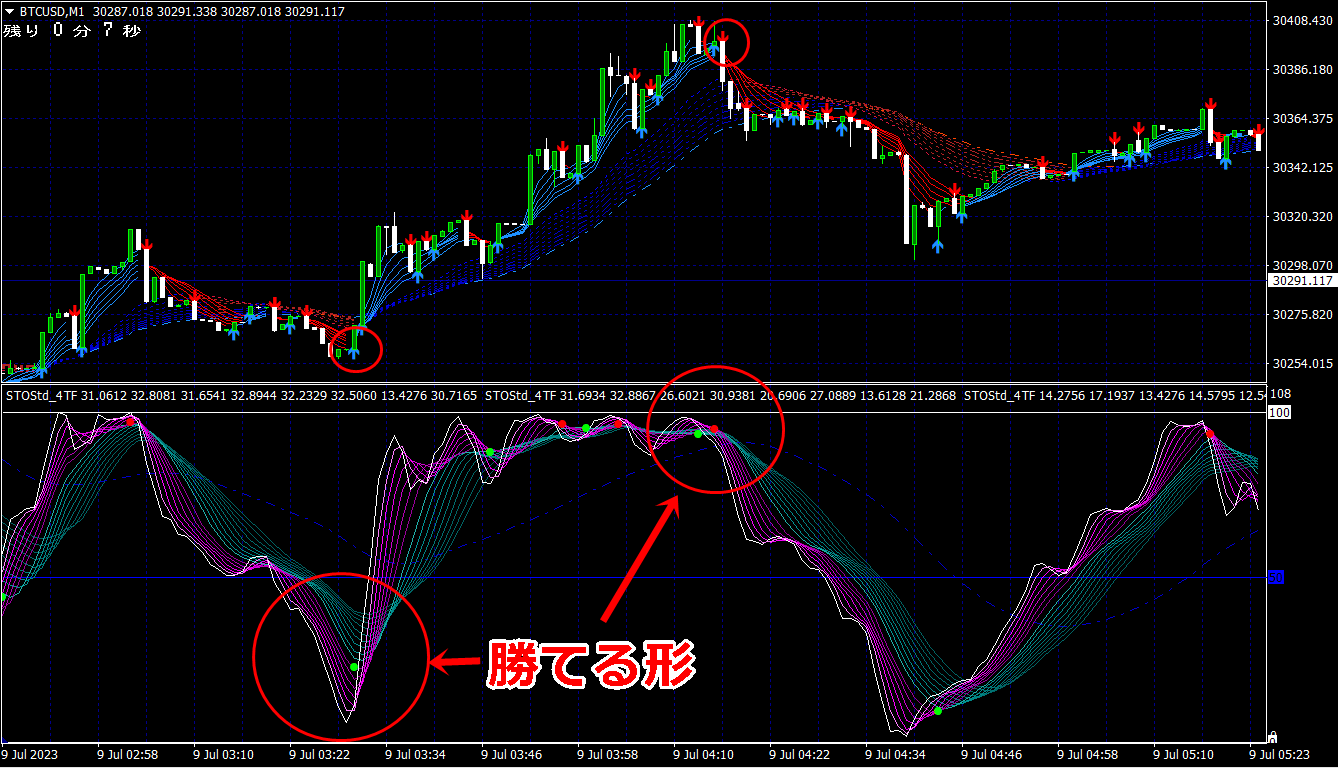
★Enter a sure-win trade after the signal lights up, when the pink band rises above or covers the green band!
(Click image to enlarge)
Capture huge opportunities on the 1-minute chart! BO/FX dual-tool indicator
Specializing in short-time trading in binary options and FX, we reveal a rock-solid entry method with the “1-minute chart indicator.”
<Entry steps are①②easy!>
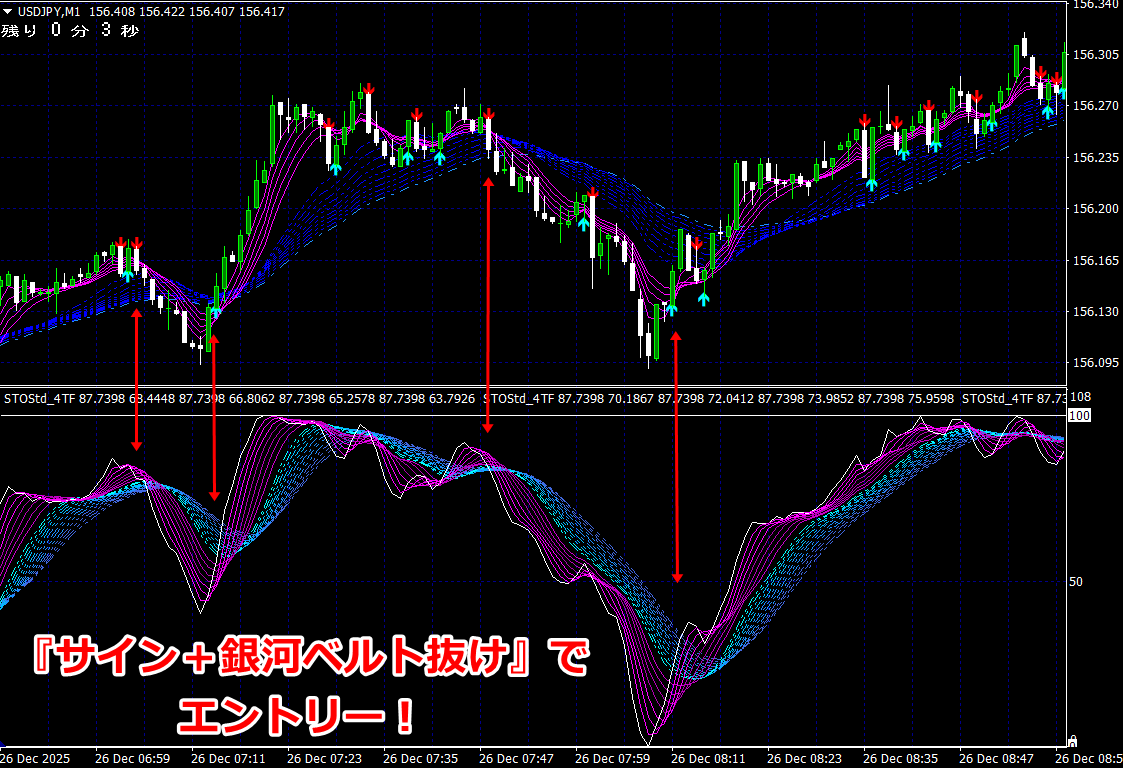
In an upward phase,

①Turn on the arrow signal to prepare for entry.
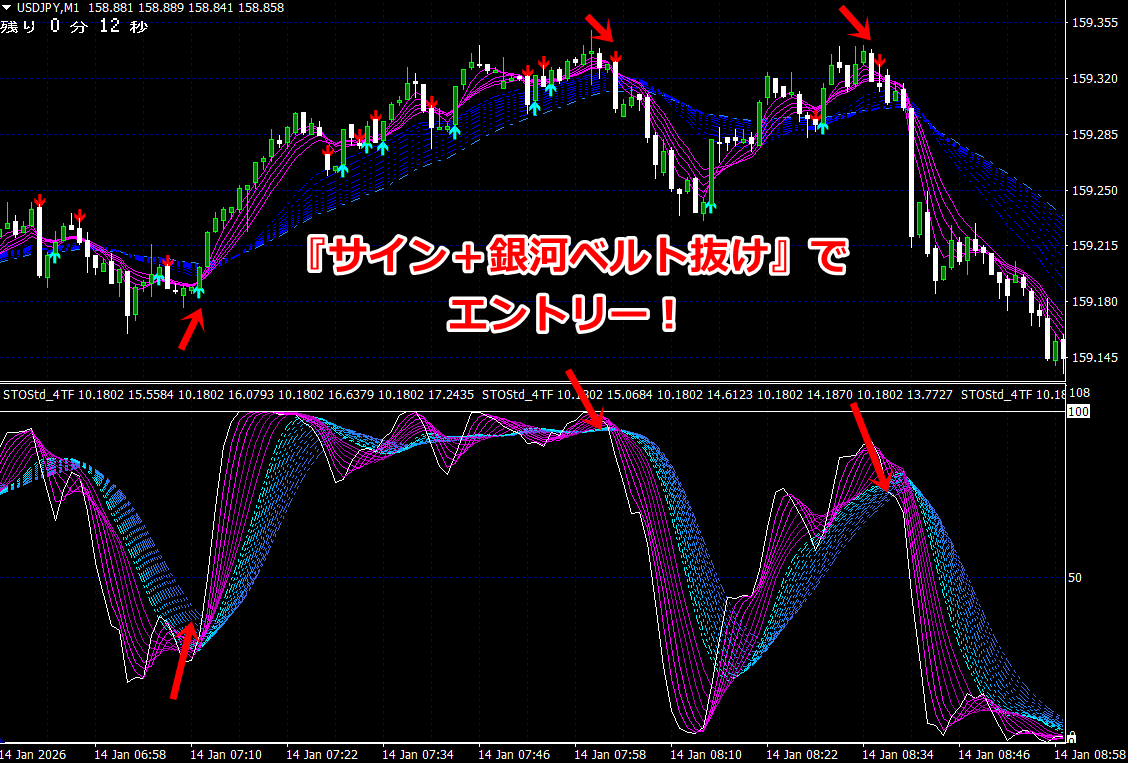
②With the arrow signal lit,if the pink band of the indicator rises up from the green bandin a scooping shape,then, a few seconds before the current candle closes or just after it closes,enter on a 1-minute or 3-minute timeframe (high entry).
※Signal lighting does not equal entry, so if the indicator does not scoot above the green band, do not enter (entries from signal lighting occur only a few times per several opportunities).
※On a 1-minute chart, the number of entry opportunities per day is several dozen to 100.
“Enter only by capturing the Winning Pattern!”
< Shape of scooping up the green band=What is the Winning Pattern? >
Similar entry points are possible at the indicator shapes shown in the image below.

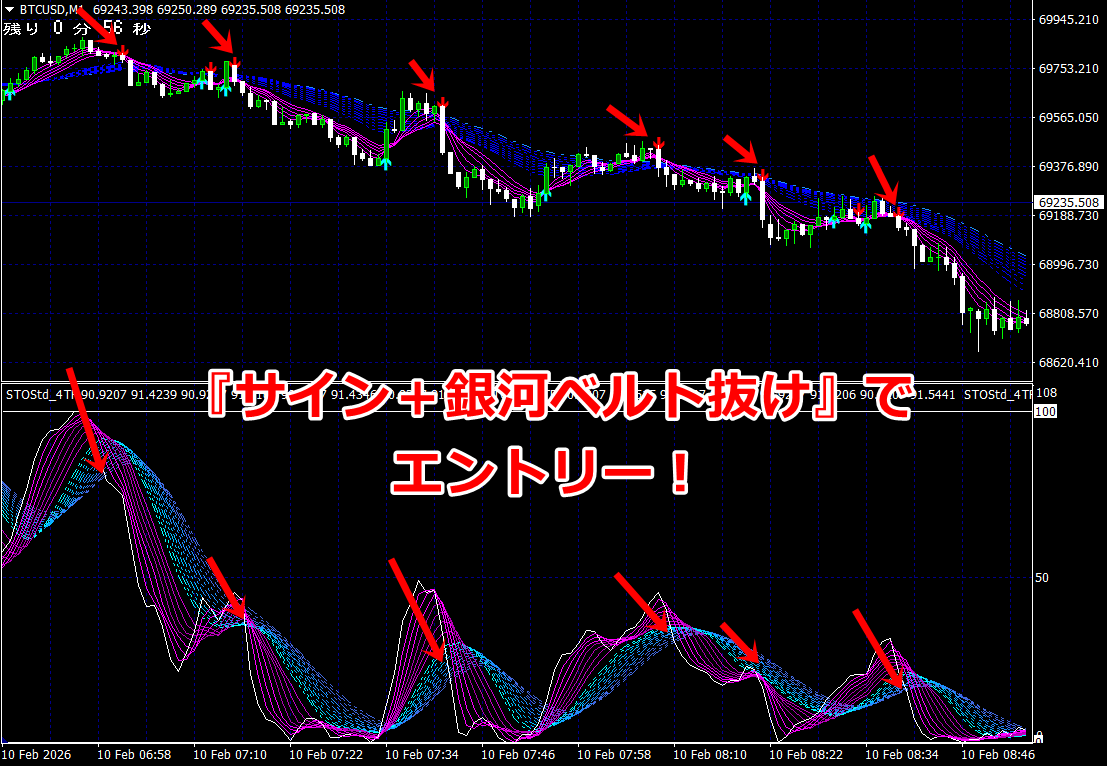
In a downtrend,
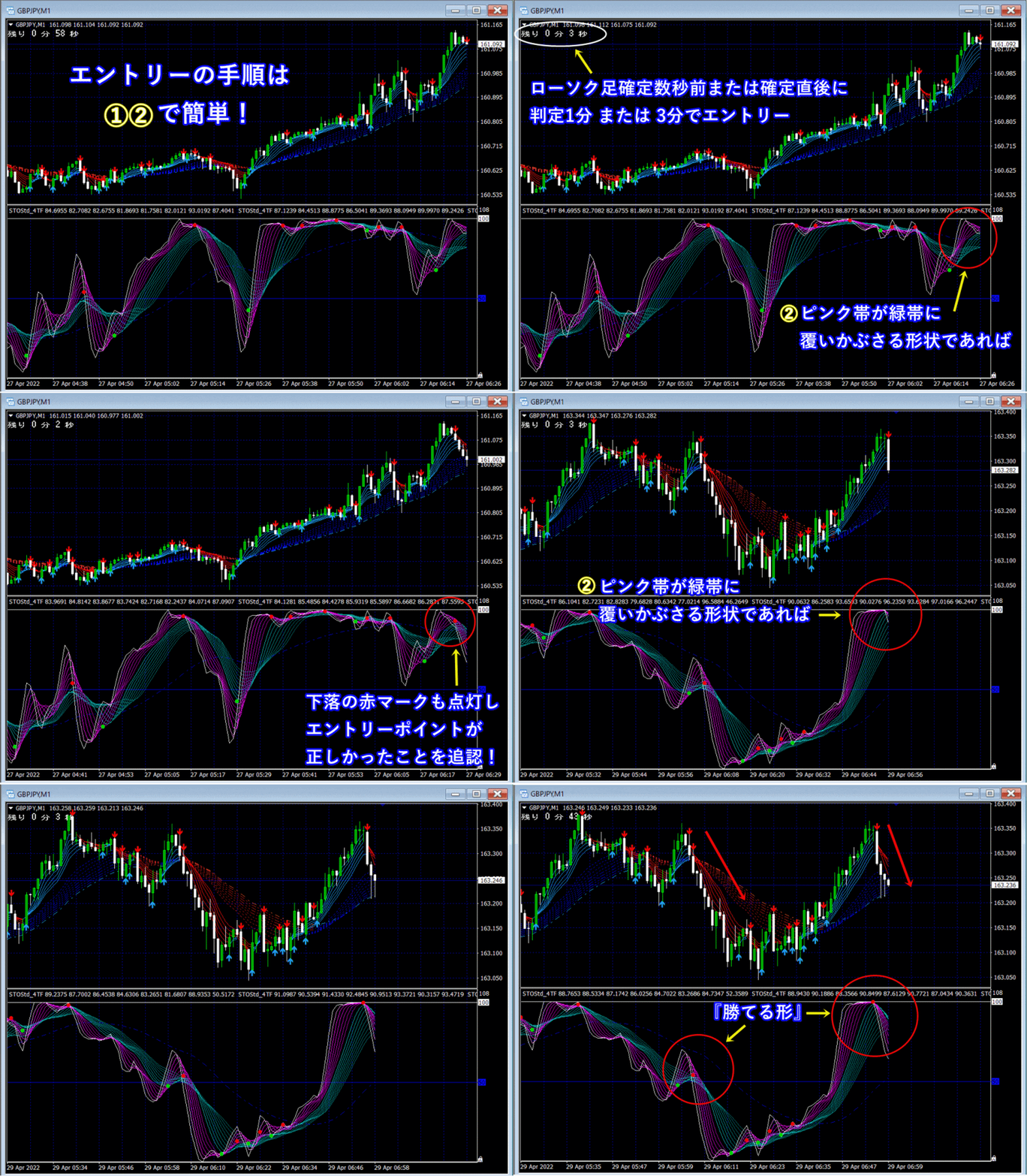
①Turn on the arrow signal to prepare for entry.
②With the arrow signal lit,the pink band rising to cover the green bandfrom abovein a covering shape,then, a few seconds before the current candle closes or just after it closes,enter a sell on a 1-minute or 3-minute timeframe.
※Signal lighting does not equal entry, so if the indicator does not cover the green band in a covering shape, do not enter (entries from signal lighting occur only a few times per several opportunities).
※On a 1-minute chart, the number of entry opportunities per day is several dozen to 100.
“Enter only by capturing the Winning Pattern!”
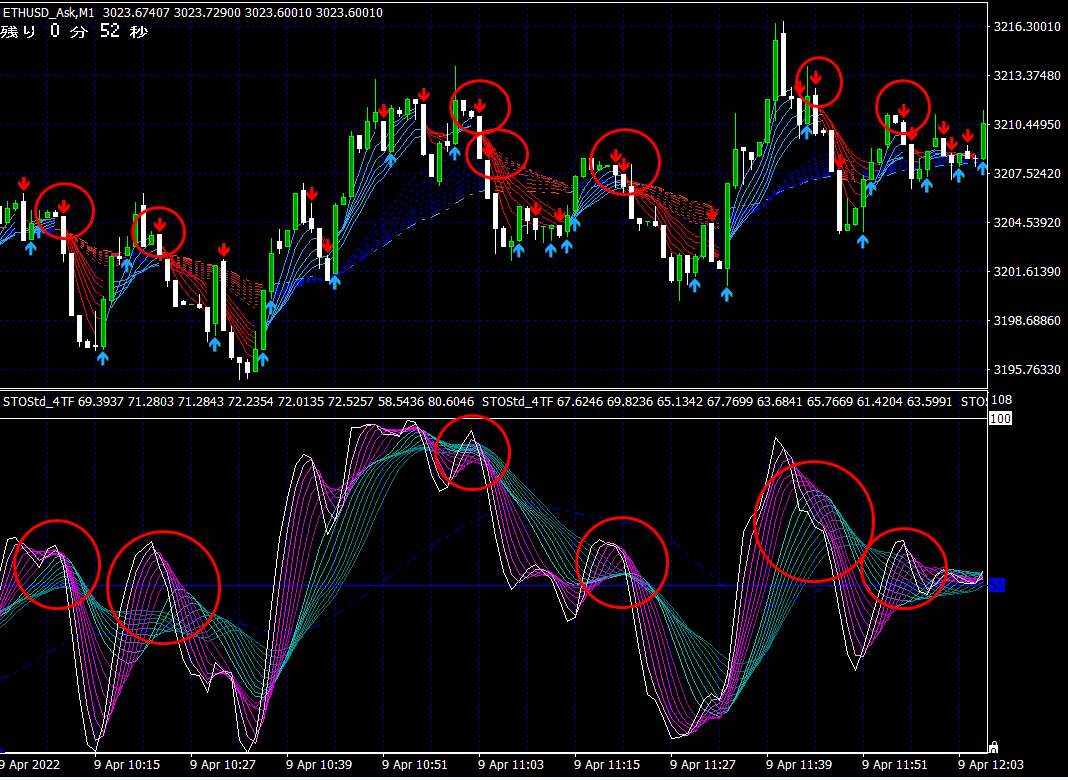
< Shape of covering the green band=What is the Winning Pattern?>
Similar entry points are possible at the indicator shapes shown in the image below.
× ![]()