
This week's forecast
Market Observation from Shibata Kaisen
<This week, will the Nikkei rise following the New York Dow?>
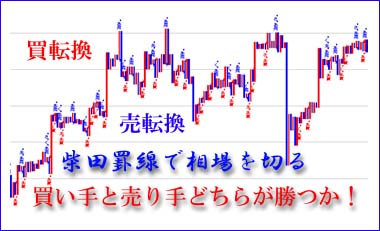
Last week, the Dow Jones Industrial Average rose to 30,185, gaining back to the 30,000 level on Monday, the 17th, after the UK’s large-scale tax cut plan was scrapped causing the pound to rise and dollar strength to ease, and as Bank of America’s earnings beat expectations, finishing up 550 points to 30,185. On Tuesday, the 18th, it climbed to 30,837, and by the 25-day moving average and the high of 30,454 just above the 75th percentile, it closed up 337 points at 30,523, marking a breakout from a triangle consolidation according to Shibata Kaisen.
Then on Wednesday and Thursday it fell by 99 and 90 points respectively, and by Friday the 21st, with the market reacting positively to reports that the Fed would slow its rate-hike pace, it rebounded sharply by 748 points to 31,082, a three-day gain. The Nikkei, which tracks the Dow, is likely to breakout higher here.
The Nikkei index, on the 19th (Wednesday), rose to a high of 27,371, surpassing the 25-day moving average and moving above the 200-day moving average, but could not break through the near-term resistance at 27,399, the high on the 6th.
However, judging from the Dow’s movement at the end of last week, the Nikkei is likely to break above 27,399 and move higher. How high it can go beyond 27,399 will depend on the exchange rate and U.S. stocks.
In principle, even if it breaks above 27,399, upside will be limited, and the movement may be choppy.
With the results of U.S. IT giants often referred to as GAFA (Google, Apple, Facebook, Amazon, Microsoft) and domestic 7–9月 (Q3) earnings announcements intensifying, stock-picking in individual names is expected to be the main activity. If U.S. earnings aren’t too bad, concerns about deteriorating earnings may retreat, and a rebound could gain momentum and attempt a recovery.
Indicator Analysis
Nikkei Average

<Last Week’s Movement>
At the start of the week on Monday, October 17, following a sharp decline in the prior week’s Dow Jones, the Nikkei fell to 26,649 intraday, closing at 26,775, down 314 from the previous close. It then rebounded with the Dow’s rise, and on Tuesday the 18th, it broke above a triangle consolidation at 27,156 per Shibata Kaisen. On Wednesday the 19th, it rose to 27,371, but failed to reach the resistance at 27,399 set on October 6th, and the week closed at 26,890, down 116 from the previous week’s close.
<This Week’s Outlook>
Last week, the yen moved toward the 150 per dollar level, and there was a real possibility of intervention by the government and the Bank of Japan. After the close on Friday, October 21, reports that December’s FOMC would slow the pace of hikes prompted a sudden exchange-rate intervention, sending the yen briefly to 146.22 per dollar. Domestic Q3 earnings will also become more fully announced, and whether the earnings market can begin given the yen’s weakness is the key. The expected range is 26,700–27,600 yen.
NYSE Dow

<Last Week’s Movement>
Two weeks ago, the Dow had fallen by 403 points, but on Monday, October 17, the pound’s rise on the UK’s withdrawal of its large tax-cut plan and the resulting ease in dollar strength, plus expectations of improved corporate earnings, led the Dow to surge by 550 points to 30,185. On Tuesday the 18th, it rose another 337 points to 30,523. On Wednesday the 19th and Thursday the 20th, it fell 99 and 90 points, but on Friday the 21st, with expectations of slower rate hikes by the December FOMC, the Dow jumped 748 points to 31,082, closing sharply higher.
According to Shibata Kaisen, on October 18 the Dow broke out of the triangle consolidation at 30,523.
<This Week’s Outlook>
This week, dips may be bought and a sturdy development is expected, but the course remains cautious regarding interest-rate movements and the pace of Fed rate hikes. Major tech firms like Apple and Microsoft are set to announce earnings, which will be watched closely. Even if the Dow recovers somewhat, as shown by the chart since the high of 36,952 on January 5 this year, the trend has been downward and the outlook remains for selling into rallies.
Forex (USD/JPY)

<Last Week’s Movement>
Last week, due to concerns about aggressive monetary tightening by the Fed, the dollar rose against the yen from the 148 level at the start of the week. On Wednesday, October 19, the 10-year Treasury yield rose to 4.14%, the highest since July 2008, sending the dollar into the high-149s per yen. The next day, yields rose to 4.24%, and the forex market saw the dollar weaken to around 151.93 yen, but then a sudden intervention occurred, and the dollar fell to 146.22 yen, closing at 147.71.
<This Week’s Movement>
Towards the end of last week, even after touching 150 yen per dollar on Thursday the 20th, there were no signs of intervention, so by Friday night in overseas markets, yen weakness accelerated and the dollar’s daily decline approached two yen. At this timing, the government and the Bank of Japan conducted a large-scale yen-buying intervention, pushing the dollar down to 146.22 yen. The closing price was 147.71 yen.
This week, the market is expected to settle in a range of 146–150 yen and then resume yen weakness. The dollar is likely to remain firm as the U.S.–Japan interest-rate spread widens further.