
The United States inflation has not eased (August Consumer Price Index)
0
In the old days, during Chairman Volcker's era, the weekly M1 announcements were major events.
Because curbing inflation was the goal of monetary policy, controlling M1 was targeted.
After that, under Chairman Greenspan, employment statistics became the main event.
In an era of disinflation, the goal of monetary policy became mainly maximizing employment.
Now, the release of consumer prices is the biggest event.
Not employment. The top priority is to curb inflation. For now, the means are rate hikes and QT (quantitative tightening). There is debate in the market about whether a soft landing is possible, but the Fed is willing to accept a recession.
U.S. August CPI was released. The core price index, excluding food and energy, rose 0.57% month over month and 6.3% year over year
The details are,Nikkei articleis detailed. There is nothing to add. That is correct.
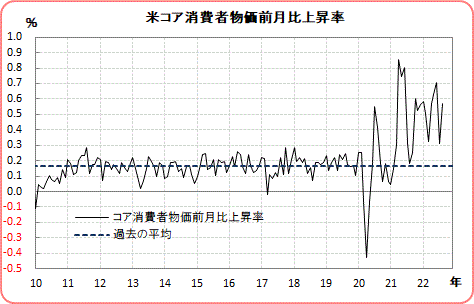
The expectation of a cooling in price increases was disappointed.
The result this time led to stronger monetary tightening, with interest rates rising more than expected, stock prices falling, and the dollar being bought.
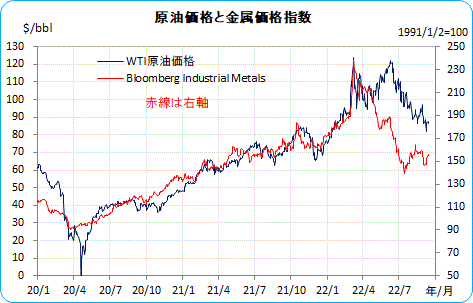
Crude oil prices continued to fall, and industrial metal prices, which reflect the economy, were also down year over year, so one had hoped too much that the inflation rate would decline.
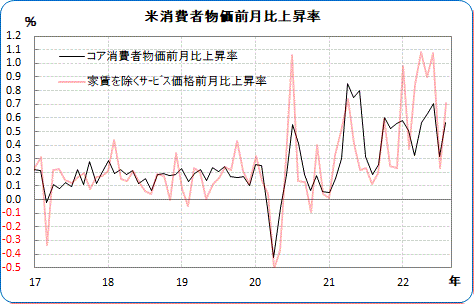
Behind-the-scenes service prices, excluding rents, rose again.
If the labor market does not loosen and wage growth does not slow significantly, inflation will not fall to the target rate (2% year over year).
The factors driving prices have been rising commodity prices and wage growth. Commodity prices seem to be calming (due to weaker demand expectations), but wage growth continues. The current inflation could be termed wage-push inflation.
Prices are determined by supply and demand and costs. Costs are determined by raw material prices, labor costs, and productivity. Currently, demand restraint and supply recovery have improved the supply-demand balance. The problem is the rise in labor costs. The Fed is further suppressing demand and trying to loosen the tight labor market.
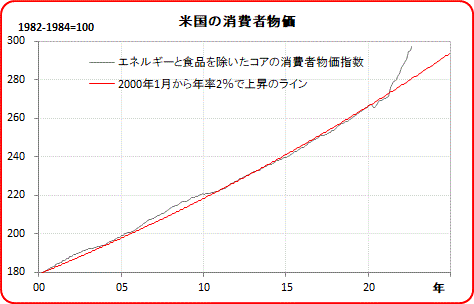
Chair Powell last year suggested that as long as prices were on a long-term 2% rise line, that would be fine, but now he says nothing of the sort. Perhaps he regards even discussing a fantasy as pointless.
× ![]()