

FX Essential Information 2: Exchange rates and interest rate differentials The trend does not change, but a pause
Two of the two important indicators (August ISM Manufacturing Index,August Employment Statistics) have been announced.
On September 8, there will be a discussion with Chair Powell at theKato Institute, but the discussion is unlikely to cover the important topics. The next point of interest is the CPI release on September 13.Previous (August 10)had some surprises, but what will the next one be like? In the short term, it might affect the rate-hike stance at the next FOMC, but in the medium to long term (more than a month), the direction of the Fed's monetary policy is unlikely to change.
<Last Week's Review>
・USD/JPY:
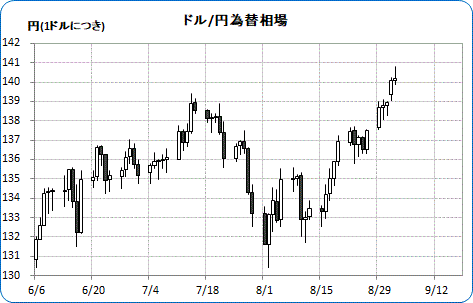
Previous Reportstated that “the 2-year yield differential suggests that 139 yen is a fair level for USD/JPY. Continue the dollar long position.” and indeed executed accordingly. It yielded a substantial gain.
・EUR/USD:“The trend is euro weakness. However, because the relationship between EUR/USD and the U.S./Germany interest-rate differential is odd, I will refrain from taking positions.” I did nothing as per that policy. The euro did not move much.
・GBP/USD:“The trend is pound weakness. However, because the relationship between GBP/USD and the U.K./U.S. interest-rate differential is odd, I will refrain from taking positions.” I did nothing as per that policy. The pound weakened, but I did not take positions.
・AUD/USD:“The trend is AUD weakness. Since the MACD is negative, continue the short position.” Implemented as planned. The AUD softened slightly, yielding a small gain.
Note that I mentioned before as well: when unsure, don’t force positions.
Right now, I have no positions in both the euro and the pound, but the dollar alone has yielded sufficient profits. About four weeks ago, I had not held any positions for several weeks.
When I was employed at a management company, basically individual stock investments were prohibited (though with procedures, they could be allowed for short-term investments), mutual funds were OK. FX and index futures were not strictly prohibited, but there was an understanding that investments requiring constant monitoring during the day and those with leverage should be avoided. In that sense, FX and futures are a bit tricky.
Therefore, I engaged in FX only when I could see a medium to long-term opportunity and could discern a trend. Mutual funds are originally such products.
That habit still remains, and that is my style.
Now, to the main topic. The relationship between the exchange rate and interest-rate differentials, and the future outlook.
The relationship between the exchange rate and interest-rate differentials is essential information for those watching currency markets.
The market is driven by supply and demand, but one of the major factors moving the demand-supply for currencies is the interest-rate differential.
The relationship between the exchange rate and interest-rate differentials is the most important and fundamental for FX.
It is necessary to continuously monitor this situation.
This relationship is not permanent. It often changes form.
We regularly follow information related to this relationship.
Below is the regular chart set (USD/JPY, EUR/USD, GBP/USD, AUD/USD, EUR/JPY and their respective interest-rate differentials correlations).