

U.S. August Employment Statistics: Still Far from the Destination
In the August employment statistics, wage growth eased slightly. The labor force participation rate rose, and the labor force grew. This is a desirable direction for the Fed. However, it is only a little. It is far from the ultimate goal (price inflation of 2% or less) and not even in sight.
The Fed's goal is to curb inflation. To break away from wage-push inflation, it needs to restrain wage growth ⇐ to ease labor demand and supply = restraint on job openings & expansion of the labor force ⇐ economic cooling & expansion of labor force participation.
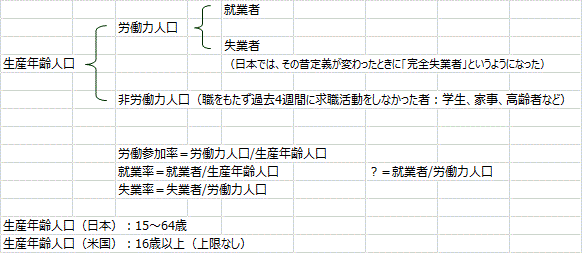
Labor-related terms are not familiar to everyone, so I will define them.
(1) Nonfarm payroll employment
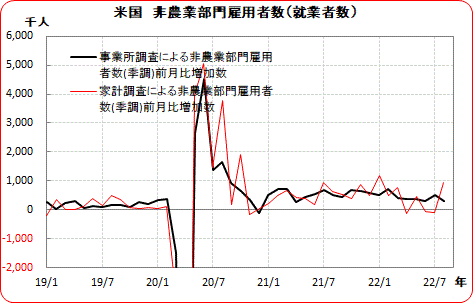
Nonfarm payrolls rose by 315,000 in August from July. July rose by 526,000 (revised down from 528,000). June rose by 293,000 (down from 398,000 by 105,000). The three-month average for June–August was 378,000. That is quite high. The Fed would likely want around 200,000.
There are two types of employment statistics: the establishment survey (based on payroll records of businesses, hourly wages, and hours worked) and the household survey (based on interviews with households, including unemployment rate and labor force participation rate). The August household survey showed employment rising by 442,000.
(2) Wages
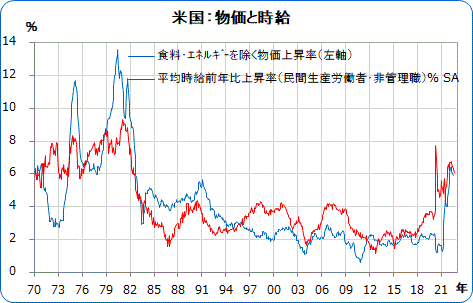
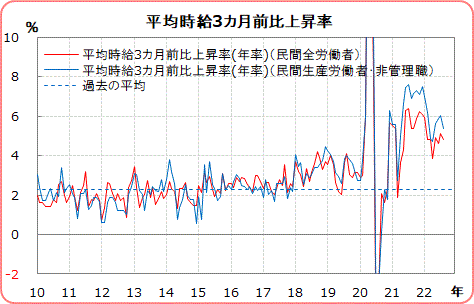
Average hourly earnings rose 0.3% from the previous month, and rose 5.2% from a year earlier. Producer wages and non-managerial staff rose 6.1% year over year. There is a sense of a peak in wage inflation, but the Fed would likely want it to be about 3% year over year, so the path remains long.
(3) Unemployment rate
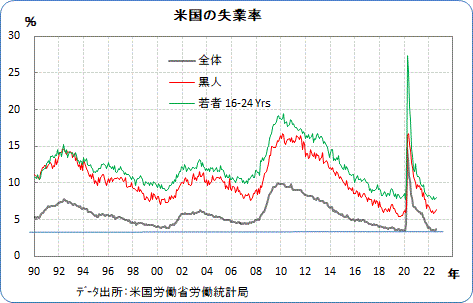
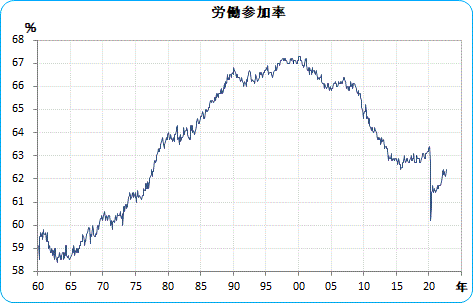
The unemployment rate rose to 3.7% from 3.5% in the previous month. Unemployed persons increased by 344,000. The cause is more people who were not inclined to work deciding to work, increasing the labor force. A favorable trend, but will it continue?
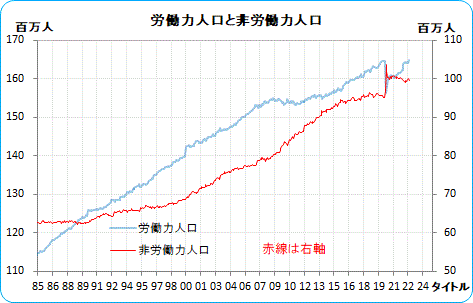
When the COVID-19 pandemic was declared in March 2020, the nonlabor force population expanded greatly and left the labor market. They will likely want to return to that level before too long.
As described above, the market reacted somewhat unsettled to this. However, that is largely due to weekend position adjustments (closing out).
Regardless of how this employment report turns out, the Fed's ultimate goal has not come into view, and it may have only a minor impact on the pace of rate hikes, but the direction of monetary policy will not change. It may affect short-term trading, but in the medium to long term nothing changes. Moreover, by the time the next CPI release occurs, this data will be completely forgotten.