
US ISM Manufacturing Index, August flat; inflationary pressures easing
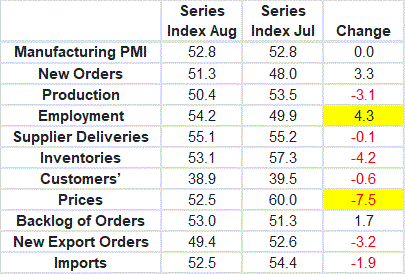
The August ISM Manufacturing Index overall was 52.8, remaining flat from July.
US Durables Capital Goods expansion continues, but…as seen in the data.
A reading of 52.8 corresponds to a real GDP growth rate of about 1.5%. It is slightly weaker, but the economy is growing, and corporate earnings seem to continue to expand. A recession (economic downturn) is not imminent.
(Note) If it falls below 47, economic growth becomes negative and the probability of a recession rises. If it is 51 or higher, it can be deemed that corporate earnings are expanding.
The input price index dropped sharply from 60.0 in July to 52.5. This likely mainly reflects a sharp drop in commodity prices.
Employment jumped from 49.9 in July to 54.2. The employment data to be released tomorrow, including unemployment claims and the ADP Employment Report, indicate weakness in the expectations. The ISM Manufacturing Index suggests slight strength. The job data also suggests strength. The market consensus for the month-over-the-month change in nonfarm payrolls appears to be +30 thousand.
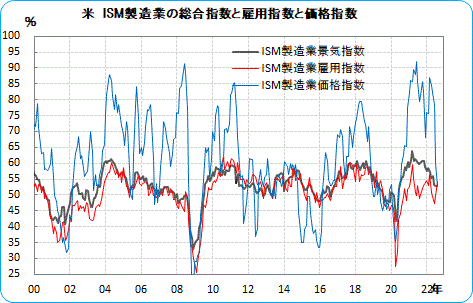
Normally, with growth continuing, price inflation cooling, and employment holding firm, today’s data would be neutral for bonds and exchange rates and positive for stocks, but the market reacted with higher interest rates, a stronger dollar, and lower stock prices.
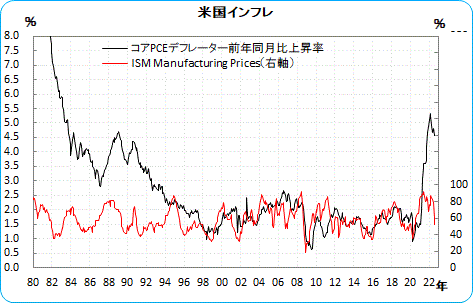
The decrease in the input price index this time reflects a drop in commodity prices, which the market likely interpreted as not alleviating wage-driven inflation. In other words, the market believes that a stronger rate hike will be necessary.
The current monetary policy goal is to curb inflation, and there seems to be a growing consensus that “to suppress inflation, some hardship must be inflicted on households and businesses.”
The current monetary policy goal is to curb inflation, and there seems to be a growing consensus that “to suppress inflation, some hardship must be inflicted on households and businesses.”
Under what circumstances would stock prices rise? (Apart from technical cases like short-covering) It is a little hard to imagine.
This is a free serialized article