
FX essential information - Exchange rate and interest rate differential 2022/08/5
0
The marketis considering a main scenario of rate hikes → economic slowdown & price stabilization → rate cuts, and expects the Fed to turn to rate cuts within next year. Of the two factors pushing up prices (rising commodity prices and rising wages), commodity prices have been falling, and the inflation uptrend feels to have peaked.
On the other hand, the Fednotes that the employment index is "still solid, with hardly any signs of hiring freezes or layoffs,"and wage-cost pressures are building,and they have no intention of loosening the reins on rate hikes. While the inflation rate has peaked, there is no clear path for it to fall to the 2% target.
In short, the market expects a slowdown in the economy → a decline in wage growth,but the Fed believes the labor market remains tight, and wage growth will not easily fall.
I tend to lean toward the Fed's view, but markets decide the prices, so I cannot go against the market. Therefore, I have avoided taking positions. Eventually there will be a revision of market thinking, so I will wait until then.
On August 2, safe-haven yen buying occurred. I judged that this would quickly unwind the yen carry trade, and bought a little USD/JPY at 130.70. I planned to average in every 1 yen, so it was only a small amount. In the end, that one purchase was all.
I had thought the employment data would be weak, so before the release I planned to reduce my position, but since it was a small position, there was no way to reduce it.Because the position was so small, I could not really liquidate part of it.An unexpected employment report sent the dollar higher, and it turned out lucky.
However, lucky times tend to involve small positions. I earned some profit, but not a large amount. (As a rule of thumb, when you take a large position, misfortune tends to occur.)
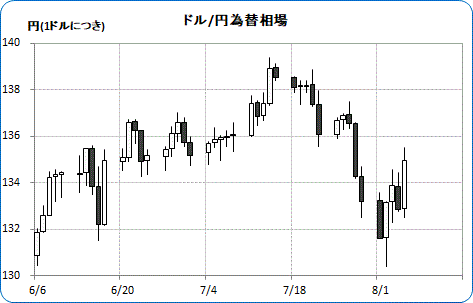
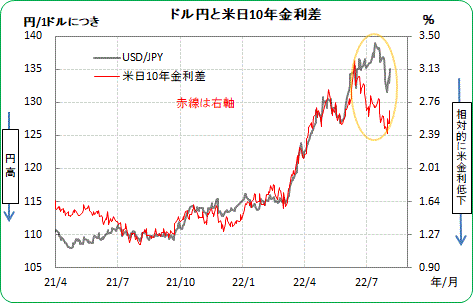
Also, from watching the news, some forex analysts suggested a 126 yen level based on the USD/JPY rate and the U.S.-Japan 10-year yield gap, but "the relationship between exchange rates and interest rate differentials is not permanent and often changes form," so I have written many times not to place much weight on that view.
Getting to the main topic.
Essential basic information for those watching the forex market.
The market is determined by supply and demand, but one major factor driving forex supply and demand is the interest rate differential.
The relationship between exchange rates and interest rate differentials is the most important and fundamental aspect for FX.
It is always necessary to keep track of that situation.
That relationship is not permanent; it often changes form.
We regularly follow information about that relationship.
Below, I will publish the routine graphs (USD/JPY, EUR/USD, GBP/USD, AUD/USD, EUR/JPY and their respective interest rate differential correlations).
(1) USD/JPY
× ![]()