
United States: First kind of recession in 40 years
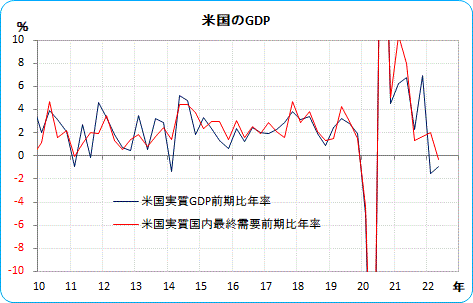
The real GDP growth rate for April–June 2022 was an annualized -0.9% from the previous quarter. It marked two consecutive quarters of negative growth. (For January–March it was -1.6%.)
However, revisions scheduled for September 29, and the annual revisions of GDP data from January–March 2017 to January–March 2022, may render the bottom more solid.
From Chairman Powell's wording, the data released this time should not be given excessive weight. That said, the market reacted strongly.
However, revisions scheduled for September 29, and the annual revisions of GDP data from January–March 2017 to January–March 2022, may render the bottom more solid.
From Chairman Powell's wording, the data released this time should not be given excessive weight. That said, the market reacted strongly.
Also, as this data shows, residential investment fell by -14.0% more than expected. It suggests that housing sales and construction activity slowed sharply due to rising interest rates.
We may not place much weight on this data, but we believe a broader economic downturn will begin in October–December 2022.
(1) The indicator measuring the underlying strength of demand in the economy—real domestic final demand excluding net exports and inventories—was a -0.3% annualized change from the previous quarter this time.
(2) A recession of a type not seen in 40 years
Let's recall what Chairman Powell said at the post-FOMC press conference.
'Even as economic activity slows, total demand remains strong. Supply constraints are larger and longer-lasting than expected. Price pressures are clearly broad-based across goods and services. Recently, some commodity prices have fallen, but crude oil and other prices have risen due to Russia's invasion of Ukraine, pushing up gasoline and food prices.'
The labor market is extremely tight. The unemployment rate is near a 50-year low, the job vacancy rate is at a historic high, and wage growth is substantial. Average payrolls over the past three months rose by 375,000, slower than earlier in the year but still solid. Labor demand is very strong while supply is subdued, and the labor participation rate has been almost unchanged since January. The persistence of a strong labor market implies that overall demand remains solid.'
Is this a recession in the making? Employment is solid, and wages are rising vigorously. Consumption is also solid.
So what exactly happened?
Examination of nominal GDP shows it expanding by 7.85%. That level is by no means small; indeed, it is quite high. The economy is expanding. It is rare for nominal GDP to grow more than 2% while real GDP contracts. This recession-like state did not occur this time. Most people who have grown accustomed to disinflation seem unable to imagine it.
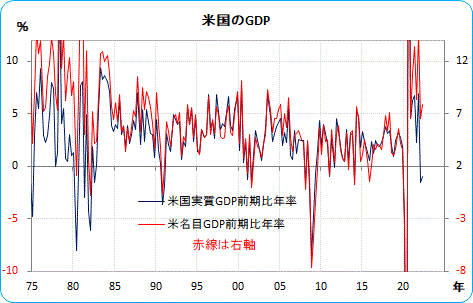
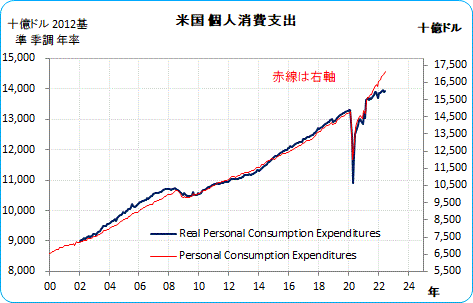
The next graph may make it easier to understand. Employment is solid, income is rising, and people are spending. Consumption is not being restrained. However, the amount that money can buy is decreasing. This slowdown is caused by strong inflation. From the seller’s perspective, the volume of sales is down, but the value is increasing. Prices per unit are rising. Raw material costs are increasing, and wages are rising, forcing higher unit prices. It is not a case of demand deficiency causing the downturn.
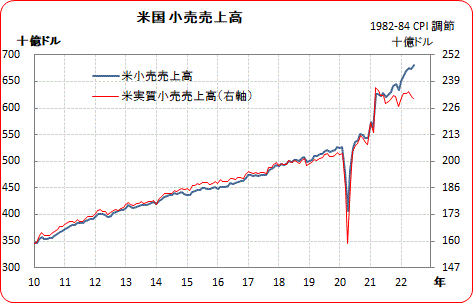
Consumption (red line, value) remains vigorous, but the purchasing power of money (real consumption) is stalling due to rising prices.
Is the economy robust or slowing?
Is the economy robust or slowing?
× ![]()