
FX Required Information: Exchange Rate and Interest Rate Differential 2022/07/22
Last week (July 18–22), basically, I decided not to take any positions.
The relationship between the currency market and the interest rate differential has broken down, and that cannot be explained. I hesitated to take positions.
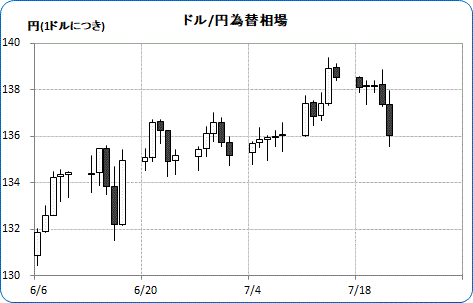
So the market surged the yen. Three weeks ago, since long yen positions were favored because US and China long-term rates had fallen, the market moved toward a weaker yen. It would have been better to accumulate more long yen positions, but it does not go that smoothly.
Last week's market theme was rising concerns about the outlook for the U.S. economy. Last week I wrote that “if the endpoint of U.S. rate hikes becomes visible, the yen would reverse higher,” and it seems the market has made that judgment, as the 10-year yields fell sharply.
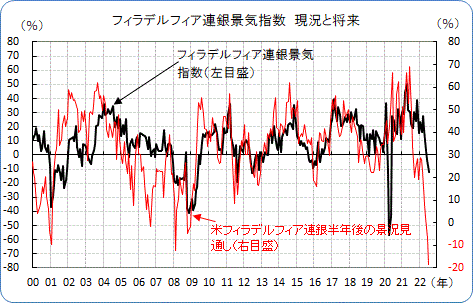
The Philadelphia Fed index for July dropped sharply. It corresponds to about 45 on the ISM index. It is at recession levels.

The forward-looking indicators are even worse. Worse than during the IT bubble collapse or the Lehman Brothers shock.
Getting to the main topic.
Basic information essential for anyone watching the currency market.
Markets are driven by supply and demand, but one major factor moving the supply and demand of the currency market is the interest rate differential.
The relationship between the currency market and the interest rate differential is the most important and fundamental for FX.
It is necessary to always keep track of that situation.
That relationship is not permanent. It often changes form.
Regularly, information about that relationship is followed.
Next, we publish the standard graphs (USD/JPY, EUR/USD, GBP/USD, AUD/USD and their respective interest rate differentials) as usual. This time, we also add graphs of EUR/JPY and the interest rate differential.
(1) USD/JPY
U.S. mid- to long-term interest rates are mindful of an economic slowdown. As for the interest rate differential, the 2-year yield gap, which more accurately reflects the Fed's monetary policy, would be appropriate.
× ![]()