
US June Retail Sales: Neither strong nor weak
U.S. May retail sales in June rose 6.806 trillion dollars? Wait, check: The text says "6806億ドル" which is 680.6 billion dollars. So: June U.S. retail sales rose 680.6 billion dollars, up 1.0% from the previous month. A rebound from May's 0.1% drop. Internet commerce rose 2.2%. There are also surveys suggesting that under inflation, online shopping—where price comparisons are easier than in-store—has been increasing. Year-over-year total sales were up 8.4%.
However, these figures are not inflation-adjusted, and the amounts are also pushed up by current price rises. Excluding the impact of inflation, June’s retail sales growth would be −0.3% month over month.
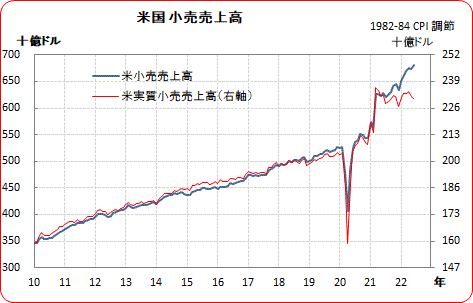
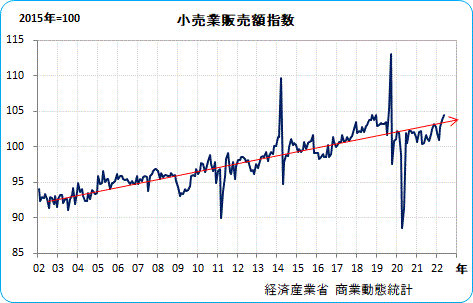
For reference, in Japan, retail sales have increased in April and May.
*Retail sales excludes most service-related items such as rents, culture and recreation, education, and health care.
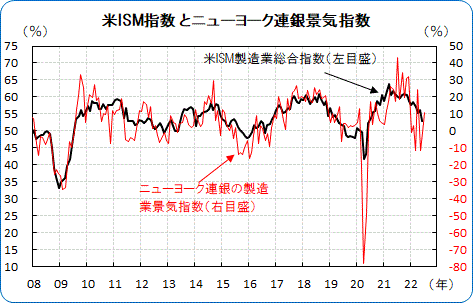
Next, the NY Fed empire? No, the NY Fed manufacturing survey has rebounded quite a bit, but monthly figures are not reliable. We will look at the Philly Fed Index to be released on July 21.
Also, on the 25th, Germany's July IFO business climate index will be released.
The six-month ahead outlook index from the NY Fed manufacturing index has fallen to levels comparable to the IT bubble burst and the Lehman crisis (the COVID shock did not drop to zero).
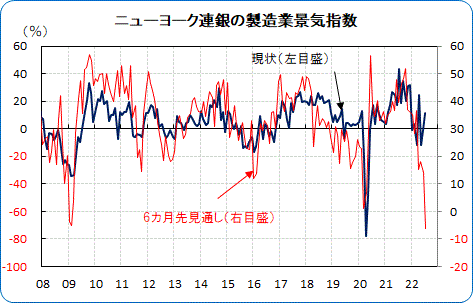
Even from all this, the current U.S. economic picture is hard to grasp. A slowdown is certainly underway, but one could say anything: that the U.S. economy is more resilient than expected, or that the economy is slowing so much that the Fed will not move to rapid rate hikes.
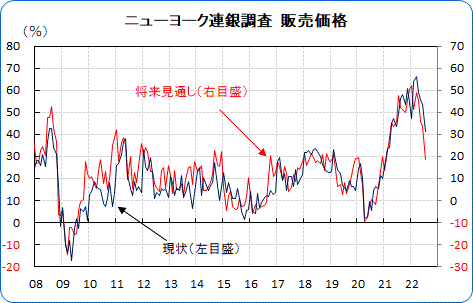
Meanwhile, the NY Fed manufacturing survey’s prices indicator has declined recently in response to the fall in crude oil and industrial commodity prices.
However, it is probably unlikely to persist. The labor market is tight and wage growth is pushing prices higher.
However, it is probably unlikely to persist. The labor market is tight and wage growth is pushing prices higher.
× ![]()