
A week to obtain near-term support conditions from a volatile stock price market….
The movement of U.S. stocks has not settled since the week of President Trump’s general address was started.
It has begun to affect the Nikkei Stock Average and even the foreign exchange market.
The sharp drop in U.S. stocks is said to have been caused by rising U.S. interest rates, but
wasn’t it the result of stock prices that were running away with themselves, with no stop in sight?
In any case, it seems clear that such movements were unavoidable and continued to be the case
that everyone probably anticipated.
However, when the adjustment would begin or what changes would appear is only a forecast
and tends to end up as a matter of hindsight.
Nevertheless, the period when the market truly begins to move has also been described in the “Stock Market Compass,”
and the year-end and New Year market tends to have few participants and no clear trend unless there is considerable material for the year,
so we advised preparing for the post-New Year U.S. presidential general address.
This time, with movements centered on U.S. stocks beginning to move and the currency market also becoming active, it was a start to what could be called the opening of this year’s financial markets.
Still, the fluctuations in U.S. stocks are likely to continue, but in the near term,
with the Tokyo market closed on Monday the 12th, including the possibility of yen movements and Nikkei futures activity,
there was growing attention on the NY close at week’s end, but as U.S. stocks moved toward the near-term low,
they rebounded and Nikkei futures and the yen also recovered before the NY close, ending higher for both U.S. and Japanese stocks
on the daily chart with long lower tails, avoiding a close at a low price for both the yen and stock prices.
From the decline in stock prices, the currency market has also been affected, but a near-term rebound
is starting to appear as a possible development this week.
Up to now, the signals of excessive buying seen in the Dow and Nikkei 225 have already been averted by this movement, and in the longer term, after a chase around the high price range with volatility up and down, either
it is thought that it will move in one direction or another, and at the current stage the market is viewed as capable of a substantial rebound in fluctuations.
If the Tokyo market remains closed at the start of the week or overseas markets do not trigger moves, then Prime Minister Abe is expected to present to the Diet on April 8 a personnel plan to keep Bank of Japan Governor Kuroda in office, indicating a likely continuation of his term,
which would imply a recovery in the Nikkei Average on the following Tokyo market open and the dollar/yen approaching a near-term support line, possibly providing a positive factor for a rebound.
The issue is that overseas markets will always prioritize U.S. stocks and affect stock prices,
so caution with important U.S. indicators is advisable, and trading should focus on
day trading in each market while waiting for a near-term rebound in U.S. stocks; once confirmed, the yen can rebound as well,
with the pound-yen pair and others remaining in a near-term support around 150, moving into a rebound phase for a while,
so it will be important to watch whether this line can hold as a gauge for a rebound.
On the other hand, the euro-dollar rate has fallen below the 1.125–1.23 mid-range high,
so the strategy of selling rallies in the short term remains, while we should avoid aggressive selling in the run.
Although the euro has moved away from dangerous overbought levels, historic euro buying remains,
and going forward, even if prices rise, time adjustments or corrections from the high price range may be needed before attempting another move.
This time there was no time for chart updates, so I plan to post a follow-up later.
Strong in USD/JPY! Battle Zone Trade Gift Campaign!
● Each currency pair has fixed entry and settlement times!
● Participants change rapidly within each time slot! Capture the flow of the day’s market!
■ About Summer and Winter Time Zones ■ Weekly ■ Monthly ■ Yearly market trends
● Trading technique “Tokyo morning session is hot! This is the origin of the yen market battle!”
● Trading technique (long-term positions)
● Ask Ultimate MAX / Shadow Set
Furthermore, a strong USD/JPY Battle Zone Trade Indicator will be gifted!
“Currency squeeze” trading technique with Ask Ultimate MAX (long-term) / Shadow (short-term) indicators
What is Battle Zone Trade?

Postscript article updated 2/12 at 4:00 AM
The Nikkei 225 and USD/JPY daily charts show long wicks on both ends, closing as bullish candles,
indicating a slightly stronger bid and suggesting buying interest in the low price range.
In the low-price region, the downward trend seems to pause or show early signs of a reversal.
There have been strong candlestick signals in the cases previously introduced in the “Stock Market Compass.”
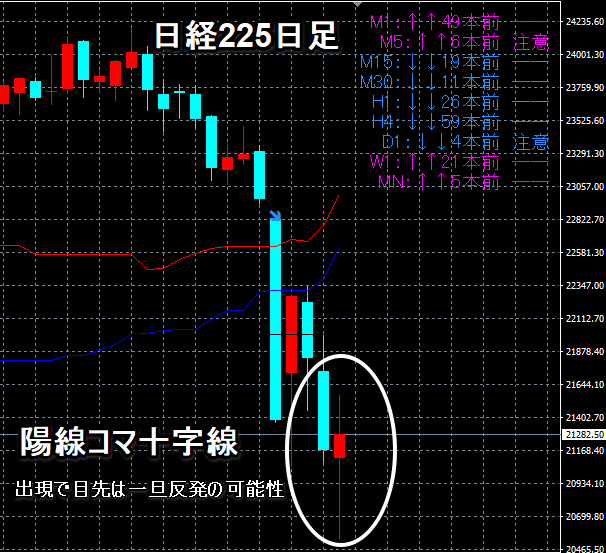
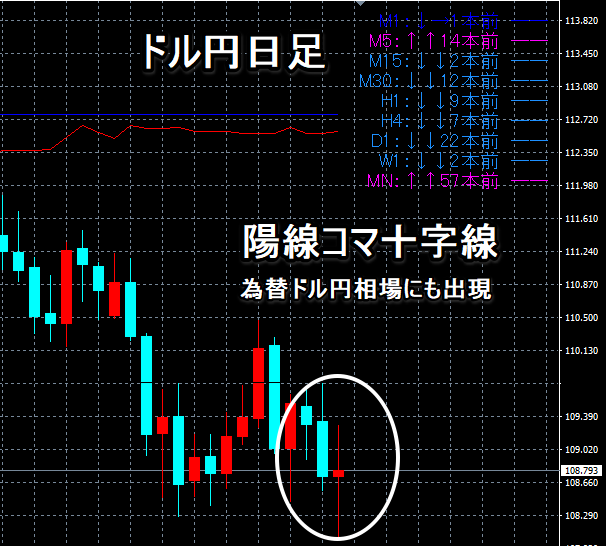
On the Nikkei 225, a selling signal is already lit on the daily chart, suggesting that the near-term market may rebound from a volatile up-and-down movement,
with a strong likelihood of a rebound at least in the near term.