
FX Essential Information: Exchange Rates and Interest Rate Differentials 2022/07/08
0
Last week's positions (July 4–8) were:
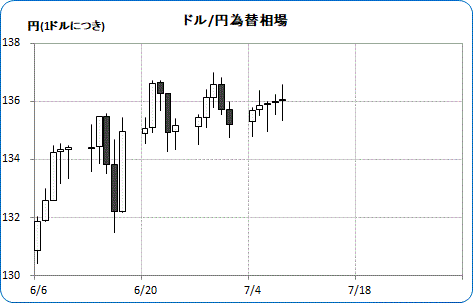
(1) Yen weakening trend, but briefly a yen long. Loss from 135.32 to 136.08.
(2) Euro short. Large profit from 1.0426 to 1.0180.
(1) Yen weakening trend, but briefly a yen long. Loss from 135.32 to 136.08.
(2) Euro short. Large profit from 1.0426 to 1.0180.
(3) Sterling short. Profit from 1.2110 to 1.2025.
(4) Australian dollar short. Loss from 0.681 to 0.686.
There were some losses in yen and AUD, but overall the profit was substantial due to the large Euro gains.
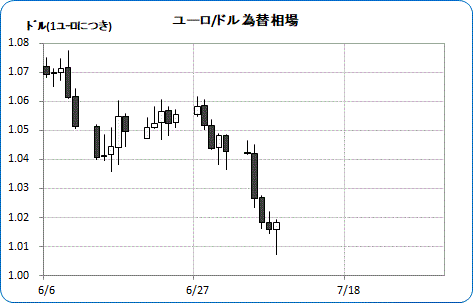
Two points about the fundamentals to note.
(1) The global economy, including the US, is softening, but US employment remains strong. US monetary tightening is expected to continue.
The ISM index has softened to 53, but job growth remains strong. The three-month increase in nonfarm payrolls is still above 500,000 until it falls below that level. (Even if it does, inflation control will be prioritized.) The three-month increase for April–June was 1.124 million.
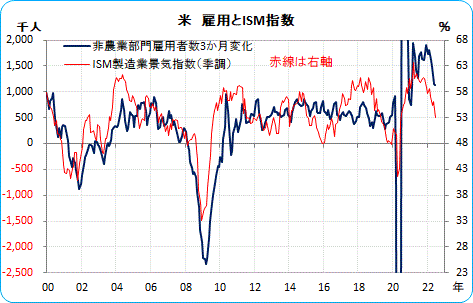
(2) Deterioration of the euro area’s international balance of payments.
The reason is obvious: rising oil and natural gas prices. Current account is also in deficit, and there is no sign of improvement. This is quite serious.
The reason is obvious: rising oil and natural gas prices. Current account is also in deficit, and there is no sign of improvement. This is quite serious.
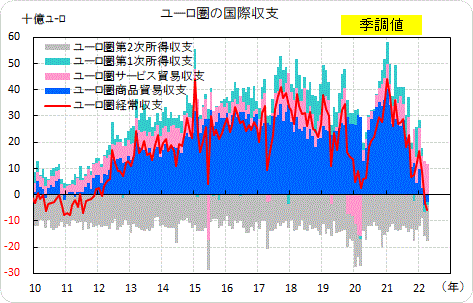
Also, for the euro area, the latest data on the international balance of payments can be viewed on the following site.
Now, to the main topic.
Essential basic information for those watching the FX market.
The market is driven by supply and demand, but the major factor moving FX supply and demand is the interest rate differential.
The relationship between exchange rates and interest rate differentials is the most important and fundamental aspect for FX trading.
It is essential to always keep track of that situation.
That relationship is not permanent. It often changes its form.
Regularly, we follow information about this relationship.
Below, we present the regular graphs (USD/JPY, EUR/USD, GBP/USD, AUD/USD and the correlations with their respective interest rate differentials).
× ![]()