
Mì tragic economic recession confirmed?
On June 16, notable economic indicators in the United States were released.
For some reason (probably) Nikkei did not report it. It was probably busy the day after the FOMC.
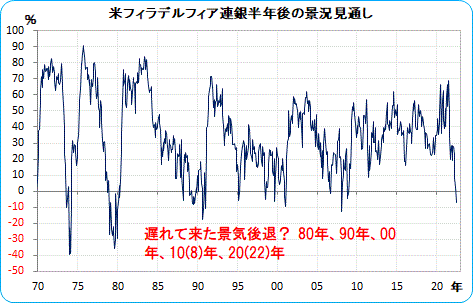
The June Philadelphia Fed Manufacturing Index came in at -3.3.
The prices-paid index remained high at 64.5.
The outlook is a recession with high prices, i.e., stagflation.
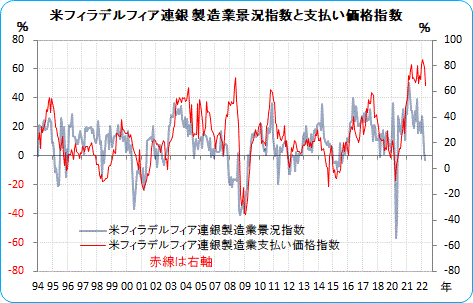
This suggests the ISM index could drop below 50. (ISM June data likely won’t be below 50, though)
If the ISM index falls below 50, it would imply corporate profits are shrinking. The stock market isn’t thinking about that right now.
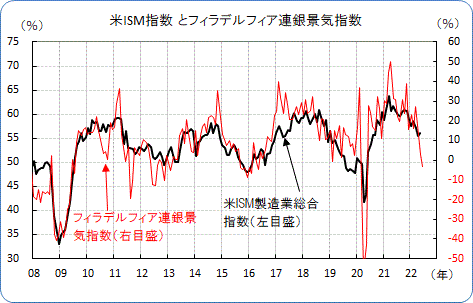
The six-month outlook is bleak.
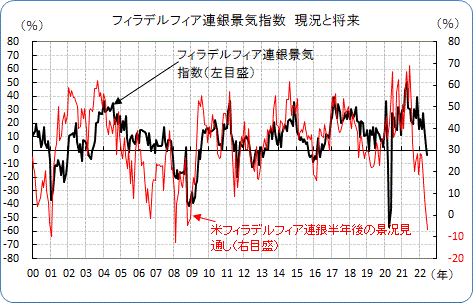
The drop in the six-month outlook to this extent is due to
the recession caused by monetary tightening after the 1980s hyperinflation.
the recession from monetary tightening in response to rising inflationary pressures in the 1990s.
the IT bubble burst in the 2000s.
not in the 2010s but the 2008 Lehman Brothers shock.
it is the next one.
This time, it has been prolonged not by 20 years but by large-scale fiscal and monetary measures in response to the COVID-19 pandemic.
A typical 10-year economic cycle is expected to occur.
Industrial production for May was released on the 17th.
There is a slight deceleration, but it can be said that it remains solid.
However, within the next six months, the U.S. economy is likely to slow significantly, and stock prices will fall further.
The June Philadelphia Fed Manufacturing Index came in at -3.3.
The prices-paid index remained high at 64.5.
The outlook is a recession with high prices, i.e., stagflation.
This suggests the ISM index could drop below 50. (ISM June data likely won’t be below 50, though)
If the ISM index falls below 50, it would imply corporate profits are shrinking. The stock market isn’t thinking about that right now.
The six-month outlook is bleak.
The drop in the six-month outlook to this extent is due to
the recession caused by monetary tightening after the 1980s hyperinflation.
the recession from monetary tightening in response to rising inflationary pressures in the 1990s.
the IT bubble burst in the 2000s.
not in the 2010s but the 2008 Lehman Brothers shock.
it is the next one.
This time, it has been prolonged not by 20 years but by large-scale fiscal and monetary measures in response to the COVID-19 pandemic.
A typical 10-year economic cycle is expected to occur.
Industrial production for May was released on the 17th.
There is a slight deceleration, but it can be said that it remains solid.
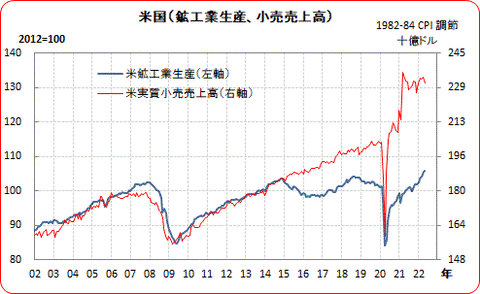
However, within the next six months, the U.S. economy is likely to slow significantly, and stock prices will fall further.
× ![]()