
There is no sign of inflation cooling in the United States
0
The U.S. Labor Department reported on June 10, 2022 that the Consumer Price Index (CPI) for May rose 8.6 percent from a year earlier. Surpassing March's 8.5%, it reached a 40-year and 5-month high. The “revenge spending” on travel and other activities that had been restrained by the COVID-19 crisis is likely to push prices higher into the summer, suggesting inflation may stay elevated. The rapid pace of rate hikes by the Federal Reserve (Fed) could persist.
For now, let’s confirm the data.
Before that, a word.
The Fed focuses on core CPI excluding food and energy because
households do not exclude food and energy when spending, and for consumers the overall price index is obviously important. Politically as well, the overall price index matters.
The Fed’s price target is the rate of increase in the Personal Consumption Expenditures (PCE) deflator, which reflects total consumer spending. It is not the core PCE deflator.
Even so, the reason the Fed emphasizes core CPI excluding food and energy is
(A) CPI is released earlier than PCE.
(B) Food and energy prices are highly volatile, making it hard to determine price direction from a single data point.
(C) Over the medium to long term, the overall price index tends to converge with the core price index. (Former Fed Vice Chairman Alan Blinder said this to me in an online meeting.)
(D) Food and energy are difficult for the Fed to control. Even if food prices rise, the Fed cannot tell consumers to cut back on meals.
(1) First, the core CPI month-over-month that the Fed checks most closely. It changes earlier than year-over-year. A few months ago, Treasury Secretary Janet Yellen (former Fed Chair) said the same.
Prices were cooling in March, but worsened in April and May (the rate of increase rose). The financial markets reacted to this.
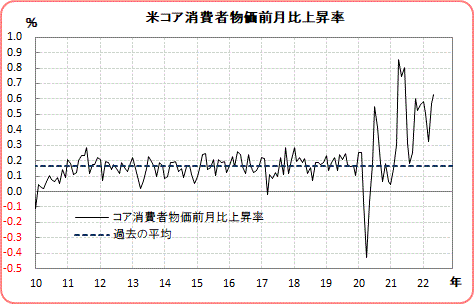
(2) Next, prices excluding used cars, which have a relatively large impact on inflation, and the index of services prices, which tend to reflect wages. Both improved somewhat from the previous month, but remain too high.

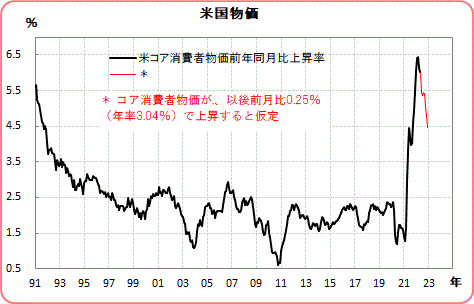
(3) Even if, by excessive optimism, the month-over-month rise continues at 0.25% going forward, what will it be year-over-year?
It does not seem possible to stop rate hikes easily.
A recession may be needed to bring inflation back to the 2% target.
To that end, a 0.5% rate hike is expected in June, July, and September. There might also be a 0.5% hike in November, and the rate could rise to 3.0–3.25% by December. After that, it seems likely the stance would be to hold, but since this is in the future, a lot could happen by then.
It is difficult to predict how commodity markets troubled by Russia’s invasion of Ukraine or supply-chain issues stemming from strict COVID-19 measures in China will unfold.
× ![]()