
The gap between the Japanese economy and the ISM index
In the United States, April 2022 industrial production and retail sales were released.
Both were strong. The stock market liked it, and bond yields rose.
In the foreign exchange market, rather, the euro and Australian dollar have been strengthening on expectations of rate hikes in the euro area and Australia. Generally, they have been rising in step with the euro.
Only the yen has been somewhat left out. The yen feels like it has entered a new phase.
The forex market is determined relatively, and there are many factors: the U.S. economy, European economy, Chinese economy, U.S. inflation and monetary policy, euro area inflation and monetary policy, and the Ukraine crisis, making it complex.
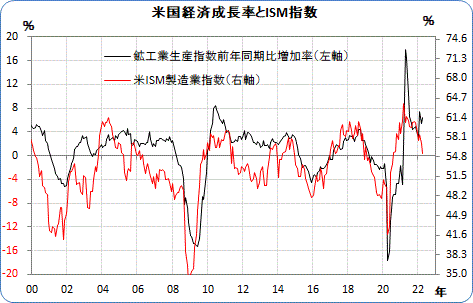
Despite the ISM index softening, U.S. industrial production remains firm.
This kind of situation occurs when the U.S. economy is solid but overseas economies are softening.
For stocks, the ISM index is more important, but for the bond market, industrial production is more important. It is also more significant for monetary policy.
(However, on May 17, the U.S. economy’s resilience was welcomed. The current stock prices have priced in roughly an ISM index around 50, so a modest rebound is likely.)
U.S. consumption remains solid. Real retail sales adjusted for inflation have also become sturdy. It is surprising. It likely reflects a tight labor market.
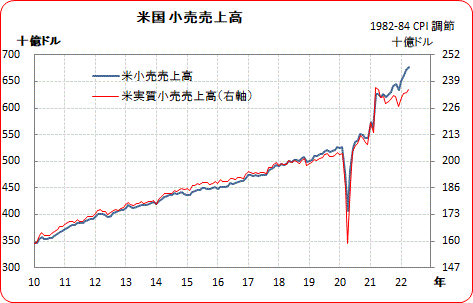
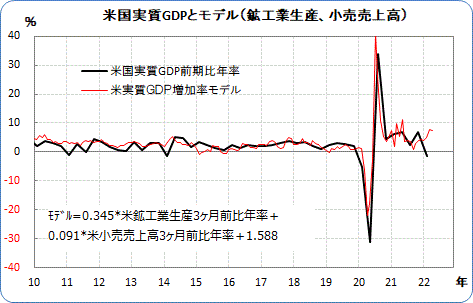
Estimating the U.S. real GDP growth rate (year-over-year rate for three months) from industrial production and retail sales, April would be 7.4%. Too strong. It supports rate hikes. Stocks welcomed it, but they will probably be pushed back by the headwind of rate hikes.