
Will a weaker yen bring about higher prices?
0
Worries about prices arise because
(1) It is concerning that prices rise even though income does not increase.
(2) Once prices start to rise, wouldn’t interest rates go up?
(A) Many people borrow with variable-rate mortgages. Future repayments become uncertain.
(B) The national debt is large. One worries whether the finances are okay.
(3) This rise in prices, even if rates are raised to curb demand, may be ineffective. The purpose of rate hikes is not to curb demand but to encourage yen appreciation and push down import prices.
Well, above all, for reference this time as well, we will outline the relationship between the exchange rate and prices.
First, in terms of price relationships, it is not the dollar-yen rate but the real effective exchange rate (since not all trade is conducted in dollars).
And the real effective exchange rate does not move as dynamically as the dollar-yen rate.
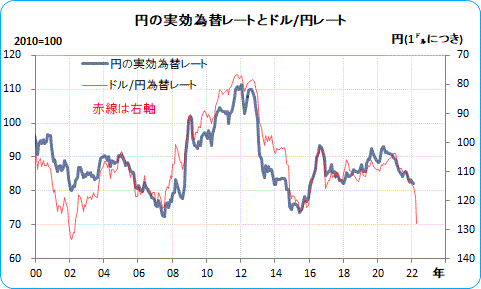
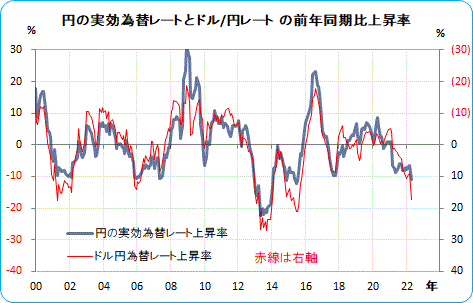
It takes about a year for exchange rate fluctuations to reflect in the inflation rate. In that sense, if Japanese prices were to start rising, it would be around April, but looking at the past, even with a weaker yen, prices do not necessarily rise.

The graph’s prices refer to “the overall index excluding food (excluding alcoholic beverages) and energy.” This differs from the commonly used “the overall index excluding fresh food and energy” in Japan. It also excludes processed foods.
So then, what about rate hikes?
Japan’s price increases are driven by energy and food. Addressing them with rate hikes may be inappropriate.
^
× ![]()