

A sign arrived on my smartphone, so I checked the chart and went all-in on 7 currency pairs in one go
Hello everyone.
I am Ku Ryuu, the developer of the Hybrid FX Trade System "Ajinichi".
Today, I’ve titled this post “I received a signal on my smartphone, so I looked at the chart and took positions on 7 currency pairs at once.”
In my view, a signal is a sign indicating the direction of the trend from the 5-minute chart to the 1-hour chart to the 4-hour chart.
Among the signals you use, there are ones used for counter-trend, or signals that blend trend-following and counter-trend strategies. But I basically trade 100% in the direction of the trend.
Therefore, many of my entries are closer to stop orders than take profits.
This time’s example was a stop-order-like market entry.
The original purpose of this signal tool was to prevent signals for counter-trend in ranges and to reduce the frequency of signals within a day.
That means it narrows down to signals that appear at the early stage of a trend.
This signal tool only functions on the 5-minute chart, so it cannot be used on other timeframes.
Are there dozens of trends in a day on the 5-minute chart?
To me, a trend means a new high or new low that consecutively updates the previous day’s low or high.
And I define the previous day’s high as the recent high and the previous day’s low as the recent low.
From this email, I can see it was a GBPUSD short signal.
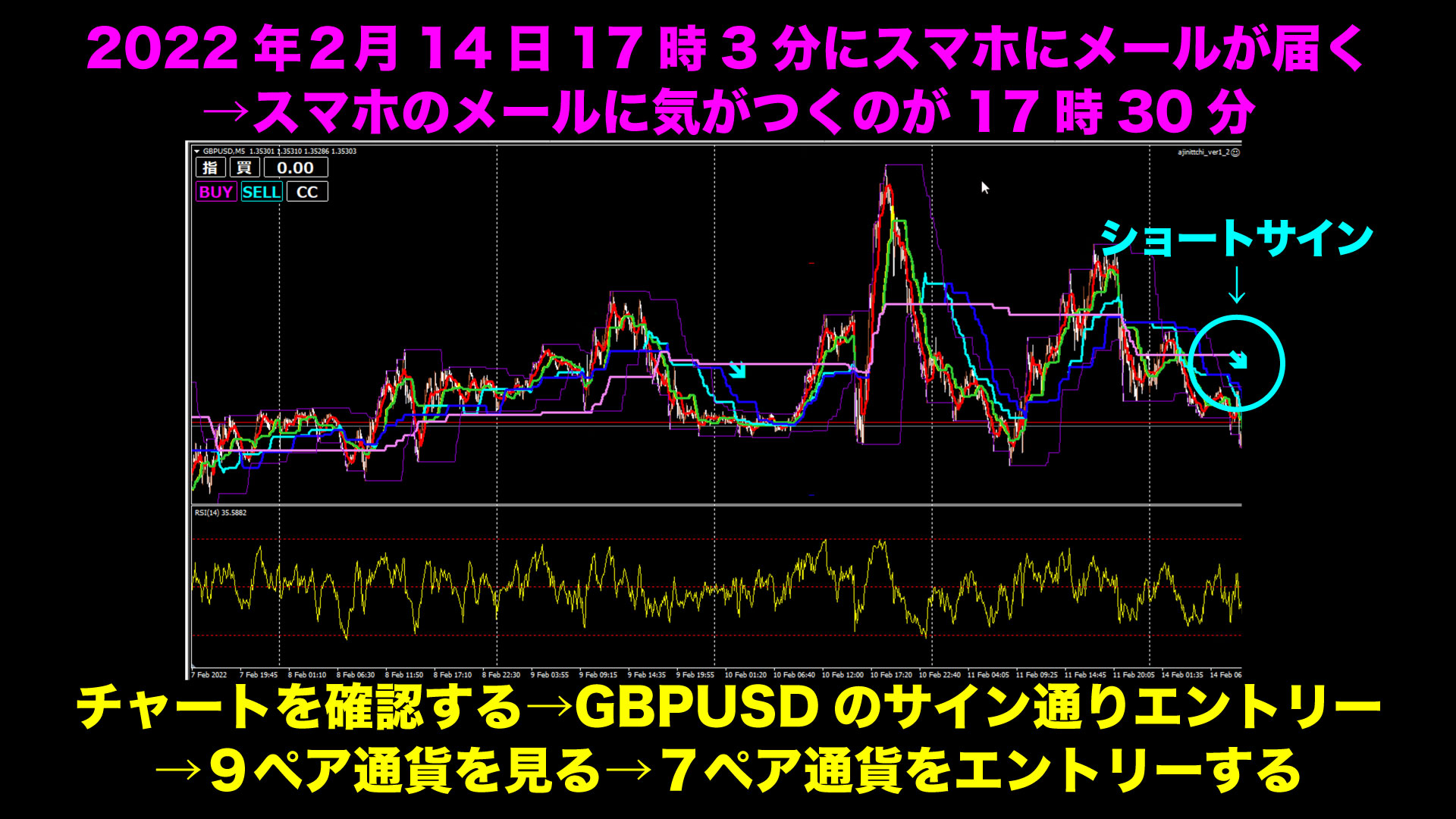
So I recorded the scene where I entered short according to the signal.
If you like, please read the article along with the video commentary.
I believe that will greatly enhance your understanding.
The short signal for GBPUSD arrived on my smartphone at 17:03.
I noticed the signal notification transferred from MT4 at around 17:30, so it was about 30 minutes late from the signal notification.
In cases where you feel you’ve missed the timing, you may skip entries, but this time a trend seemed likely, so I executed the entry.
That was this timing.
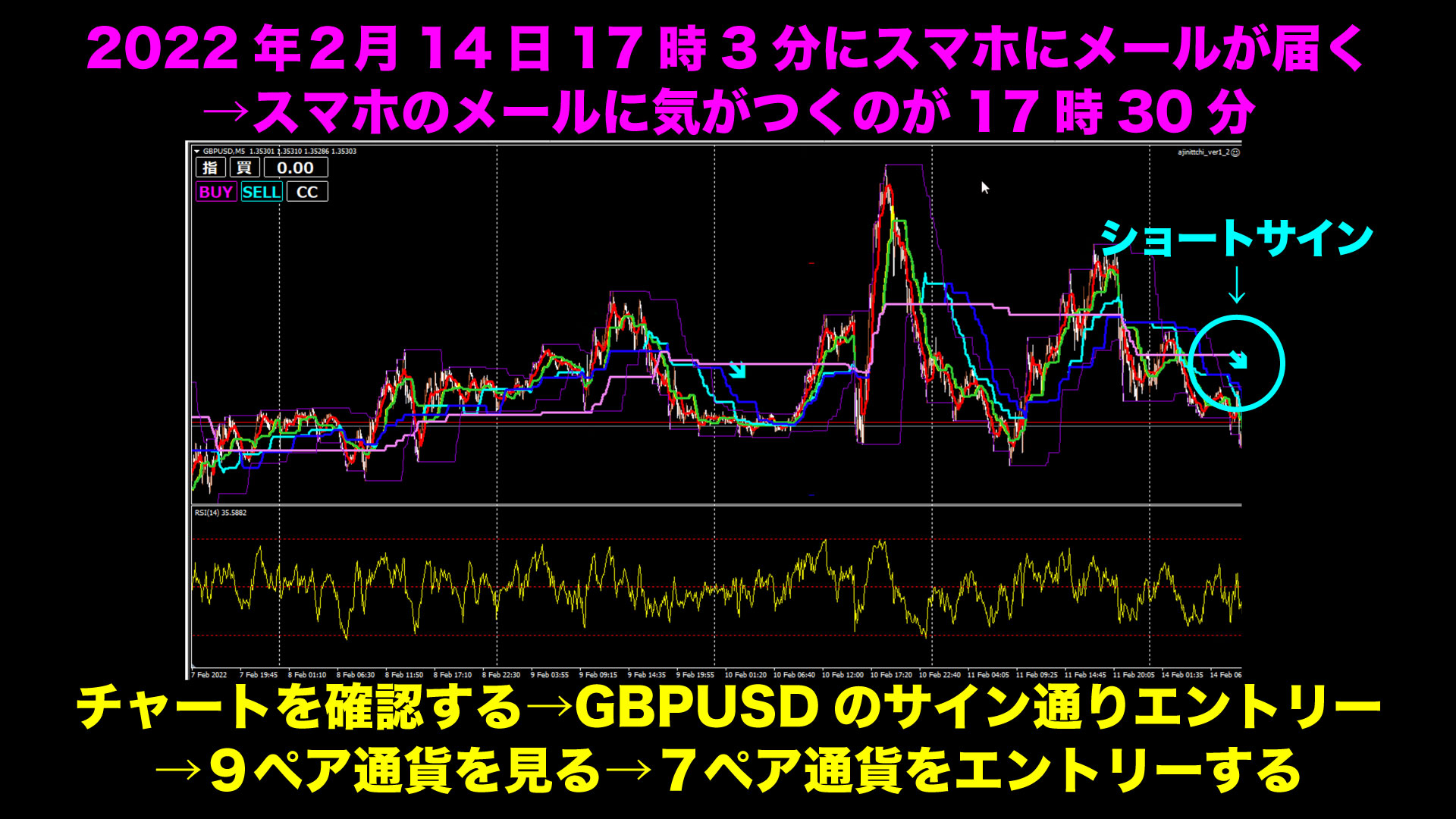
The figure above shows the signal viewed 30 minutes later.
This is the GBPUSD short signal.
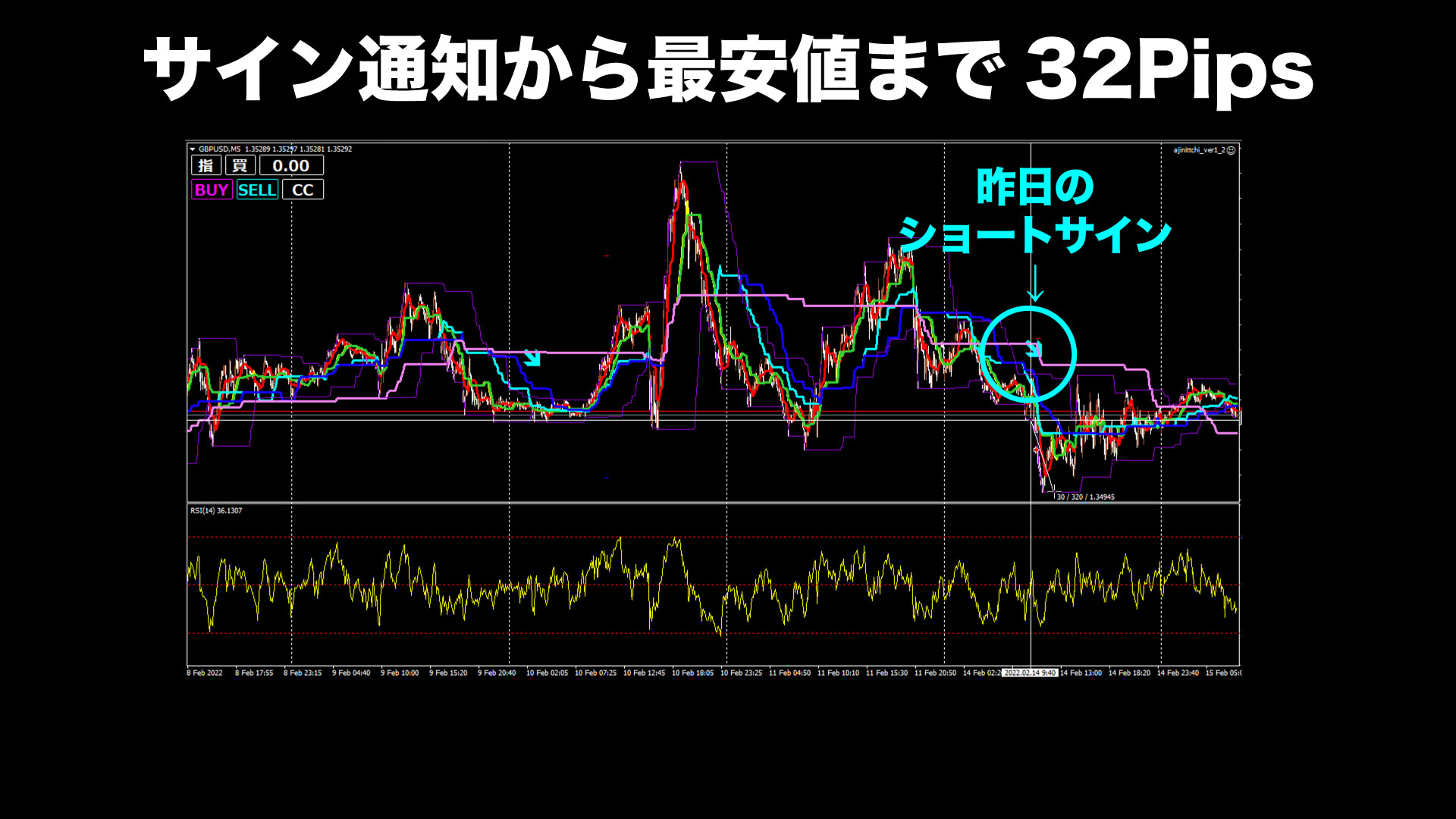
When I looked at it the next day, it looked like this.
As expected, it updated the previous day’s low and hit a new low.
This low might be a new low that updated last week’s low!?
However, after that it moved into a range, so the scalping perspective was ultimately correct.
Even looking at the GBPUSD weekly chart, there isn’t a clear long-term trend here, right?
Therefore, I kept a ultra-short-term view, minimized holding time, and took multiple positions at once with high leverage, which paid off.
After yesterday’s signal and entering, this is how the nine screens looked.
Since there seemed to be many pairs with the momentum to update the previous day’s low, I took short entries across many currency pairs.
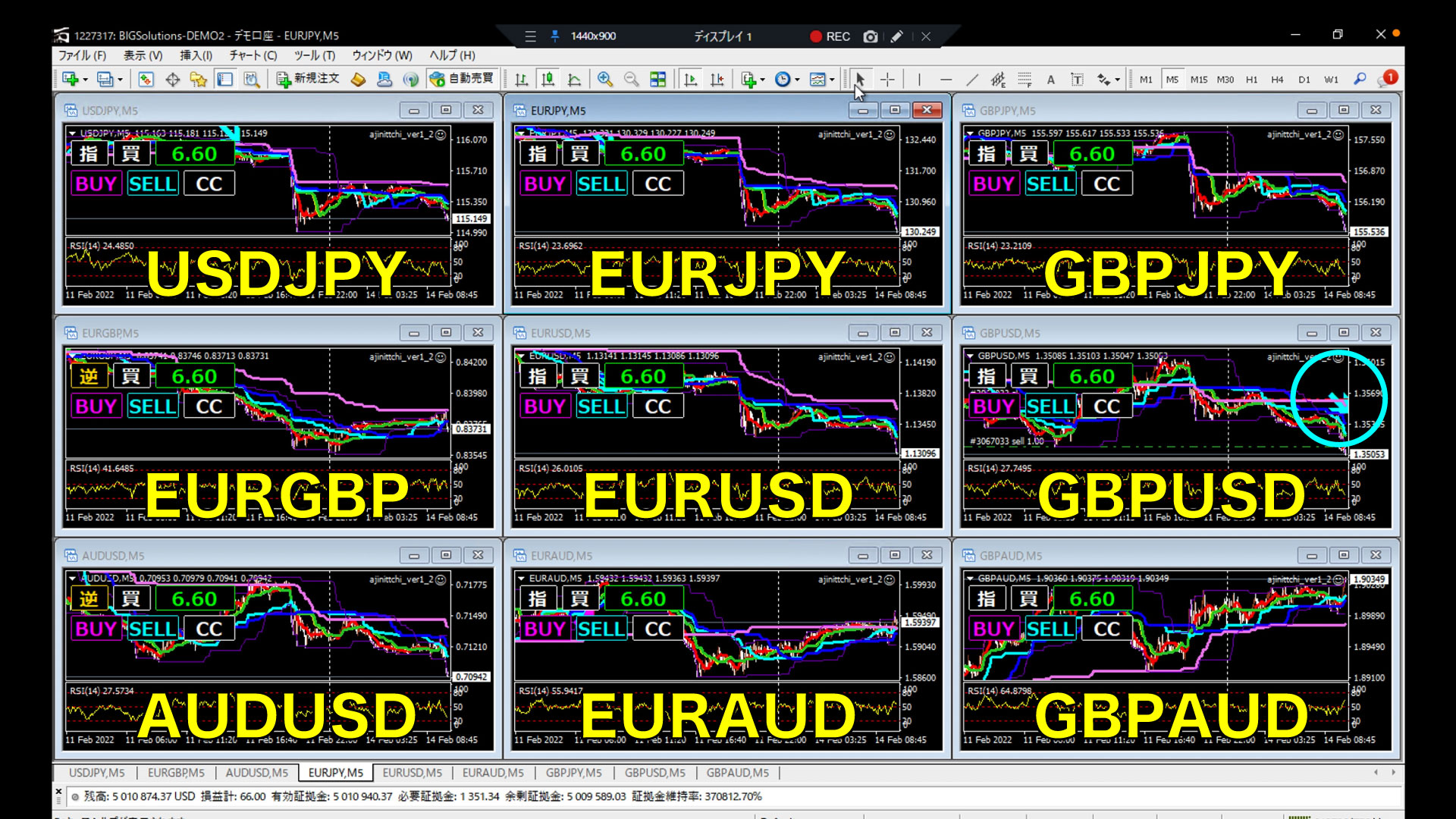
The short signal on the right-central area became my entry point, but when I looked at the nine screens, a trend seemed likely, so I opened 7 positions across multiple currency pairs at once.
These are the currency pairs I entered at the same time.
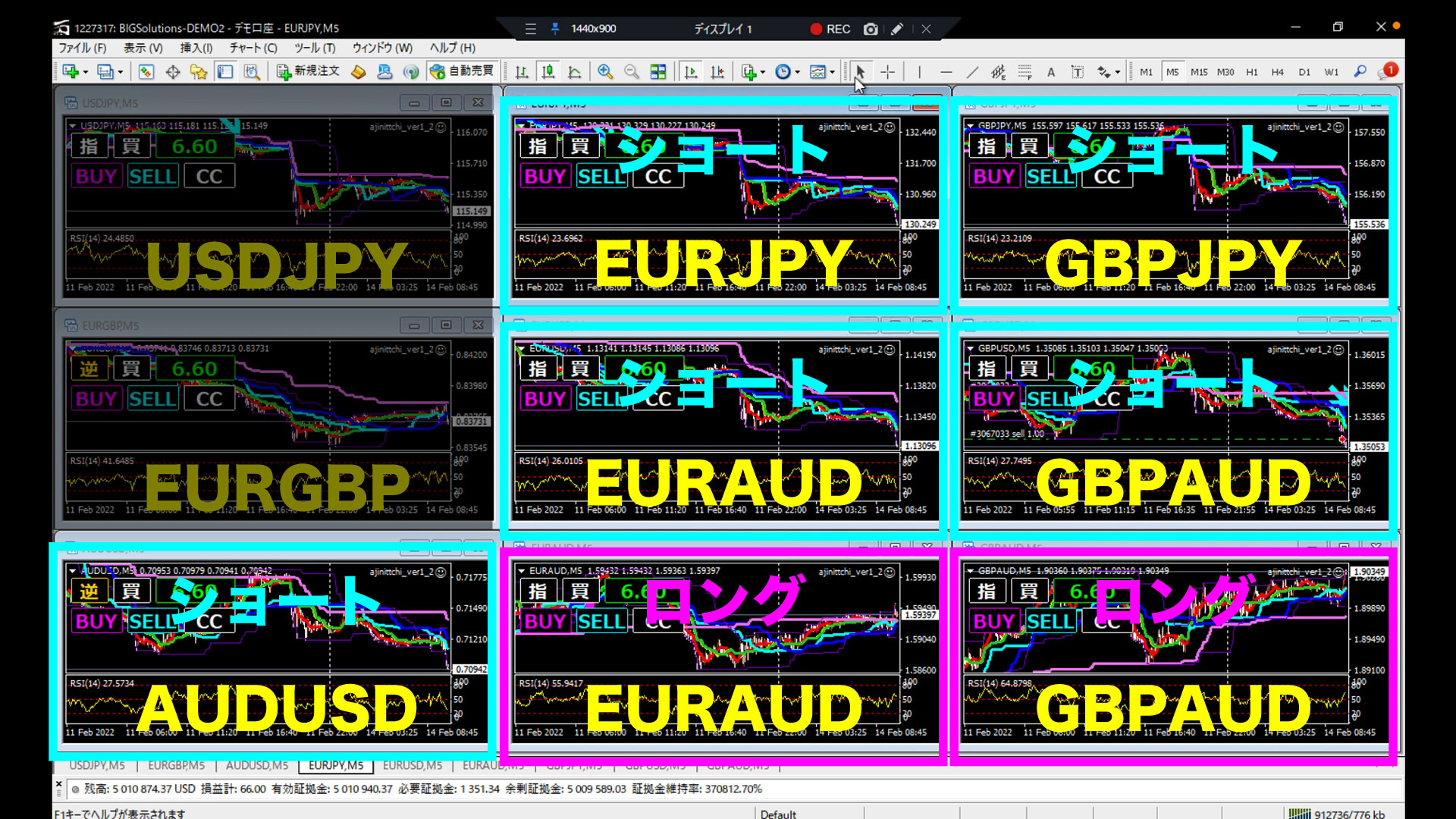
Looking at this, you can see the basis for discretionary judgment at the same time as the signal, right?
Because there is momentum in the market, I expected this trend to continue for a while (from a few minutes to several tens of minutes).
This is still from a scalping viewpoint, so I planned to exit a few minutes later.
I wasn’t very confident about the two long positions at the bottom, but since AUDUSD showed downward momentum in the counter-correlated pair, I judged that the other two might rise later.
EURJPY was in a range, so the number of entries increased.
If EURJPY’s trend had been clear, I would often enter only the stronger side of EURJPY, but this time I took both selling and buying positions in EUR and GBP.
This is the state 15 minutes after entry.
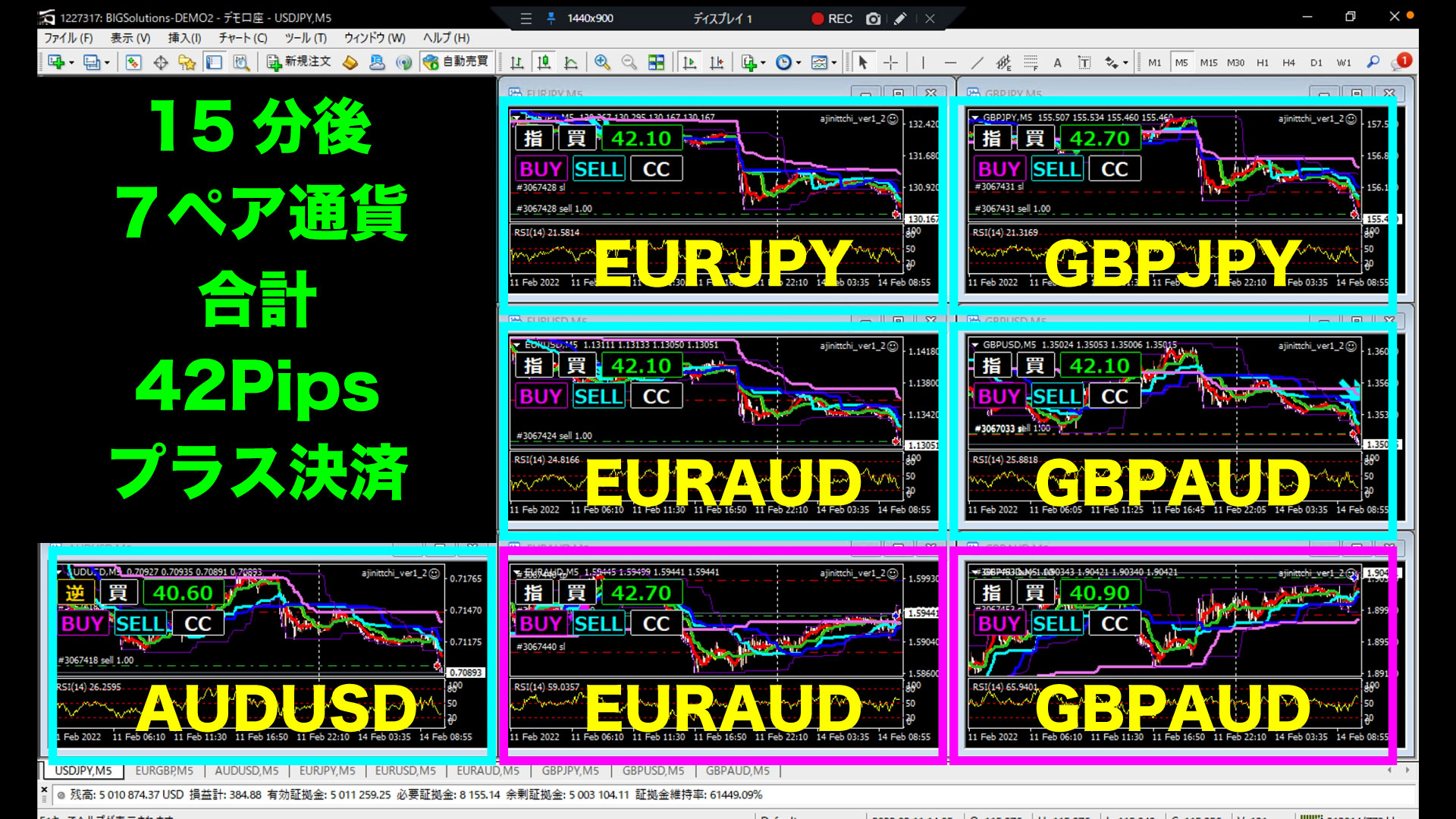
I closed the trades with a bulk CC settlement.
Here is the account’s trading history.
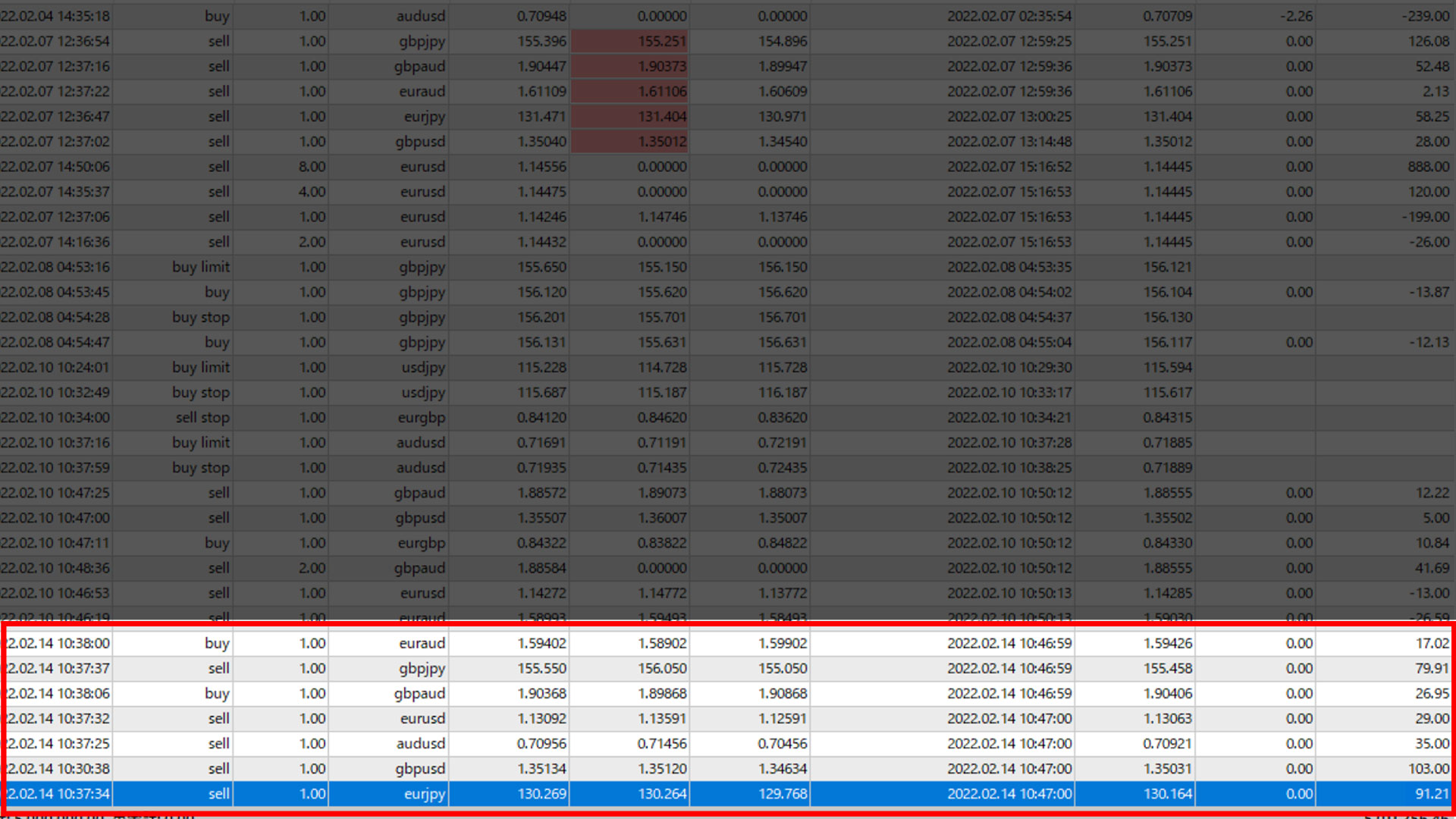
So all positions ended with a positive result.
Summary
The takeaway is that signals indicating a trend may cause related currency pairs to move together.
This is a very important concept.
The discretionary trading assist tools I’m introducing to you have three major features.
1. Development of a signal tool that points to trends.
2. Clear methods for discretionary decision-making.
3. Provision of an EA to streamline entries and exits.
Thank you very much for reading to the end.
Ajinichi YouTube Channel
Blog
↓ Get the latest updates on “Ajinichi” here!



