
Even with rising domestic prices, interest rates fell, and there was a substantial dollar decline—an intriguing paradox
First, consumer prices in December 2021 are high.

What stands out is clothing (2.7% of the consumer price basket), new cars (3.9%), and used cars (3.4%).
Month-on-month is also high. However, excluding energy and services (which account for 57.7% of the consumer price basket) and further excluding housing (which accounts for 32.4%), the price increase is only 0.14% (annualized 1.7%). It might not be an inescapable inflation.
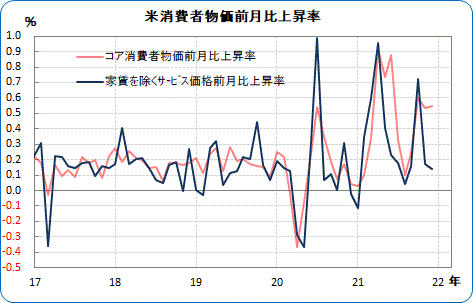
Anyway, following this December consumer price release, expectations for rate hikes rose further. The probability of a March rate hike indicated by futures is 82%, and the probability of four rate hikes in a year is 54.4%.
Raw material (nonferrous metals, etc.) prices are rising, U.S. long-term interest rates are falling (European rates are also falling), and the dollar is dropping sharply. Stock prices are largely flat.
The slight fall in rates may be due to the usual narrowing of the gap between short- and long-term rates when rates rise, but the sharp fall in the dollar is puzzling.