Market Observation from Technical Perspective
In last week's U.S. markets, the three major indices rose together, and today the Nikkei Stock Average also advanced, aided by the U.S. stock rally, the completion of the SQ on Friday improving supply-demand, and a favorable market tone after breaking through the 5-day moving average, leading to a further rise. The Nikkei 225 closed up 166 points at 29,776, and the TOPIX ended up 7 points at 2,048.
However, after the initial buying cycle, selling to take profits pushed the gains back, and the candlestick ended with a bearish close, indicating upside hesitancy.
From here, the area above has a high accumulated volume and strong selling pressure, so moving higher may be a staggered, back-and-forth process, but the short-term uptrend remains in place, and the recovery to the 30,000 level remains in sight for the Nikkei Average.
In broad terms, the market will likely maintain a mild upward trend with repeat ups and downs, and I think the Nikkei may reach 30,000 within this month.
However, technically, if price reaches 30,001 yen, filling the 9/28 daily chart gap, that could give a strong sense of achievement, followed by a pullback.
World events and the yen could influence this, but for the time being, a move toward around 30,000 may be a short-term milestone, with the subsequent trajectory depending on the situation at that time.
For now, the investment stance remains to focus on individual stocks and look for pullbacks to buy, maintaining a stock-picking approach.
Selecting stocks with unrealized upside potential — those with solid earnings but undervalued or underappreciated, or those with good earnings but underperforming — and buying on dips remains the best strategy in Japan's market for now, in my view.
Quarterly results from domestic major companies have passed their peak, and once the results are out, any remaining catalysts may be exhausted, but opportunities may arise in stocks that have fallen after earnings.
There are several stocks that declined despite decent earnings; looking ahead, these could offer ideal bargain-buy opportunities.
Movements up and down after earnings are largely responses to expectations and disappointments that may appear somewhat excessive, reflecting a somewhat speculative element.
Yet by looking a bit further ahead and carefully considering each company's fundamentals, a different future may become visible.
The market adage “where there is a path behind the crowd, there is a mountain of flowers” also applies to post-earnings investing.
There is no need to rush into buying; waiting for near-term selling pressure to exhaust and then gradually starting to buy at low prices can be a low-risk path to profits.
Consistently prudent investing, even without flashy moves, is likely to lead to long-term gains in stock investing and to compounding profits over time.
Market Observation from Shibata Kaisen
<This week, attention on whether Nikkei can break above 30,000 and caution on U.S. inflation acceleration>
November's stock gains, by rule of thumb, are strong, and when looking at the monthly up and down via Nikkei's monthly candlesticks, the win rate is 65% since 1969, second only to the 69% rate of the strongest month in the year, April.
Since 2012, November has been an up month for nine years in a row, and if this pattern holds, the closing price on Monday, November 1 would be around 29,647 yen, indicating a higher probability of finishing above this level. After the House of Representatives election on October 31, November 1 began with a good start. In the second week of November (8–12), the index dropped to 29,040 yen on the 11th (Thursday) to test the downside and then rebounded; this week the Nikkei 30,000 appears to be within reach.
This week, earnings announcements have largely peaked, and with a lack of catalysts, the market may lack direction. If U.S. equities rally again, the lagging perception could attract buying. Although earnings peaks have passed and many companies revised downward due to higher raw materials and semiconductor shortages, overall expected EPS has risen steadily through earnings, potentially creating a fundamental-driven market movement. Domestic sentiment has improved, and the Cabinet Office's October DI for current conditions rose to 55.5%, the highest in 7 years and 9 months.
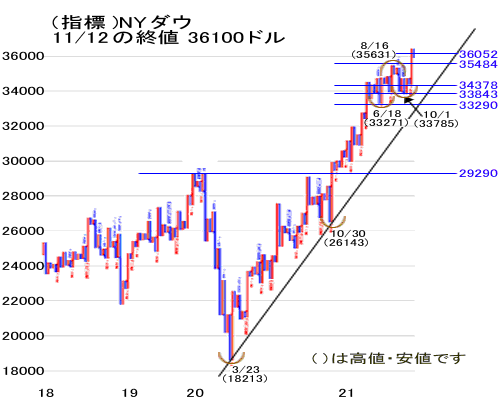
On the other hand, Japanese stocks have not moved in step with U.S. gains and appear to follow U.S. declines; caution is warranted from last week's U.S. moves. Through November 8, all three indices had been making new highs, but on November 9, the Producer Price Index rose by 6.8% year over year, the inflation concern intensified, and the three indices fell sharply for two days. The Dow fell for three days through November 11, but tech stocks attracted bargain-hunting and the Nasdaq rose, closing up 179 points at 36,100.
Indicator Analysis
Nikkei Average
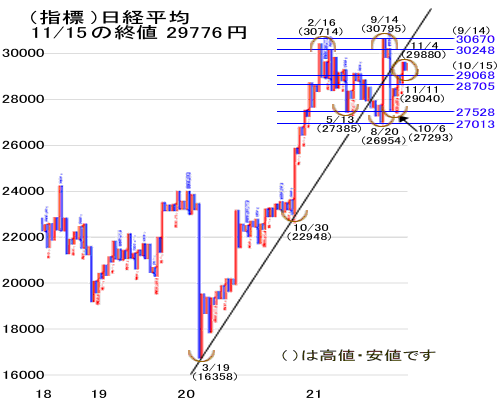
Last week's forecast was that despite U.S. stocks pushing to new highs, the yen at the low 103s would keep the Nikkei's upside muted; domestic earnings were expected to peak, and favorable earnings could lift the index above 30,000 as a sign of supporting the Kishida administration.
However, with crude oil prices high and upside limited, a range of 29,000–30,000 yen was anticipated.
This week, the range of 29,000–30,000 yen remains in focus. After testing the 29,040 yen low on the 11th, the move to 29,880 yen on the 4th suggested a break above that level would push the Nikkei into the 30,000s. The next resistance is around the 30,200 range.
Last week, earnings peaks ended; domestically, aside from Kishida administration stimulus measures, there are few catalysts. If U.S. equities push to new highs again, Japan could be bought on the back of lagging sentiment. Domestic attention will be on how much the Kishida administration's 40 trillion yen economic package is reflected in markets.
Dow Jones
Last week's forecast was that Powell’s indication of tapering would not imply imminent rate hikes since labor market improvements were needed; thus early tightening would be delayed and low rates would support markets.
Ultimately, through November 8 (Monday), the Dow and the three indices reached new highs, but on November 9 (Tuesday), the Producer Price Index rose 6.8% YoY, fueling inflation fears and causing the three indices to fall sharply for two days. The Dow declined for three days through November 11, but after over 500 dollars drop in three days, bargain-hunting buy supported tech stocks, and Nasdaq rose, closing up 179 dollars at 36,100.
This week focuses on retail earnings and October retail sales. With supply-chain disruptions causing shortages and pre-holiday demand reportedly pulling forward, positive retail sales could push stock prices higher.
Forex (USD/JPY)
<Last Week's Movement… Dollar Buyings Intensified on Inflation Fears>
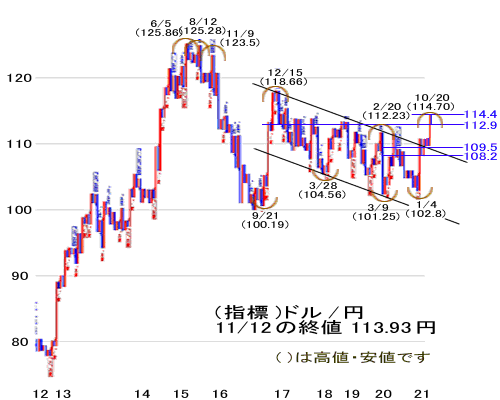
The yen weakened to 112.73 on November 9, but the October CPI release on the 10th showed a year-over-year rise of 6.2%, beating expectations and increasing expectations for early rate hikes, boosting dollar buying. However, Powell has maintained a cautious stance on early tightening, and around the 114 yen level, some dollar selling was observed, though with inflation not cooling much, the dollar held firm in the 113s. The week closed at 113.93 yen.
<This Week, Dollar Pauses… 115 Yen Area as a Resistance Band
Last week, inflationary pressures caused expectations for early rate hikes to recede, but consumer confidence remained pressured by high inflation. Confidence in sustained U.S. economic growth is weakening, so further dollar buying is unlikely. If Powell is reappointed in February next year, a dovish candidate like Brainard could be promoted, which would support dollar buying.