
This week's forecast
Market Observation from a Technical Perspective
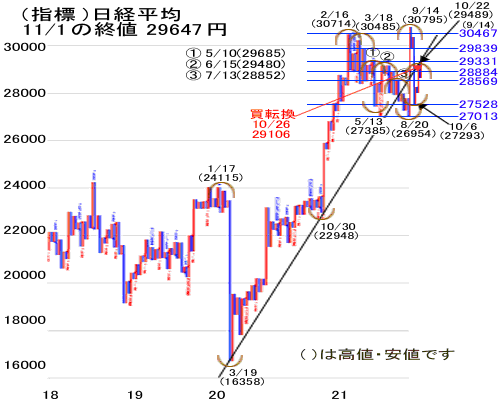
The notable lower house election results favored the ruling party by more than expected, the stock market responded positively, with the Nikkei Stock Average rising 754 to 29,647 and the Topix up 43 to 2,044.
Although a collapse of the Liberal Democratic Party’s majority was feared, the results exceeded expectations, winning 261 seats, securing an absolute majority.
The coalition partner Komeito also increased seats, while the Constitutional Democratic Party unexpectedly lost seats, and Ishin (Japan Innovation Party) expanded nearly fourfold, suggesting they absorbed some of the protest vote.
In light of this election, governance stability provides reassurance to overseas investors, expectations for economic measures rise, and there is growing prospect for the Nikkei to revisit the 30,000 level.
In broad terms, sentiment is bullish, but corporate earnings announcements are intensifying, so stock movements depend on individual companies’ results. The environment remains one where emphasis is on individual issues rather than the whole market, and until earnings are confirmed, earnings risk remains.
Today, driven by futures, the Nikkei rose sharply, breaking through the 29,489 high set on 10/20, and broadly moving toward targeting the 30,000 level.
However, is it going to head straight to 30,000, or move up and down before aiming for it? This depends on overseas trends, so there’s no need to rush into buying.
Until last weekend, many investors stayed on the sidelines awaiting election results; today, after confirming the results, selling traders covered first, followed by chasing buy orders, creating a rally.
In the Japanese market, major companies’ 7–9月 (July-September) quarterly earnings have begun in earnest, with some downgrades due to higher raw materials costs and supply chain issues, while others raised guidance; impacts vary by company.
On the flip side, it’s hard to read through the results, so there is hesitancy to buy until earnings announcements are confirmed.
For already announced earnings, although they’re easier to buy, high expectations pushed up the shares; waiting for a modest pullback before buying is ideal.
For companies that have lowered guidance but where the causes (raw material costs, supply chain issues) are clear, future conditions are expected to improve, so you can buy after a decline, but now is still too early.
Once major earnings reports are completed and outlooks are in place to some extent, movements will become much easier, but it’s better to remain in a stance of waiting for earnings announcements for a while longer.
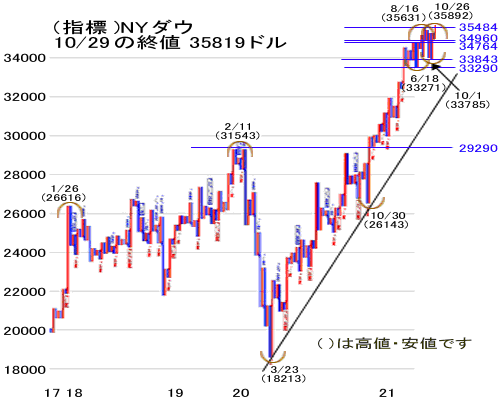
Political uncertainty from the election has eased, but there remain many uncertainties: global inflation concerns, high raw material costs, supply chain issues, concerns about Chinese real estate company defaults and China’s economic slowdown, and early timing of rate hikes in the U.S. The list of uncertain factors is still long.
Nevertheless, it is also true that many of these concerns are gradually being priced into the stock market.
Today the Nikkei rose significantly, so there is no need to force buying. However, in the appropriate moments of a minor pullback, once earnings announcements have passed and companies with strong earnings outlooks are identified, we should consider buying them gradually.
Don’t rush to buy, but focus on stocks with strong earnings and undervalued themes when prices dip, and maintain that basic stance.