
Investing has three classifications: bullish, bearish, and foolish (a Wall Street proverb)
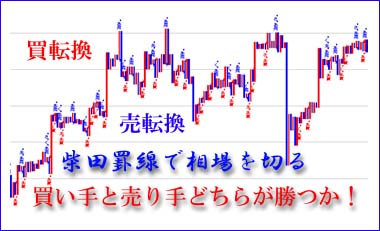
There is a Wall Street saying: "Both optimism and pessimism can profit from stocks. However, greed (foolishness) is bad." In other words, investors categorize into three: bullish, bearish, and fools. The basis for this classification comes from the old principle of "buy, sell, rest." If you are unable to buy or sell and rest all year round, you will eventually lose all the profits somewhere. For example, when you hold stocks that rise and you continue trading to realize profits, you reach a substantial gain by the peak. Yet greed leads you to add to the position with the profits, expanding the gains. However, in the final stage, popularity peaks and it becomes a large-volume trade. True professionals take profits at the big-volume phase to prepare for the next decline. By contrast, greedy people think it will rise further and do not sell, or they sell and then quickly buy back. Then that point is the peak, and afterward, in severe cases, it retreats to the original strength level, which is the stock’s true starting point for its rise, wiping out all the previous profits.
Stock movement consists of three states: an uptrend, a downtrend, and a period of consolidation. An uptrend is a bullish market premised on economic growth. You buy on dips, but if there is a significant drop, you wait for a floor and buy there. Because the U.S. Fed’s near-term rate hikes triggered anxiety last weekend, the Dow Jones dropped sharply, and this week the Nikkei average fell below 28,500 and then below 28,000, creating a buying opportunity. As a result, on Monday the 21st, it temporarily fell to 27,915 (closing at 28,010), a zone signaling a buying opportunity. However, after the close, the U.S. market rebounded sharply, and the Nikkei also nearly recouped yesterday’s decline by rising 873 points to 28,884. Such movements lifted individual stocks as well, so they did not become a buying opportunity. Nevertheless, professionals dealing in futures could have earned nearly 1,000 yen in one day. Moving forward, if the U.S. market continues to rise, Japanese stocks will follow, targeting 30,000. But even during an uptrend there is always a consolidation phase, so for individual stocks, investors should forecast the Nikkei’s upper and lower bounds of consolidation and invest by waiting for movement toward the Nikkei’s lower bound.
To invest with reduced risk, you must assess which of the three states the current market is in—uptrend, downtrend, or consolidation—and train yourself to switch between bullish and bearish as appropriate.