
A Method to Profit from the Market Anytime: Trend Edition
Sorry, but it is almost like gambling
Because in the end you end up taking on risk to make a profit
That is
whether it’s a momentary wind of speed
or the accumulation of plain risks
that’s all
In the normal market, only contrarian averaging down yields profit
You have to wait for time for trend-following, and you don’t know if you can win
And it often ends up in a forked state
Even after doing contrarian averaging down, ultimately
You are driven into “averaging-down hell”—this is the future that comes if you think about profits
Even so, to escape the idea of averaging-down hell
you have to impose averaging-down limits, but it is easily possible with automated trading
so I don’t think profits will be stable
When you do contrarian averaging down, you will inevitably be obstructed by the mechanism of this averaging-down hell
When a trend emerges, there is no way to escape this averaging-down hell
In the end, to escape this averaging-down hell
you must first make a profit using a profit pattern during averaging-down
then withdraw with the averaging-down hell pattern
but the number of people who can do that is overwhelmingly small
Also, at the point of withdrawal
the cycle toward profit becomes worse in a compensating way
In other words
before a profit pattern arrives
the averaging-down hell pattern arrives
the balance of profit and loss becomes unfavorable and counteracts, throwing off market sense
This is almost at an absolute level
Everything hinges on trend-following
Basically, a pattern that picks up trend-following in five minutes
This can cover all markets
Five-minute Williams percent range trend-following
Automate this to minimize losses
Then leave it as is and watch markets when a large trend is occurring
That’s all
Past losses disappear
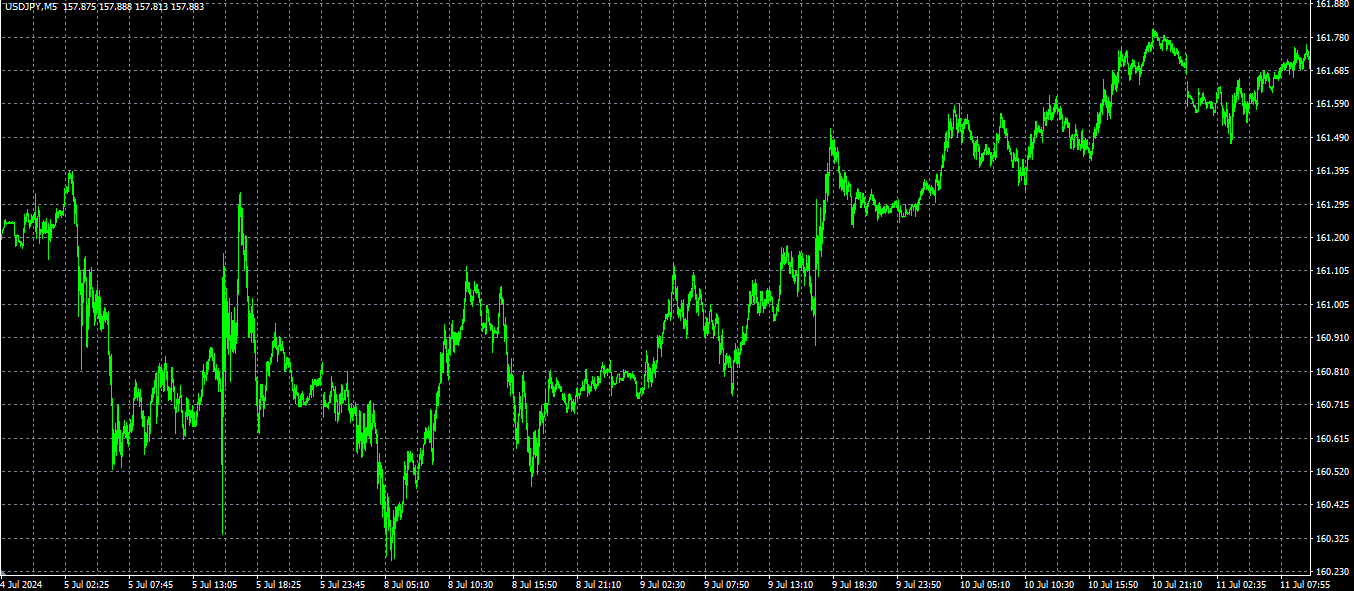
Gold has been in a range; when a trend comes, a large trend emerges
This is the entirety of trend-following, and it is the holy grail of contrary indicators
The holy grail of contrarian indicators is
One entry
If you profit from a naked averaging-down, you end up repeating a reversal
This allows you to catch a large trend in just one entry
It’s a theoretical idea, but
In reality it becomes just theory
So you end up with a mindset of leaving a trend-following EA idle
Because timing is hopelessly off,
timing aligns hopelessly well
Just do trend-following in a large trend market
I don’t think this state will ever disappear
Because
averaging-down logic
D'Alembert logic
aiming for middle returns in a trend
and various other automated trading will be created
but a passive strategy only for large trends isn’t created
Ultimately, the motive to “build profits with other auto-trading logics” grows
only the trend-following passive approach for large trends continues to yield profits
This holds in any market—the end is that trend-following wins
However, implementing this is a tough task
It’s just a matter of being a trend-following passive model
To continuously extract profit from the market
Ultimately,
low risk: high return
low risk: mid return
In the end, it’s always about timing
But with low risk: high return
only then do profits begin to appear
so you have to adopt that strategy
In short-term battles
Contrarian averaging-down yields low risk: high return
but in a trending market it becomes “averaging-down hell”
and the P&L grows in a Martingale-like fashion, which is forbidden
By aiming only for low risk: middle returns
you can’t truly target the real trend market
and your performance becomes unstable
If you do contrarian averaging-down
and the trend truly comes, you will leave it idle for a long time
If you can really do that, fine
If you cannot, discretion is not something you should do
Entry timing is
usually unfavorable
the market direction being wrong is normal
there is only one proper timing for entry
and a single setup is enough—the market direction is usually wrong
then you end up entering after waiting twelve hours
or simply leaving trend-following idle
Both contrarian averaging-down and trend-following idle
are based on market sense, not entry timing
Yet both lose when the market tilts
so the risk is very high; it only looks reduced
Ultimately trend-following idle is deemed acceptable just like contrarian approaches
Behind contrarian averaging-down
there exist an overt and covert desire to make profits and recover losses
and to reconcile those sides
So in the end you cannot escape the mechanism of averaging-down hell
Averaging-down is discretionary, but
unless you take an infinite averaging-down form, it won’t yield profitability
Profitability of averaging-down
is based on 1:1 or 1:2 continuity
In a reversion market, profits appear,
but in a continuing market, losses cannot be caught up
As profits arise, they increase
once a continuing trend appears, everything spirals out of control
I don’t think you can count on recovering losses at every turning point
If you lose in both directions, your market sense collapses
In the end, with contrarian strategy you stay contrarian
with trend-following you stay trend-following
You have no choice but to believe in the same direction
It’s simply about selling when prices rise and buying when they fall
Commit fully to trend-following
Keep entering in trend-following to chase the trend or enter and aim for profitability
Even if you increase the number of entries
you will not necessarily capture higher-profit pips
Whether trend-following or contrarian, there is no advantage in two consecutive moves
Any perceived advantage is only temporary
Spamming trend-following entries to chase the trend
means you only profit if the attempt succeeds
↑
you’re simply employing the opposite of contrarian averaging-down
↑
If you view it as a contrarian indicator, you build a trend-following pyramid
(Shorting with a 20-pip stop and a 10-pip averaging-down point—do the opposite)
Contrarian
Stop loss 20 pips
Averaging-down point 10 pips
Take profit location = when profits exceed 20 pips beyond the performance
Frame trend-following pyramid as a contrarian averaging-down stop-loss in reverse
Market sense at this moment is “not needed”
And that becomes the basis for “the plan to increase”
More than trend-following, it ends up becoming a contrarian indicator, which is the logic toward trend-following
Evaluate with a total of +5
With the current results, take profits at +5 return
To always increase,
get used to contrarian indicator trading
That’s all
Trend-following pyramid and trend-following setup, that’s all
Think in a 1:1 ratio
Then design contrarian averaging-down setups
Assume you are doing 10 averaging-down moves
In the end, the 1:1 of these 10 averaging-down moves will lose, right?
Then what happens to the trend-following pyramid?