
[Free Newsletter Now Available] Thorough value investing and corporate-value analysis that lead to "Investing That Won't Lose" — Learn from Mr. Yuuki Yanoshita, Value Investing Fund Manager
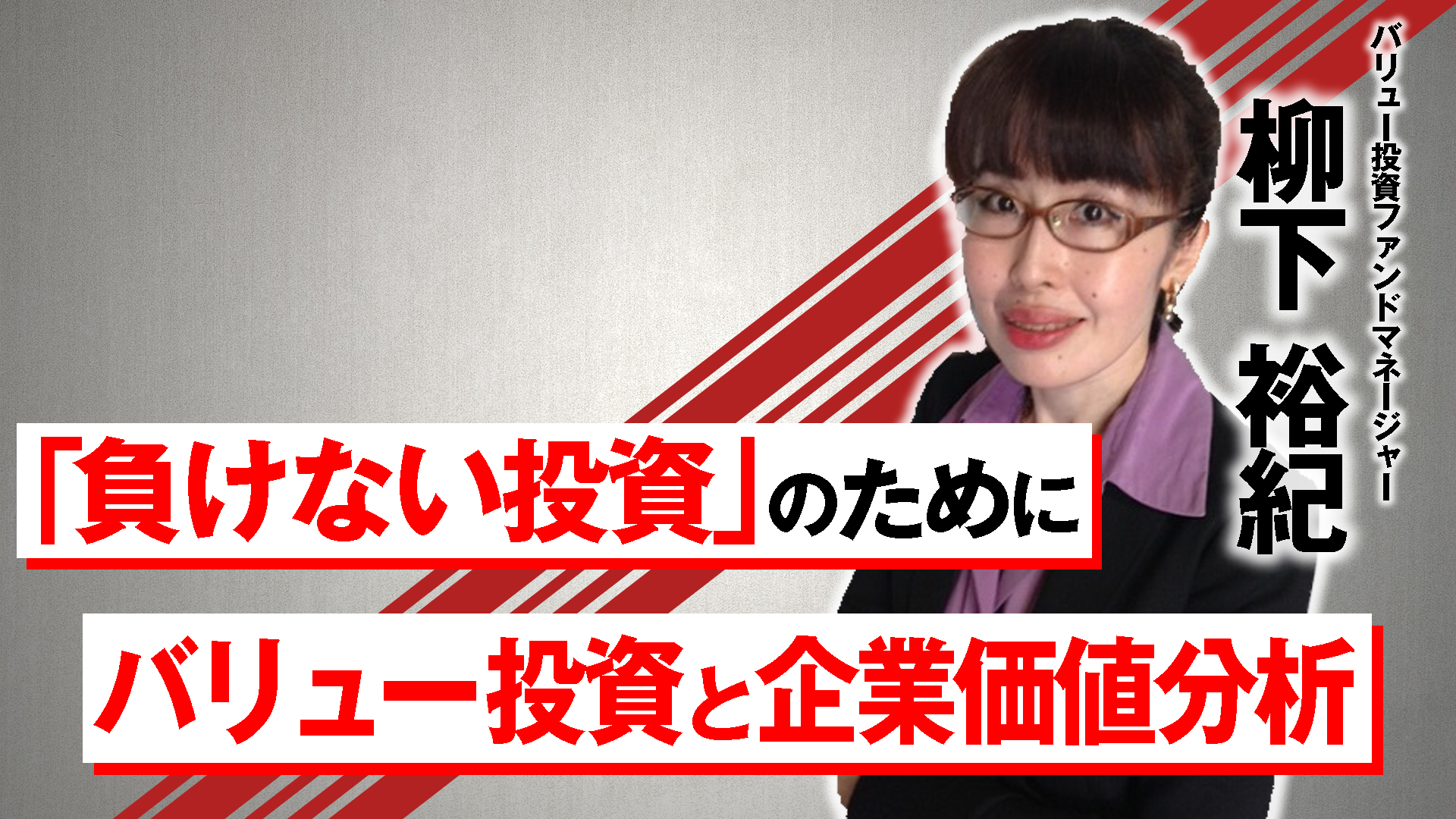
Mr. Warren Buffett is the emblematic value investor (an investment approach that buys stocks believed to be undervalued and holds them for a relatively long period to aim for capital gains and dividends), and there are also well-known value investors in Japan.
Aurea Lotus Co., Ltd. (https://www.aurealotus.com) president Yuuki Yanashita, studied at a U.S. university and in 1997 entered the world of financial trading from Citicorp Securities, gained experience at BNP Paribas Securities, and served as a fund manager for an IT-focused U.S. stock fund at Explorer Fund on the West Coast of the United States as it was just starting to emerge.
He later moved to Hong Kong in 2002 and worked as a fund manager for Asia equities, including Japanese stocks, at Value Partners led by a CIO who is known as the Warren Buffett of Asia; he also touched on corporate restructuring at Goldman Sachs Realty in Japan.
Since his days in Hong Kong, he has focused on uncovering value stocks, and his insights are trusted by people around the financial industry.
Currently,as an external outsourced fund manager for a hedge fund in Hong Kong, he manages Japanese and U.S. stock funds, while also running value investing study groups.
Initially starting with a small circle around Mr. Yanashita among acquaintances, the group gradually expanded, and now the study sessions held about twice a month are very popular, making him somewhat of an evangelist for value stock analysis.
GogoJungle Online SalonIn “Unraveling Companies and Markets by Value,” you systematically learn a methodology for identifying companies that can create and continue to increase value and invest with real money in true value, while also conducting actual analyses of individual stocks.
Today, we would like you to view content released on November 7.
ーーーーーーーーーーーーーーーーーーーーーーーーーーーーーーーーーーーーーーーーーーー
Release date: 2020/11/30 12:25
November 2020 No.3 'The Importance of Understanding the Situation of Business Areas from Segment Information: A Case Study of MonotaRO'
We are very sorry for the delay.
This is the last newsletter lecture of November.
A little while ago, on Twitter
"When analyzing corporate value, it is fundamental and very important to thoroughly confirm the business contents of the company or group and the roles of major related companies."
So, I’ll start by explaining that viewpoint from the basics.
The group’s business activities and the businesses of its major related companies, as you know,
can be understood by looking at the "Status of Related Companies" in the securities report.
Basically, consolidated financial statements are prepared by treating the entire corporate group, including subsidiaries, as if it were a single company.
For groups that operate multiple businesses in various regions domestically and internationally, results from each region are blended together, so the consolidated financial statements alone do not reveal detailed segment- or region-specific information.
There is "segment information" by business area or by region, which describes the performance by business segment and the status of global expansion. The way segments are divided varies by company; many divide by business area, but there are also cases where segmentation is by region, or domestic by business area with overseas businesses grouped, etc.
In segment information, for each segment that the company has defined, at least figures for sales, profit, and assets are disclosed; typically, the magnitude of those figures, their share of the total, their scale and contribution to performance, and whether they are core or sub-core can be understood.
Also, sales are divided into two: "External Sales" (sales to customers) and "Internal Sales to segments" or "Transfers" (sales to internal segments).
Among these, when "Internal Sales to segments" is large, it means there are many inter-segment transactions, such as parts produced by one segment being used as materials by another. This is usually interpreted as a complementary position to the core business, i.e., a high degree of in-house production.
From the size of assets, you can gauge the scale of each segment’s business in terms of working capital and facilities such as stores and factories. However, assets include goodwill, so if a business has grown via acquisitions, those assets may be large as a result. From here, you can also calculate asset turnover by segment (sales ÷ assets). Based on this, you can assess the quality of each segment’s business, the underlying trends of the base business, and whether it is a high value-added operation.
As mentioned above, if overseas segments are included, you can see overseas sales, profits, and assets, so you can gauge overseas business size from these figures and their share of the total company.
If overseas sales account for 70% or more, it is considered a global company; around 50% indicates substantial global expansion; around 20-30% indicates that the foundations for global expansion have been established.
Also, if overseas segments have large "Internal Sales to segments" or Transfers, it means that products manufactured overseas are imported for domestic use, and overseas serves as a manufacturing base. Furthermore, large overseas assets generally indicate localization in manufacturing and sales. However, as assets include goodwill, acquisitions that expanded overseas could enlarge them. Note that for manufacturing companies, if overseas margins are low, it may be because manufacturing or sales are done overseas only.
As I always say, we typically value a company using DCF, but we also value it using business multiples based on such data. You can see the value of each business, and above all, by clarifying the potential for future value creation and risk recognition in your own mind, you can determine what to focus on and what to monitor.
Last Saturday we held a graduate alumni salon that reached its 100th session,
and there were questions about MonotaRO’s parent company, Grainger.
In the case of MonotaRO, the company is a subsidiary within the Grainger group and holds a very important position, which we discussed in detail at the salon.
Originally, Grainger was a wholesaler focused on providing a centralized purchasing system for large enterprises, with a long-standing customer base and a stable business, and it lagged in online presence. Amid such circumstances, with the rise of Amazon and others, its performance and stock price declined significantly, but in 2010 MonotaRO proposed to Grainger to develop the small- and medium-sized enterprise market, created an online subsidiary, and dispatched personnel from MonotaRO to provide the know-how; this subsidiary Zoro grew rapidly, became profitable in 2013, and has continued to rise since then.
The Zoro business expanded not only in the U.S. but also into Europe with Zoro UK, positioning this as a growth-strategy business; the traditional wholesale business became the High-Touch Solutions model, while the digital solutions business led by Zoro and MonotaRO formed the Endless Assortment model, with the two businesses pursuing growth as a dual engine for stability and expansion. In 2019, MonotaRO's President Suzuki was concurrently appointed Managing Director of Grainger’s Endless Assortment business in the U.S., Europe, and Japan. This underscores how significant MonotaRO’s presence is within the Grainger group.
Grainger’s ROIC was around 15% up to 2010, rose to around 17–18% from 2011 to 2017, moved into the 20% range from 2018 onward, and recently rose to 23%.
There were also news reports that clearly show how MonotaRO changed the very corporate character of the Grainger group.
「The world’s largest indirect materials distributor 'W.W. Grainger' China subsidiary completes an MBO and launches its own sourcing platform」
Well then, that’s about it for today.
ーーーーーーーーーーーーーーーーーーーーーーーーーーーーーーーーーーーーーーーーーーー
As with this article detailing the behind-the-scenes relationships of MonotaRO’s overseas expansion, regularly encountering Mr. Yanashita’s analytical methods and the information he provides, which carefully examines the surrounding environment and growth potential of companies, will undoubtedly significantly improve individual investors’ investment know-how.
written by Hayakawa