
I read the popular e-book 'FX Principles' and tried trading!

It's been quite a while since the last article, but…
This time“FX Principles and Rules”I read it, andtrade using that know-howI would like to share the results of trades made using that know-how!
If you haven't read our previous articles yet, please check the following!
▶No.1 in e-book sales rankings! Learn the basics with ‘FX Principles and Rules’
▶Read all of FX Principles and Rules (up to the Wave chapter)!
In this training material,“Basic trading method using technical analysis”((Trend section)) and“Trading method using Elliott Wave”(Wave section) are included, and we will introduce the trading results using each method!
This time I traded on a demo chart of OANDA MT4.
■Trading in the “Trend” Section
MainlyDow Theory based tradingis a method that looks for currency pairs with strong trends and higher profit potential, then trades in line with the trend.
Note) Dow Theory is a theory proposed by Charles Dow, a financial journalist active in the late 19th century in the United States.
It is regarded as the foundation of all technical analysis and consists of six basic principles.
<Main trading steps>※Rough outline
1. Find a currency pair with a strong trend
2. Target the trend after a correction
3. Close the position at trend end
<Goal>
Capture the trend on a 30-minute chart
<Indicators used>
None
Step 1: Find a currency pair with a trend
GBPJPYThe currency pair is in a downtrend, so I plan to trade here!
Step 2: Target the trend after the correction
Draw a trendline...
Enter on the break...!! I wonder how it will turn out.
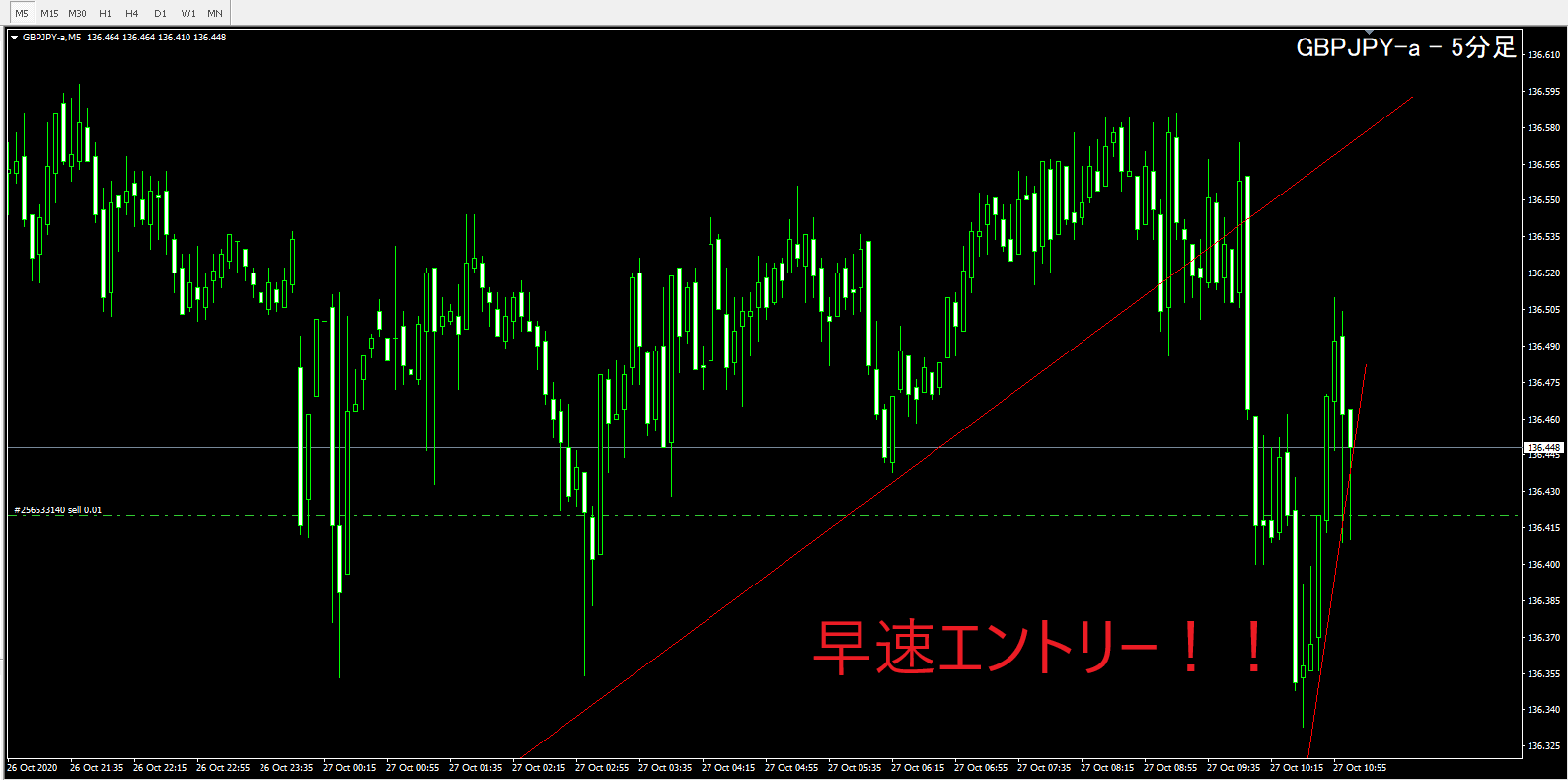
Step 3: Close at trend end
Since the price surpassed the high I checked, I judged the trend to be over and closed the position (timing was a bit late, though...).
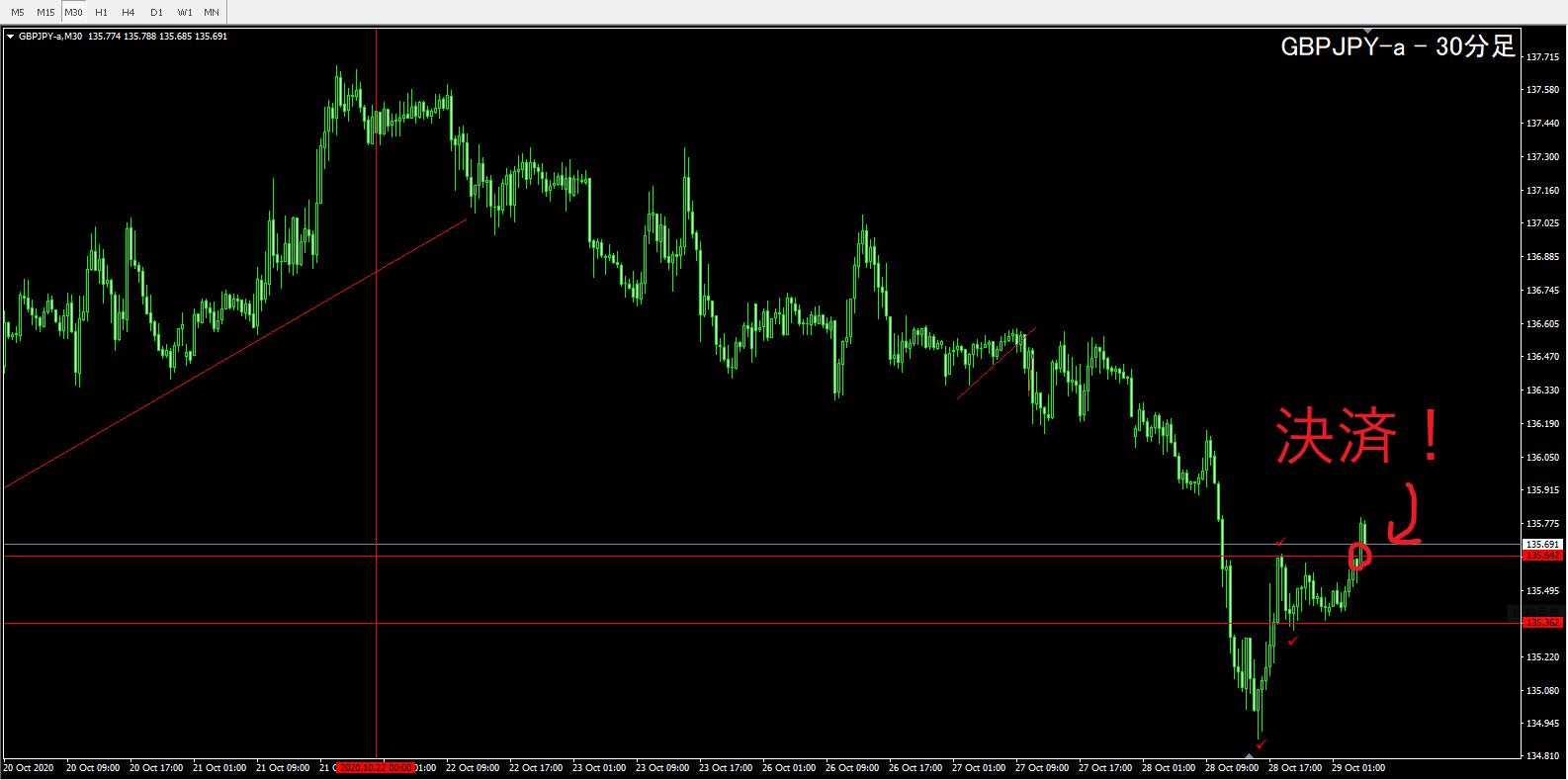
<Trading Result>
Now, the result is...66 pipsearned!!
It would have been better to close a bit earlier, but let’s call it good!
I tend to rely on indicators and make judgments accordingly, so this time I traded using only lines and without indicators.
Next, trading with Elliott Wave will be more challenging, so it’s nerve-wracking.
There’s no point in complaining, so I’ll just go ahead and try it!!
■Trading in the “Wave” Section
Elliott Wave is a trading method based on Elliott Wave.
Note)Elliott Wave is a market analysis method developed by the American stock analyst Ralph Nelson Elliott, and today many investors around the world, including Europe and the Americas, use it.
This theory is the idea that the market forms one cycle with five upward waves and three downward waves.
<Main steps>※Also roughly...
1. Confirm that a strong trend is developing
2. Count the waves
3. Trade on impulsive waves
4. Close the trade at the end of the impulsive wave
<Goal>
100 pips
<Indicators used>
・DAI_ON_MA5(Elliott): Five moving averages
・DAI_ON_Tenkan-Sign :Displays trend reversal signals
▶Bothare included with“FX Principles and Rules,”
and they can be toggled on/off to keep the chart clean!
Step 1: Confirm trend development
This timeAUDNZDwas traded!
The trend was forming, so I chose this pair, but I think a pair you’re more familiar with would be easier to trade.
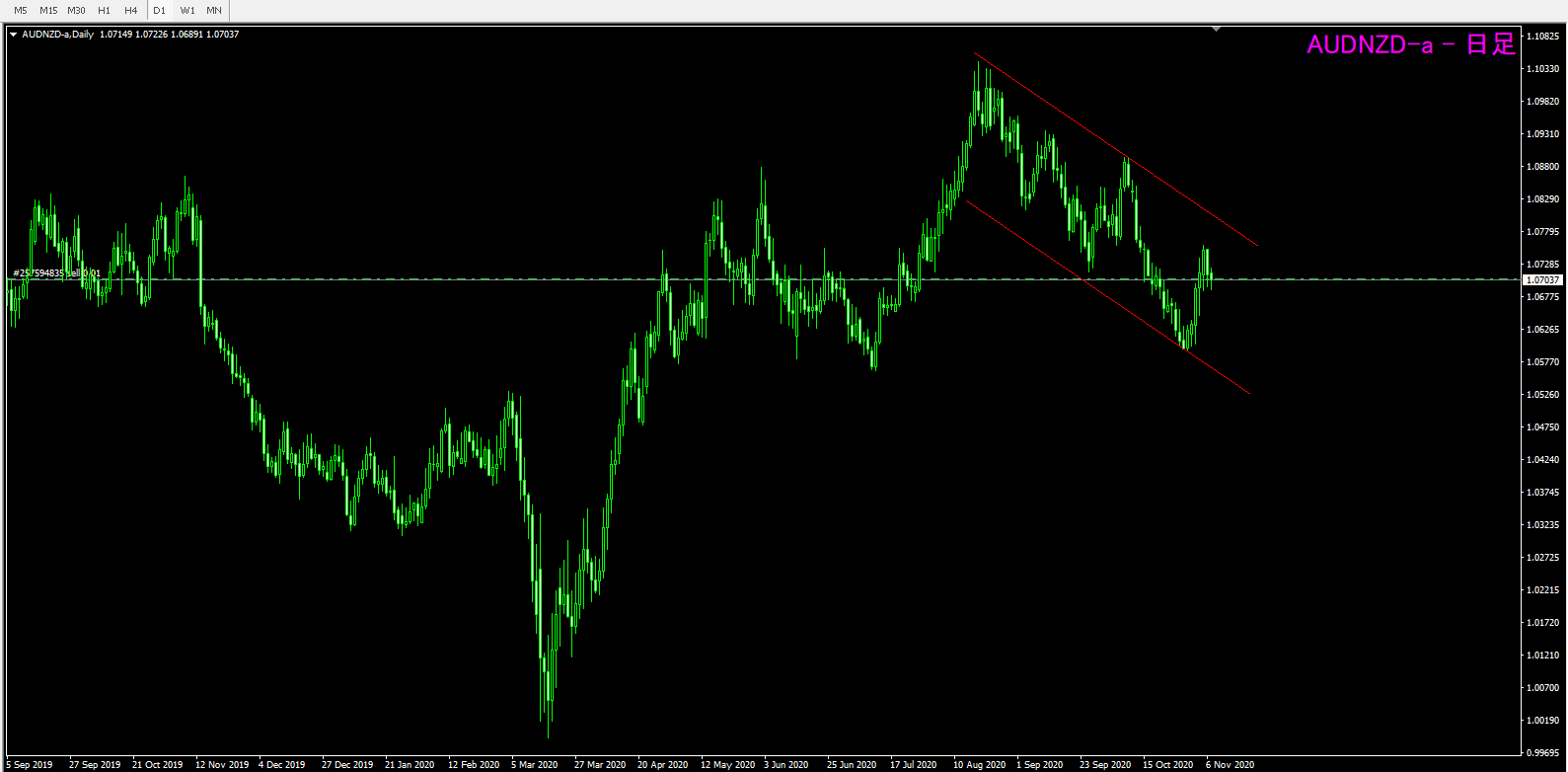
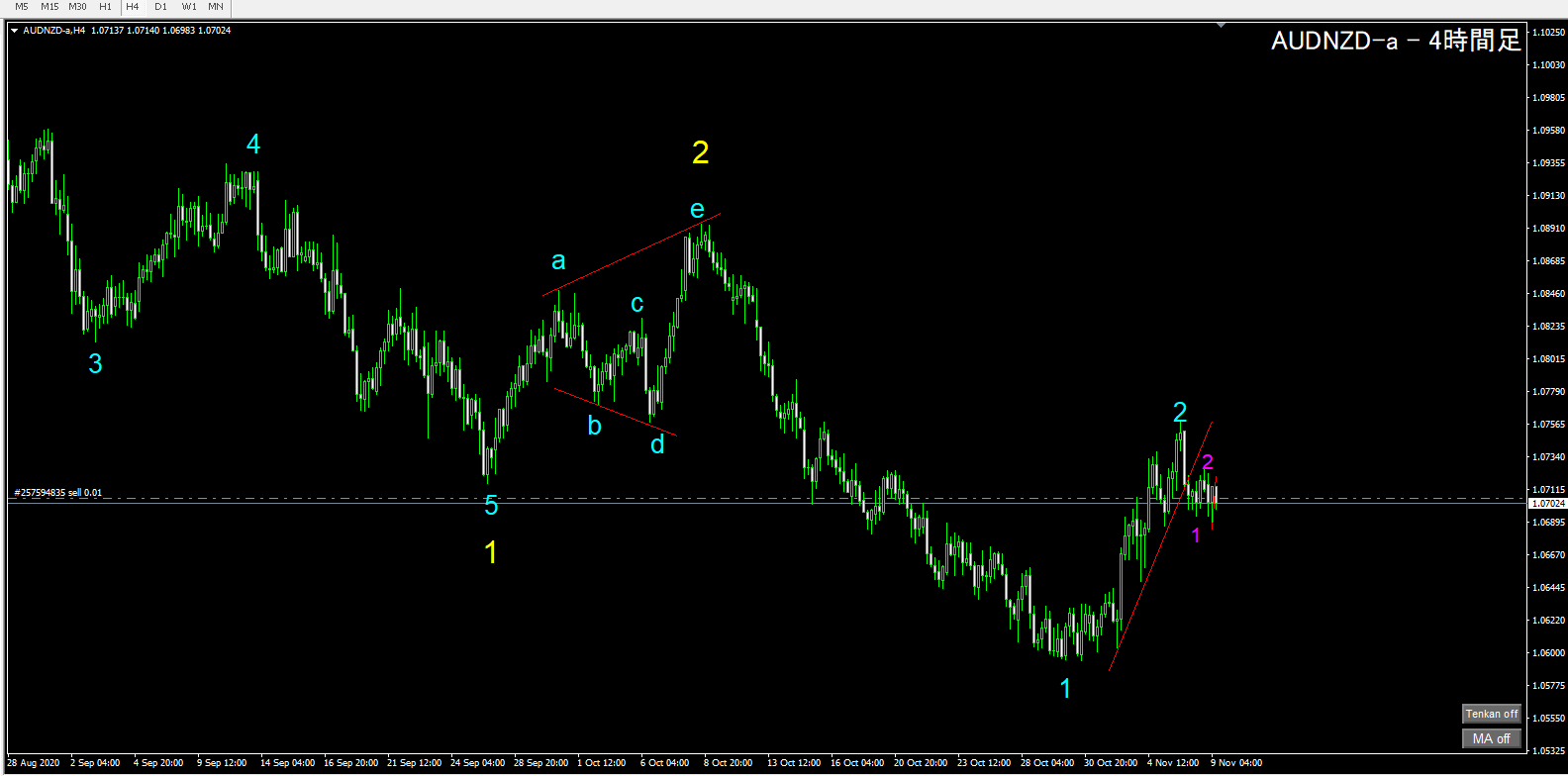
Step 2: Wave counting
Count while using indicators.
I might be mistaken, but I tried it with a “go for it” mindset.
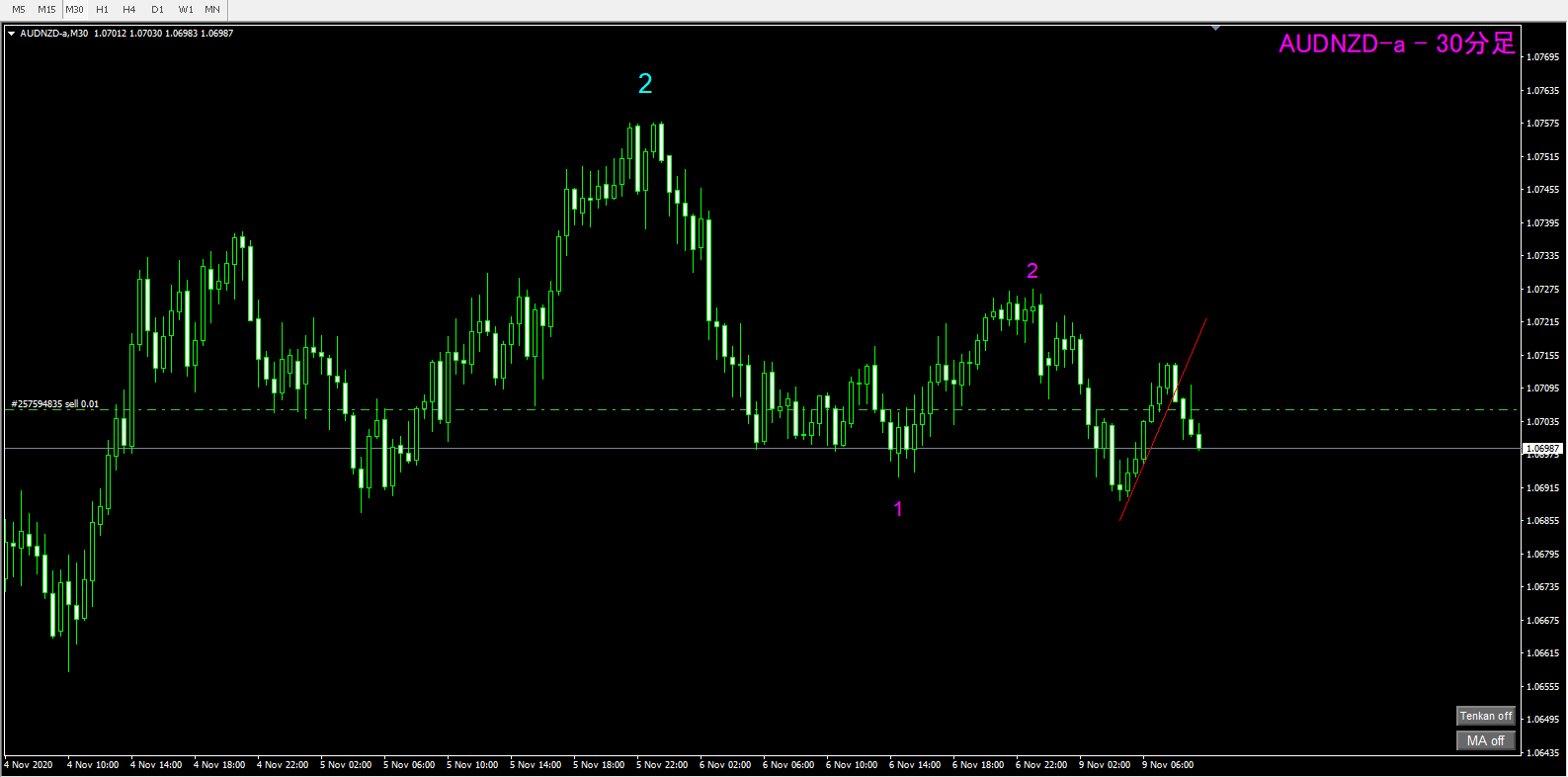
Step 3: Trade on impulsive waves
Whether it’s a 5-wave impulse or a 3-wave extension is uncertain, but since the retracement broke, I entered for now!
(The timing of the screenshot was a little late, but please don’t mind...)
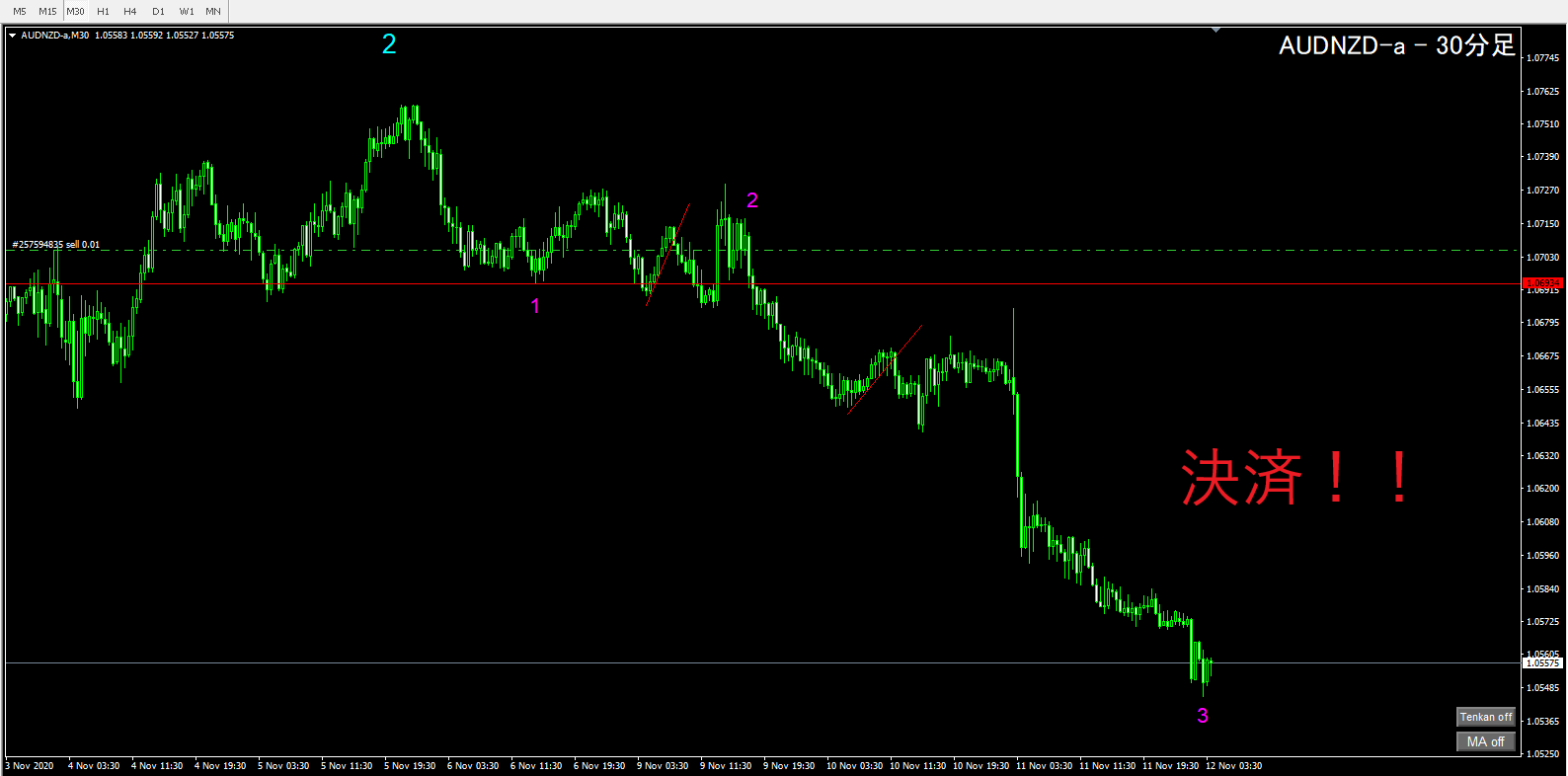
Step 4: Close at the end of the impulsive wave
In the material it says to close at the end of the impulsive wave, but this time I closed when a retracement began on the 30-minute chart.
<Trading Results>
The result was...152 pips!! Target achieved!!
Unlike the Trend Section, counting without indicators was difficult, so I used the recommended indicators from the developer, DAI.
It was a trade after practicing repeatedly in the Practice section, but real-time counting is challenging...
I still have a lot to learn, so I will continue practicing trading.
■Summary

I tried trading using the know-how from both the Trend Section and the Wave Section, and I managed to win!
I studied only with FX Principles and Rules, and even as a complete beginner, I achieved this kind of result!!
I've been at it for months, and the material is truly extensive; there are motivation-boosting courses and sessions to help you avoid quitting, so I could keep going to the end without giving up.
Trading with half-baked learning won’t bring much success.
You need to understand each theory and method and practice them.
Through FX Principles and Rules, I realized that the quickest way to become proficient in FX is to study the basics well, practice, and gain experience.I realized this.
At first things don’t go well often, but with enough practice, a day will surely come when you win.
Not only trading methods, but also money management tips and how to use indicators, there are many techniques you can use right away, so,
For those starting FX trading or who are struggling with trading,this is a material I wholeheartedly recommend regardless of level.
Break free from the habit of endlessly chasing numerous courses and indicators,“real教材”— Do you want to encounter one?
▼Product page here▼