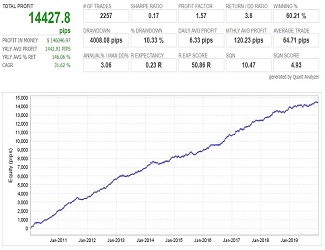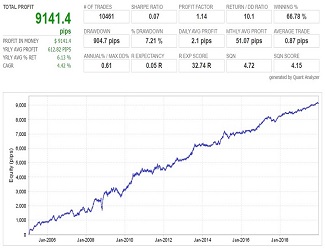

FANTASISTA USDJPY Version Verification

Backtest Verification
Test Period: 2008.01.01 – 2020.07.01

Profit and Loss Breakdown

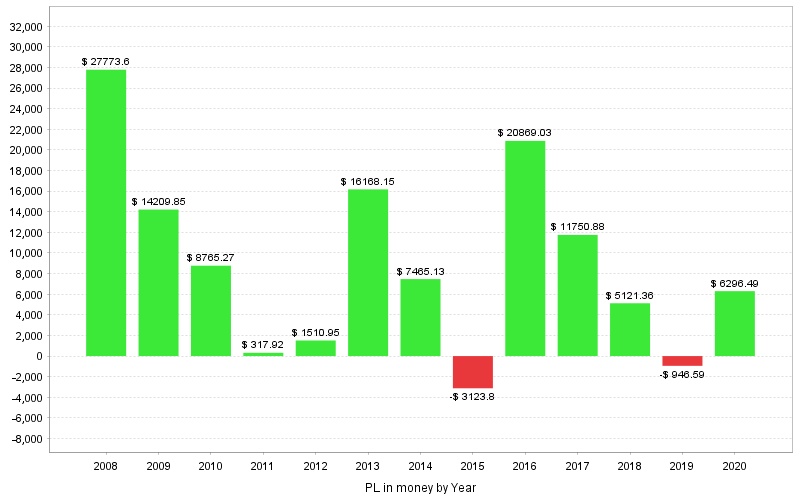
Annual Profit and Loss Graph
Win Rate
Trade Count
The number of trades in one year is about294times.
The forex market is open about 260 days a year,
so, calculated from there,
the number of trades per day is
about1.13
times.
Profit and Loss Ratio (Risk-Reward Ratio)
Average Profit: +12.78 Pips
Average Loss: -26.23 Pips

Maximum Profit: +129 Pips
Maximum Loss: -70 Pips
What is the Risk-Reward Ratio
The risk-reward ratio is the ratio of average profit to average loss.
Example
If average profit is 10 Pips and average loss is 10 Pips, the ratio is 1
If average profit is 20 Pips and average loss is 10 Pips, then 2
If average profit is 10 Pips and average loss is 20 Pips, then 0.5
If the number is greater than 1, it is favorable (more profit than loss),
if the number is less than 1, it is unfavorable (less profit than loss) for an EA.
PF (Profit Factor)
What is PF (Profit Factor)
Profit Factor (PF) is a measure of how many times total profit exceeds total loss.
It is also called the expectancy.
The PF formula is
Total Profit ÷ Total Loss.
By PF you can see how many times profit exceeds loss.
For example, PF 2.0 means profits are twice as large as losses.
Entry Time and Time-Based Profit/Loss: Winter Time GMT+2, Summer Time GMT+3
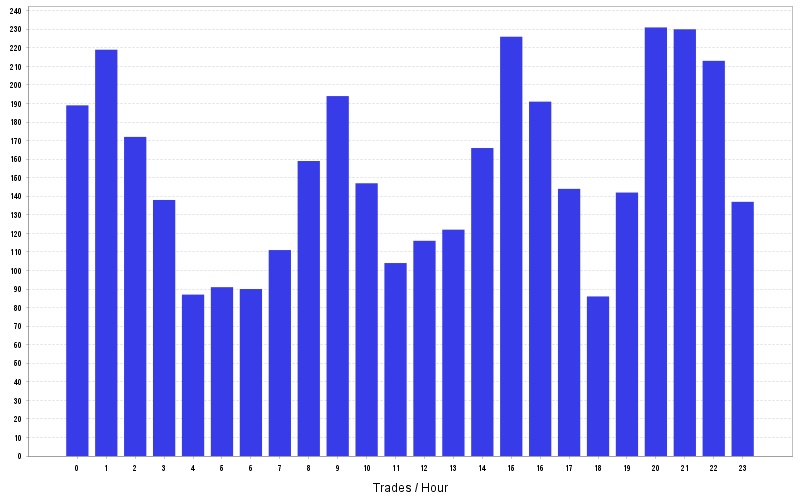
Entry Count
Time-Based Profit/Loss Total
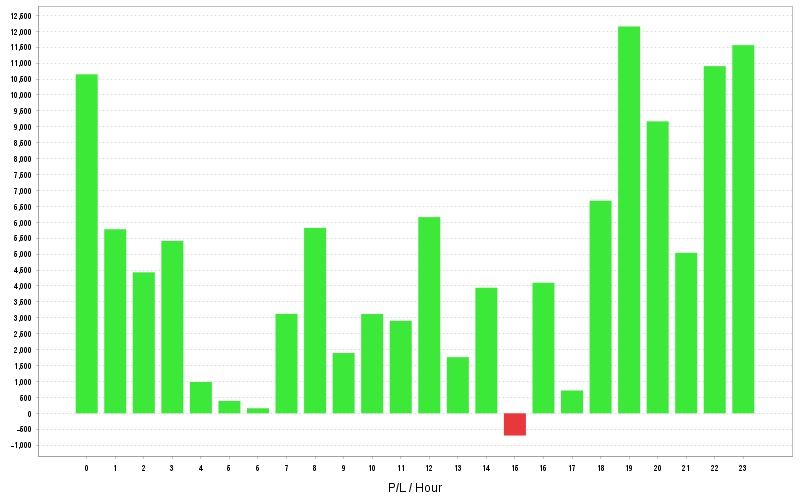
Time-Based Profit/Loss Individual
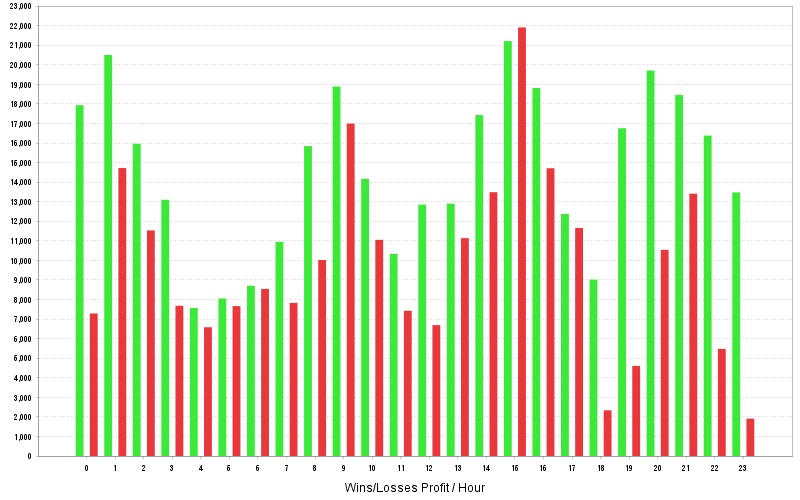
Entry time is 24 hours.
About GMT
MT4's time zone typically uses winter time GMT+2 and summer time GMT+3.
During winter time (November–March), it is GMT+2, and the time difference with Japan is -7 hours
During summer time (March–November), it is GMT+3, and the time difference with Japan is -6 hours
How to convert to Japan Time
To convert this GMT to Japan Time,
add 7 hours for winter time,
add 6 hours for summer time.
Winter time: 8:00 MT4 = add 7 hours to become 15:00 Japan time
Summer time: 13:00 MT4 = add 6 hours to become 19:00 Japan time
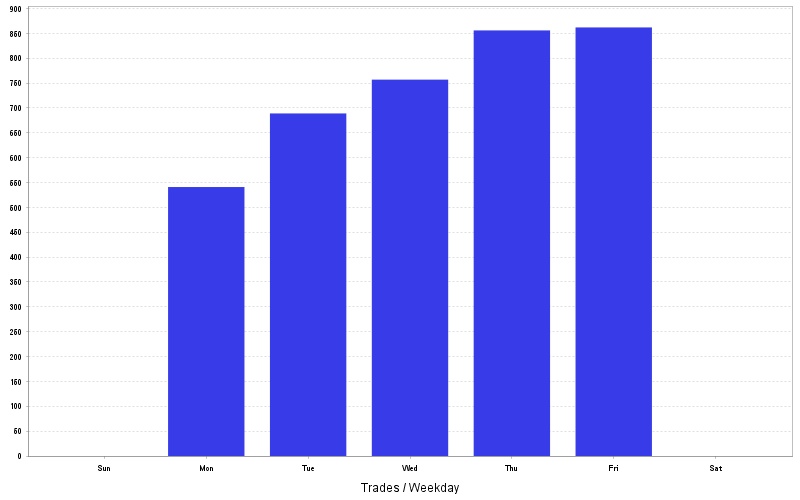
Entry Day of Week and Profit/Loss by Day
Entry Count
Profit/Loss by Day Total
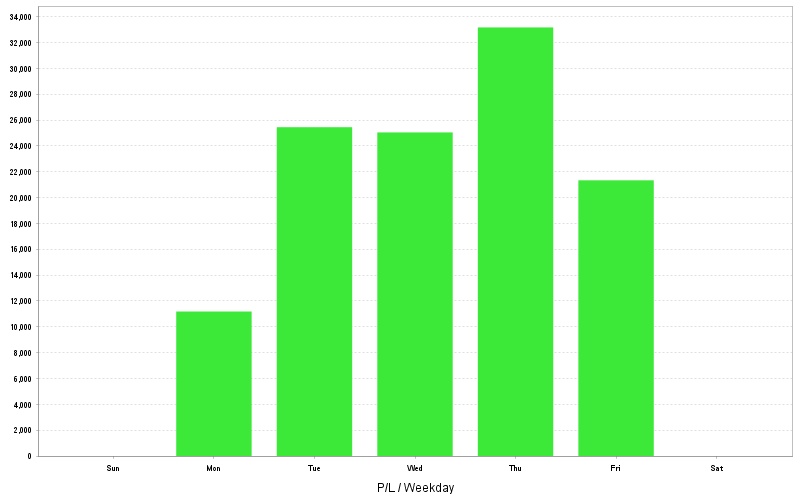
Entry days are Monday through Friday.
Position Holding Time and Profit/Loss Characteristics
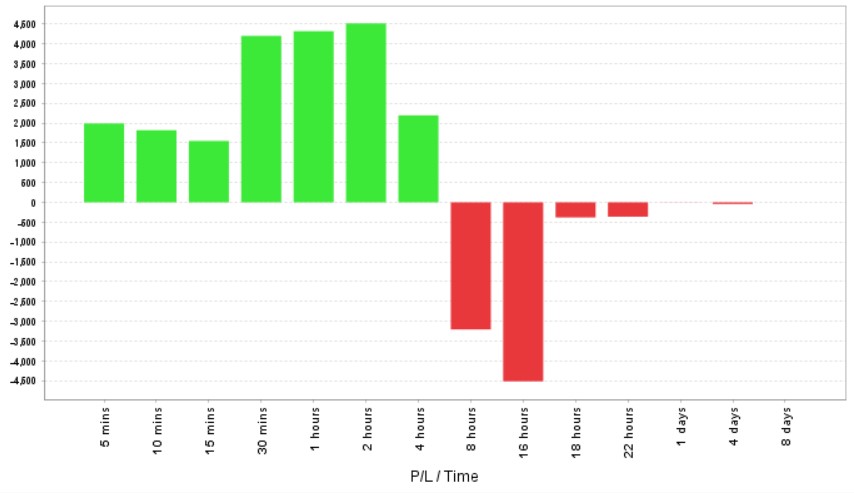
Winning vs. Losing Trades Features
A negative Z-Score indicates a higher likelihood of consecutive wins or losses.
What is Z-Score
Z-Score represents the persistence of trading behavior.
A negative Z-Score indicates a higher likelihood that wins or losses occur in streaks.
Stagnation in Days for the Asset Curve
The longest period to update profits over 13 years was 647 days.
What is Stagnation in Days
Stagnation in Days refers to the time needed for a new profit update on the equity curve.
When drawdowns or sideways performance occur, this period lengthens.
Evaluation Criteria for Stagnation in Days
0–150 days: short
151–300 days: somewhat short
301–450 days: normal
451–600 days: somewhat long
601 days or more: quite long
EA Evaluation: SQN SCORE
What is SQN SCORE
SQN SCORE is an evaluation value for EA calculated as “Expectancy / Standard Deviation × √100.”
SQN SCORE Evaluation Scale
1.6 or below: average
2.0: average
2.5: good
3.0: excellent
5.1: superb
7.0: holy grail