
Expected annual interest rate of 38.88%, calm and stable Nekoboo FX
In the five years since launch, profits have gradually accumulated in the marginnekoboo FX, attracting users' attention.

I would like to run 17 years of TDS backtest results through Quant Analyzer.
The backtest source data are the Nekoboo FX 7333 Gogojungle TDS backtest, used for the backtest.
Spread: Variable
Lot: 0.1 lot
is being conducted.
Note: Although the units are in dollars, the backtest data use Japanese yen as the base from OANDA JAPAN, so the units are in yen.
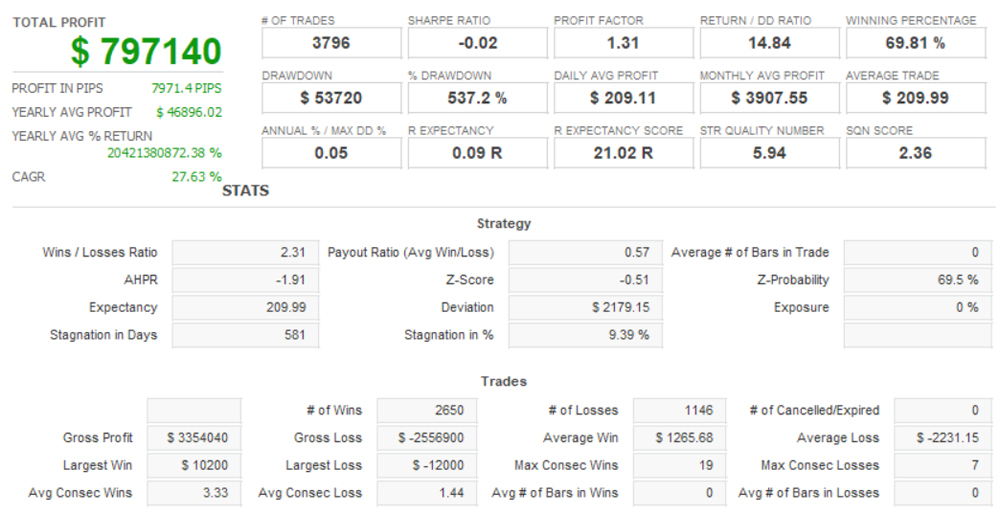
Annual average profit: ¥46,896
Monthly average profit: ¥3,907
Annual return: 38.88%
Win rate: 69.81%
Average annual number of trades: 223
Average profit per trade: ¥1,265
Average loss per trade: ▲¥2,231
Maximum drawdown: ¥58,180 from the backtest
Profit factor: 1.31
Risk-reward ratio: 13.70
has become.
The developer writes on the EA page that it is an EA for beginners that can be operated with a low margin, and given the high risk-reward ratio of 13.70, I think this is precisely true.
Monthly performance
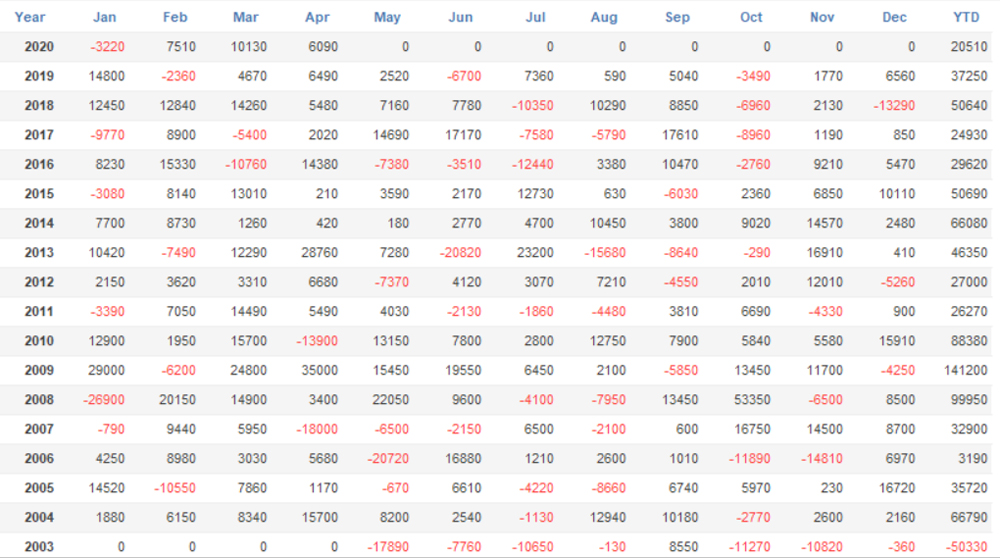
Overall, there has been no losing year in the annual totals except for 2003.
The monthly wins and losses follow the 69.81% win rate, and although it trades quite frequently at 223 times per year, it's an EA that rarely feels like it's in drawdown.
【What are the recommended margin and returns?】
The calculation formula for the recommended margin used in GogoJungel's system-trade performance measurement (assuming 25x leverage) is
10,000 units × exchange rate of the traded currency to JPY ÷ 25 × average lot × 0.1 × maximum number of positions + maximum loss (using the backtest's maximum drawdown)×2
Therefore,
¥1,069,600(today's rate) ÷25÷0.1×1 position + ¥58,180(maximum drawdown)×2
The recommended margin is ¥120,638.
In contrast, the annual average profit is ¥46,896, so the expected annual return is 38.88%.
It can be described as a conservative EA, but it is also stable; by adjusting the lot size relative to the margin, it can be operated more aggressively.
written by Hayakawa