

Enshu Truck, which became Amazon's delivery provider (9057). Can it become the “second luck” of the fish in a pond—like Maruwa Transport (9090) that achieved a tenfold stock rise?
On October 9th,Enshu Truck (9057) hit an all-time high since listing and is gaining momentum.
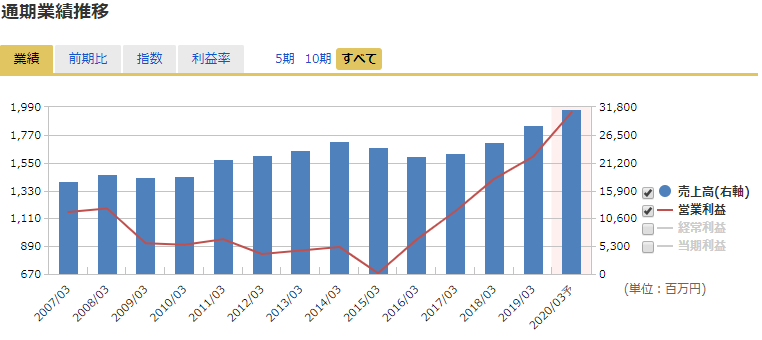
Earnings are strong,with operating profit reaching a record high last term, and this term is expected to grow by over 20%.
What is Amazon's Delivery Provider?
The background to the solid performance is thatthey became Amazon's delivery provider.
A delivery provider is a regional transport company, hired by Amazon to handle increasing parcels beyond the major carriers. Enshu Truck covers western Kanagawa Prefecture, Shizuoka Prefecture, and Aichi Prefecture.
They began operations as a delivery provider in July 2018,and by fiscal year ending March 2019, accounted for 14% of sales, benefiting from the earnings growth.
Enshu Truck is a fairly ordinary logistics company founded in袋井 City, Shizuoka Prefecture. It wasn't a prominent company, but becoming Amazon's delivery provider has suddenly drawn attention in the stock market.
Maruwa Transport Corporation Became a Delivery Provider and Achieved Tenbagger
Meeting Amazon's demand, the stock price ofMaruwa Transport Corporation (9090) surged, andreached a tenbagger (10x stock).
Maruwa Transport Corporation was designated an Amazon delivery provider in the Tokyo metropolitan area in 2017,and its stock price rose significantly around that time.
Enshu Truck is expected to be the "second swine" to Maruwa Transport Corporation.
"Momotaro Quick Ace" is a groundbreaking business model using independent contractors
However, I believethere is a decisive difference between Enshu Truck and Maruwa Transport Corporation.
One is the difference in how Amazon deliveries are operated.
Originally, both companies were corporate logistics companies anddo not possess the know-how of "home delivery" like Yamato Transport or Sagawa. This is a major reason why the delivery provider reputation is extremely poor.
Enshu Truck uses its own drivers and has started into the delivery business as well. At present, this is likely viewed as a side business.
On the other hand, Maruwa Transport Corporation has adopted the "Momotaro Quick Ace" system. This means thatdelivery is performed not by its own drivers, but by contracted independent contractors.
This is revolutionary from a cost-structure perspective. If they used their own drivers, they would eventually be unable to meet the growing Amazon demand. If that happens, they would need to hire new employees, butJapan's employment system makes it difficult to dismiss once hired.
When you hire people,costs such as social insurance premiums are also substantial. In labor-intensive industries like truck transportation, this is a heavy burden.
On the other hand, by contracting with independent contractors, the pay is commission-based, solabor costs can be variable. In other words, when demand is high, you can hire more independent contractors, andwhen demand subsides, you don't have to place orders, avoiding unnecessary costs.
(Of course, this also carries the same issue as a convenience-store franchise system—the exploitation of independent contractors chasing the "dream" must not be forgotten.)
The Dangers of Dependency on Amazon
Depending on demand from Amazon can be a very large risk.If Amazon builds its own delivery network, delivery providers could easily say goodbye.
In fact, Amazon itself is contracting with independent contractors,moving toward in-house operationsis steadily progressing.
Even if it doesn't go that far,price negotiations are extremely difficult. Instead of raising prices, Amazon will increasingly pressure for price cuts. This led to Sagawa's withdrawal and Yamato Transport's sales increasing while profits do not, resulting in a "harvest without wealth."
Transactions with Amazon, even if initially profitable, carry the risk of profits not rising and the contract being suddenly terminated. We must carefully reconsider what it means to do this with our own resources (costs)..
Maruwa Transport Corporation's Focus on Profit
Another difference between Enshu Truck and Maruwa Transport Corporation isMaruwa Transport Corporation's emphasis on profit.
Maruwa Transport Corporation specializes in3PL (third-party logistics). This involves actively proposing improvements to clients' logistics and taking on the operation themselves. They particularly focus resources on low-temperature food logistics, among others.

3PL is expanding due to rising outsourcing needs from companies.Because the transport company can provide added value themselves, they have high profitability and also possess the "economic moat" of contracts that are hard to terminate once signed.
Enshu Truck also does 3PL, butnot as thoroughly as Maruwa Transport Corporation.
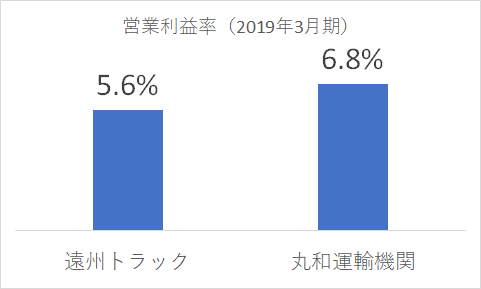
As a result,operating profit margins are 5.6% for Enshu Truck and 6.8% for Maruwa Transport Corporation. Over the long term, this gap could translate into different growth trajectories.
Good Things Are Expensive. What Matters is to Find the "Delight"
So, if you consider these two, is it good to invest in Maruwa Transport Corporation? Not so simple.
When comparing PER, Enshu Truck is 12x, Maruwa Transport Corporation is 38x. Even with growth prospects, a 38x PER is hard to buy.
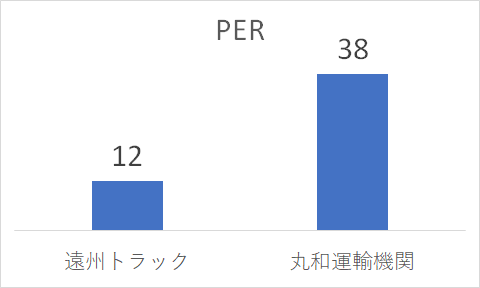
In that case, despite the risks, Enshu Truck at a PER of 12x seems appealing for near-term growth, and that may be why it has recently risen.The transportation industry won’t disappear even with the internet; it will expand further with e-commerce. All eyes are on future movements.