

Beginner investors should fail first! There are things that can never be learned through study alone
There are many people who think they want to try stock investment, but not many actually do. According to a survey by the Japan Securities Dealers Association, the current percentage of people who own stocks is only 12.2%, and among those, about 40% own only one issue.
【Reference】National Survey on Securities Investment for Individuals, Fiscal Year 2018
Therefore,only about 7% of individual investors currently own two or more stocks. This shows how high the hurdle is to start stock investment.
That hurdle is the fact that “they do not have sufficient knowledge yet” and “there is a risk of price declines” are among the top concerns.
There is no such thing as “sufficient knowledge” in stock investing
If you are not investing in stocks because you think you lack sufficient knowledge, there is no need to worry. Because,there is no one who has perfect knowledge of stock investing.
I still learn something new about stock investing almost every day. I often think, “I invested without even knowing this.”
In other words,because perfect knowledge does not exist, stock investing remains interesting and contains opportunities for great profits.
The merits of stock investing are “low cost” and “loss-limiting”
In this context, one thing is certain:you won’t gain knowledge unless you try it. If you keep saying there is a risk of price declines, you’ll never realize profits.
The good thing about stock investing isyou can start with a small amount, and losses are limited to your investment.
For example, if you invest 100,000 yen and the company goes bankrupt, the loss is capped at 100,000 yen.
What if this were real estate investing? If you try to buy a single building, it might cost around 100 million yen. In that case, a reasonable asset allocation would be 10 million yen of your own funds and 90 million yen in debt.
If this were a fraudulent property like a “pumpkin carriage” scam, not only would you not gain profits, you would bear most of the 90 million yen debt. If the property price were 30 million yen, even if you could sell, you would still have 70 million yen of debt remaining.
Stock investing can be sold off quickly if you think it’s risky, and at worst you can lose everything. This flexibility is a major advantage when starting stock investing.
However, there are cases where you can incur debt even in stock investing. That is “margin trading.” You can trade up to 3.3 times your own funds, but the amount of losses can be just as large. Therefore,losses can exceed your own funds.
By engaging in margin trading, you discard the benefit of stock investing’s “loss-limiting” aspect. Beginners should, therefore,avoid starting with margin trading.
There are things you can’t learn just by studying
The first stock I bought wasJGC (1963), a company that builds LNG (liquefied natural gas) extraction plants.
This technology is dominated by Japanese firms like Chiyoda Engineering (6366) and Toyo Engineering (6330), and JGC possessed outstanding technology and track record among them.
The reason I encountered this company wasI happened to have an opportunity to listen to the president’s lecture. Its business model for expanding globally, its technological strengths, and the bold words to “aim for 10 trillion yen in sales” made me think, “I must buy this.”
At that time, the stock price was rising, but I thought it would be cheap enough if they achieved 10 trillion yen in sales.
However,the stock price later fell significantly. I thought, “That can’t be true,” but since it was actually falling, I had to face reality.
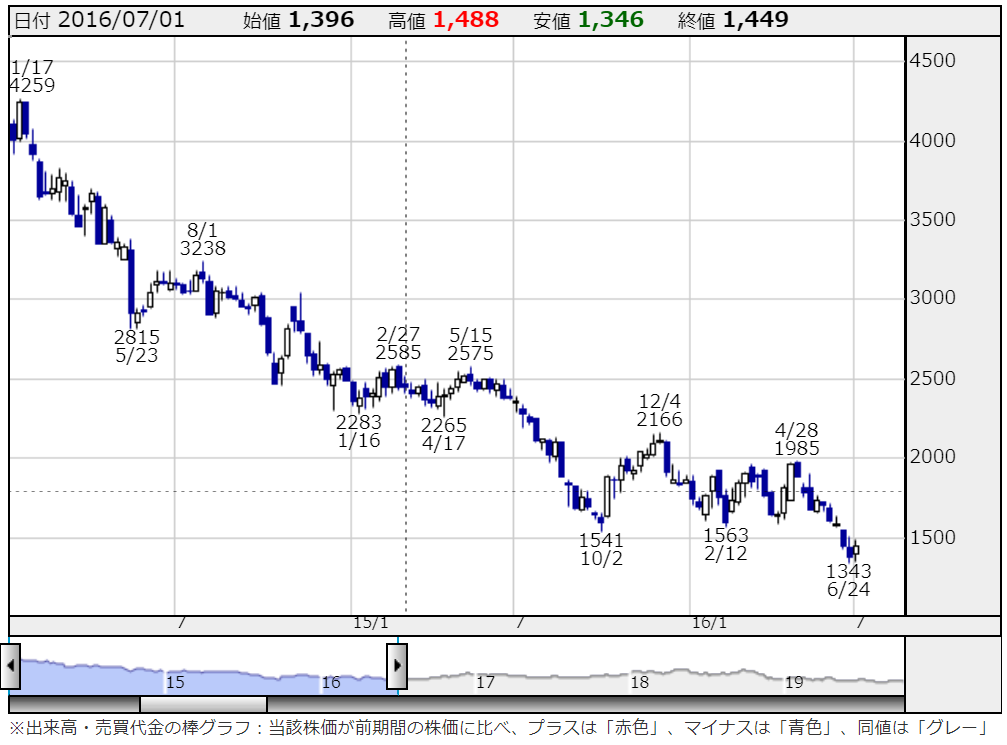
Then, for the first time, I read JGC’s annual report. I found that LNG plants are a business with highly variable demand!
The price of LNG is linked to crude oil prices. When crude oil prices are high, the industry booms with increasing plant construction demand, but when prices fall, the market collapses quickly.
When I invested, crude oil prices were at a peak. Afterwards, the US shale gas revolution caused crude oil prices to drop, and demand for LNG plant construction halted.I was ashamed of investing without knowing this.
From this failure, I realized thatwhen investing, you must understand the business mechanisms and history. Before, I thought I had studied in college and at securities firms, butI didn’t truly feel it until I actually invested.
Fail first! Then the conversation begins
Still, I’m glad I failed here.If I hadn’t failed, I might not have realized important things, and could have led to even bigger failures.
That’s why what I want to tell investment beginners is “First, fail.” Even if you lose 100,000 yen there, if you don’t give up and continue, it can become the power to increase to 1,000,000 yen or 10,000,000 yen eventually.
100,000 yen is by no means a small amount, but viewed long-term, it is a small figure.If that yields 10,000,000 yen in profit in the future, the investment efficiency will be incredibly high.
First, start and fail — that is the first step toward becoming a financially happy person.