

The Japan Post Group lacking governance. The self-styled strengths have been misused for an "information-poor business" downfall
Bank of Yokohama Life (7181) is facing issues with improper insurance sales.
【Reference】Bank of Yokohama Life fraud doubles to 180,000 cases in the past five years (FNN)
In simple terms, postal clerks, to achieve sales targets, engaged in unnecessary or inappropriate switching or duplicate contracts, and in severe cases, forced certain customers to enter into multiple insurance contracts.
“A Success Story of Privatization” The Big Difference from JR
The Postal Group was born in 2006 through postal privatization. With privatization, Kanpo Life and Japan Post Bank (7182) ended up under the umbrella of the stockholding company Japan Post (6178).
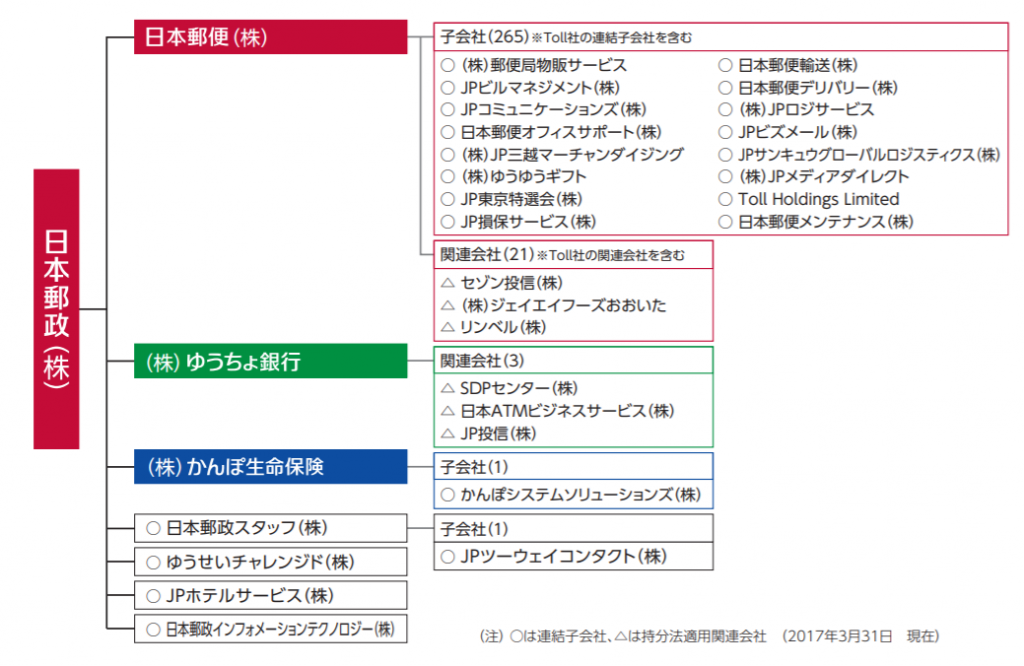
Although it is a separate company, the counters for Kanpo Life and Japan Post Bank are ultimately post offices. Most of the recent misconduct is believed to have been committed by postal clerks.These companies cannot be separated from each other。
When I was at a securities firm, I was involved in group IPOs, and when I saw this news, I could not help but think, “It was bound to happen.”
Because this group is full of problems.The governance structure is especially problematic.
Since the postal business was a public service, it did not have a structure to generate profits. To operate as a private company, especially a listed company,a major reform is necessary.
For example, JR, the former national rail, faced labor union friction and nonetheless brought about a remarkable transformation to its current polished form. What made that possible wasmanagement with a strong vision from within the company.
Looking back at the executives of the Japan Post Group,mostly outsiders from financial institutions and large companies, and former Postal Ministry officials.
The reform of JNR had the goal of reforming management that ran deficits. However, the Postal Group, because it was doing moderately well, shifted the aim from management reform toincreasing national treasury revenue through stock sales.
Therefore,the supreme command for this company became “how to sell shares at the highest price”, and no one had the determination to seriously undertake management reform.
Lack of governance turns its own strengths into an “ignorant-persons business”
Nevertheless, when it went public, it achieved a reasonable level of performance, so it could sell its shares at a reasonable price.
But the situation has continued to deteriorate.
Even in insurance,as the population declines, remaining silent guarantees decline. Domestic competition tightens as a limited market share is fought over.
Financial products like insurance can be easily copied, so differentiation by product features is difficult. Therefore,the keys are “sales power” and “cost competitiveness”.
In terms of cost competitiveness, online insurance holds a tremendous advantage. Kanpo Life cannot compete here, so the remaining sales power will be decisive.
In this regard, they had a powerful strength that other companies could not imitate.The nationwide network of 20,000 post officeswas there. Moreover,the image of the post office as “close and reassuring”exists.
Originally, they should have leveraged this strength well. If they had sold ordinary products in the ordinary way, there would have been buyers.If you look at “Hoken no Madoguchi” continuing to increase its stores, it should have been clearly possible.
Management should have developed marketing that enables people to buy insurance as a matter of course, rather than leaving it to sales staff alone.
However, shockingly, they turned this image to their advantage in a business model. That is the“ignorant-persons business”. They ended up encouraging elderly customers, who have long been familiar, into unnecessary contracts.
Management would probably say, “We did not instruct such things.” However, pushing quotas without understanding what customers exist is something that, sooner or later, was bound to lead to this outcomeeventually.
In the first place, executives from outside could not possibly understand the customers.They only care about completing their terms of office safely.
Recent trends showIn ESG investment, the “G” stands for governance. (“E” is environment, “S” is society.) This directly affects corporate performance and is the most important aspect for investors. The postal group completely lacks governance in this regard.
Cockroaches keep coming one after another...
The stock prices of all three listed entities continue to fall.Dividend yields approach 5%, and there are investors who may find it worth buying.
However,I have no intention of buying at all.
A company with weak governance produces problems one after another. Moreover, with 250,000 employees (group-wide), it would take an enormous amount of time to grasp the overall picture, and any reforms would be far in the future..
If there is one cockroach in the kitchen, more of its comrades will come out afterward
Warren Buffett
Japan Post Group is neither a good company nor dramatically cheap. There is no long-term merit to hold it.
Please refer to this article as well.
★ Investment information galore! Tsubame Investment Advisory’s website here ★