
[Steps to preserve the screen before entering] Do not rewrite the reflection from memory
Reflecting on a losing trade once again, have you ever found that the notes and the chart didn’t match?
Even though you write a recap every time, why does the same way of losing keep happening?
Many people end up writing that they closed because they were scared, while still unable to stop taking profits quickly.
Good evening!
This is Masashi^^
This time, I’ll write about a mismatch between the recap notebook and the chart.
It’s my story of records that should have been written correctly, not matching the person who was entering at that time.
I started leaving one chart screenshot just before placing an order, triggered by a certain weekend.
I’ll write in order what I captured and how I arranged it afterward.
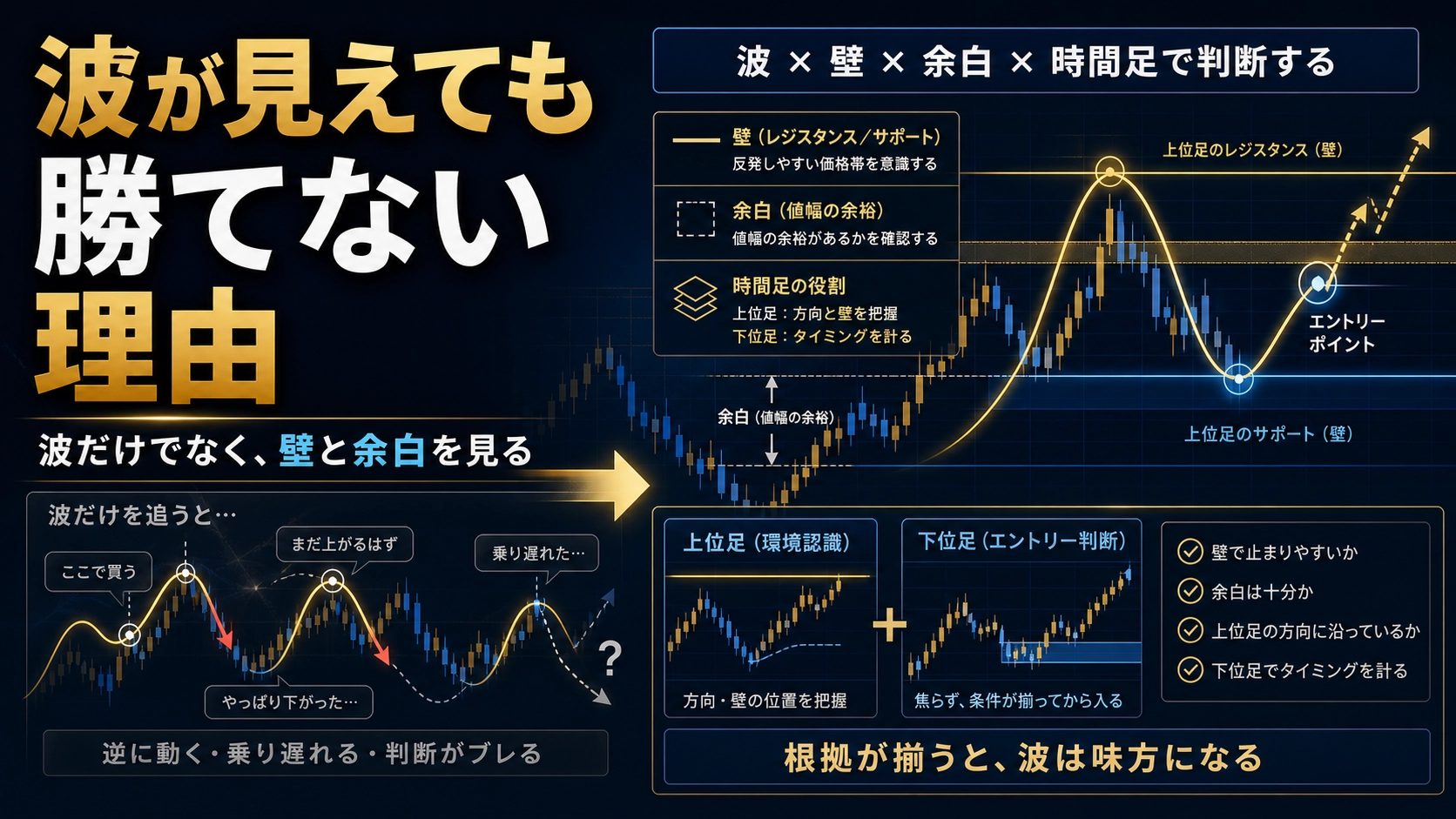
❌ The notebook said “I entered after seeing I had hit the wall”
This is a story from my old self.
Back then, I would write a recap after every trade ended as well.
Reasons for entry, reasons for exit, what to be careful about next time.
Looking at only the notebook, I probably appeared to be a trader who did it properly.
One weekend, I reread the notebook of a losing trade.
【I entered after seeing I had stopped at the wall below】
I should have entered according to the procedure and exited as planned.
With that in mind, I rolled the chart back to that exact time.
✅ Read only the notebook, and there was nothing wrong with that one trade.
❌ I wrote the recap after the entire trade was over.
? When I rewind the chart, the entering point was quite above the wall
Looking at the price at the entry time, I couldn’t believe my eyes.
It was well above the wall, in a place where it hadn’t even stopped yet.
I didn’t enter after the trade had stopped.
I had entered earlier because I thought it might stop (;'∀')
I didn’t intend to lie in the notebook.
When I wrote it, I genuinely thought I had entered after the price had stopped.
After it was over, I rewrote my entry as a slightly better version of myself at the moment of entry.
When I realized this, I laughed a little…w
✅ What was written in the recap notebook wasn’t the past self at entry.
? When I recap, I open the chart from the entry time before reading the notebook.
? Even trades with quick profit have their exit reason in the entry location
Curious, I checked other trades by rewinding the chart.
What most often happened was early profit-taking.
The notebook said this.
【Because it didn’t look like it would grow, I closed early】
But when I rewound to the entry time, in most cases I had entered from a point away from the wall.
When you’re away from the wall, a small swing the other way makes you feel like you should exit nearby.
After becoming scared, you wrote that it wouldn’t have grown, didn’t you?
You were trying to fix the speed of profit-taking, but really what needed fixing was the entry location.
✅ There was a case where the cause of quick profit-taking lay in the entry time, not the exit.
? For entries where you can only write “I was scared” as the exit reason, verify from the entry point.
? After knowing the result, the mind aligns the entry screen
Why does such misalignment happen?
In my case, it’s because I knew the outcome when I wrote the recap.
Knowing a loss makes it harder to recall the hesitation at entry.
Knowing a profit makes the justification at entry seem stronger than it actually was.
The screen after entry gradually shows the result.
Looking after the move went against you, the first impression looks risky from the start.
Looking after it grew, it seems like it would go up from the start.
Ah, to be more precise, rewinding the chart afterward isn’t inherently bad.
However, the chart you rewind afterward doesn’t reflect where you were looking as the wall.
✅ I think you must record what you looked at before entering at that time.
? A screen with results not yet known is only one shot just before placing the order.
⚠ Even if the reflection is long, memory misalignment won’t be fixed
I wasn’t taking recap lightly back then either.
The more I lost, the longer the reflection I wrote.
“Wait without rushing next time”
“Be more conscious of the wall”
Both are words written by my post-result self.
No matter how long you write, unless you have the screen from entry, you’re reflecting on a rewritten memory.
The longer the recap, the more the notebook’s future self seemed like a better trader.
The reason I couldn’t find where to fix it was because I was reading a record that didn’t show the place to fix.
✅ More important than the amount of reflection is having one screen from before entering.
⚠ I’m careful not to try to fix the way of entering based only on words written after knowing the result.
? The photo of the dish should be taken before eating
This is a bit similar to food photos.
It’s hard to recall how the dish was plated just by looking at the finished plate.
So, photos are taken before eating.
The trading screen is the same: if you’re going to leave a record, do it before entering.
“No, you can always look at the chart later!”
You might think this, too.
But what you can see later is only price movement; you can’t see what you were looking at.
✅ I chose to train my memory by leaving one pre-entry screen instead of trying to memorize everything.
? The shot should be the screen just before you press the order button, when you haven’t known the result yet.
? Before ordering, leave one screen with a line and a mark
There are only three things to do right before placing an order.
・Write one line before entering
・Put one line or mark where you think there is a wall
・Save that screen as an image
The line should separate the entry reason and the exit point with a diagonal slash.
【Enter after seeing the wall below / Exit when it settles below the wall】
It’s fine to capture it on a phone or a computer screenshot.
Write the line as the image name or in the nearby memo.
One mark is enough.
If you want to add two or three, you may not have decided which wall you’ll be looking at yet.
✅ On the pre-entry screen, leave one line and one mark each.
? Tomorrow’s task is just to take one shot before the order and write a line about the entry reason and exit point.
✔ After finishing, take another shot of the same place
When the trade ends, take another shot of the same place.
Whether you cut loss, take profit, or end at breakeven, it’s the same.
This second image does not receive an extra line.
The urge to add text should be restrained here.
The second image remains as the screen after the outcome.
This separates the pre-entry self from the post-completion self onto different screens.
To summarize the flow: 【Write one line / Add a mark and take one shot / After finishing, take another shot】
✅ Keep the second image as the screen of the post-trade self.
✔ If you store the captured images in a folder by date, you’ll save time looking for them on weekends.
? On weekends, align the two shots and look at only three things
When two shots accumulate, align them left and right on the weekend and view three things.
What you’ll look at are three things.
・Was the mark on the first shot really near the wall?
・How far was the entry point from the mark?
・Did the line on the first shot match the words in the recap notebook?
For me, the second item was the most accurate.
Even though the mark is properly placed on the wall, the entry point is a bit before it.
I found several more misalignments in the third.
There was a line with no momentum described, yet the notebook stated【I closed early because the momentum was strong above】.
In these cases, I fix not mainly the exit speed but the reason not stated on the first line.
If you want to correct it, open the first line and confirm whether the target exit point has not yet been reached.
✅ The recap starts by aligning two screens before reading the notebook.
? Weekend procedure: 【Align two shots / View three / Mark the misaligned case】
⭕ You don’t have to capture all trades; keep going
Let me interrupt the story here.
It isn’t that you must take a shot for every single trade.
In fast-moving moments, you might miss the moment you wish to exit while taking the shot.
If you delay entry because you prioritized taking screenshots, that’s another issue.
For trades you couldn’t capture, write “missed” in the record.
There’s no need to count missed shots as failures.
Be mindful of the day when taking shots becomes the goal itself.
It’s not “I checked because I took one shot,” but “I took one shot because I checked.”
✅ Take shots after you finish confirming.
⭕ Weeks with multiple missed shots may be weeks where you didn’t have room to write one line before entering.
? Do you miss the entry location while you’re shooting?
People ask if you don’t miss the place you want to enter while shooting.
I was concerned about this at first as well.
When I actually tried it, the time to take a shot was only a few seconds.
In those seconds, the place you’d have entered before it stopped was usually the place you intended to enter.
After aligning two shots, the places you need to adjust over the weekend changed!
Instead of chasing the reason from the outcome, I started looking from the pre-entry screen.
There will be losses as before.
If both shots line up with the exit, I leave it as an expected cost.
The hard part is deciding where to put the mark on the first shot, which is confusing every time.
If the wall position remains ambiguous, the mark’s location will change day by day.
If the price level is shown as a line on the screen, the same line will appear on both the first and second shots, making comparison easier.
However, the line does not replace your judgment.
✅ Decide for yourself where you consider the wall to be.
? If your captured screens accumulate too much, you can align only the exit trades and fast-profit trades.
? GOLD Special: a feature article is being prepared^^
If you want to reorganize from the basics, please check the content and its limits.
? Summary: Recaps start with a pre-entry screen
In my case, continuing to write recaps for the same losses wasn’t due to insufficient reflection.
It was because what I wrote in the notebook were words after knowing the result.
So, before you know the result, leave one screen with a line and a mark just before placing the order.
After finishing, take another shot of the same place to separate it as a post-outcome screen.
On weekends, align the two shots and check whether the mark was near the wall, whether the entry point was not too far from the mark, and whether the line and notebook words match.
For misaligned trades, fix them from the side of the entry point, not the result.
If you missed capturing a trade, simply write [missed] is okay.
Before pressing the order button next, take only one shot and try writing a line about the entry reason and exit point on the side.
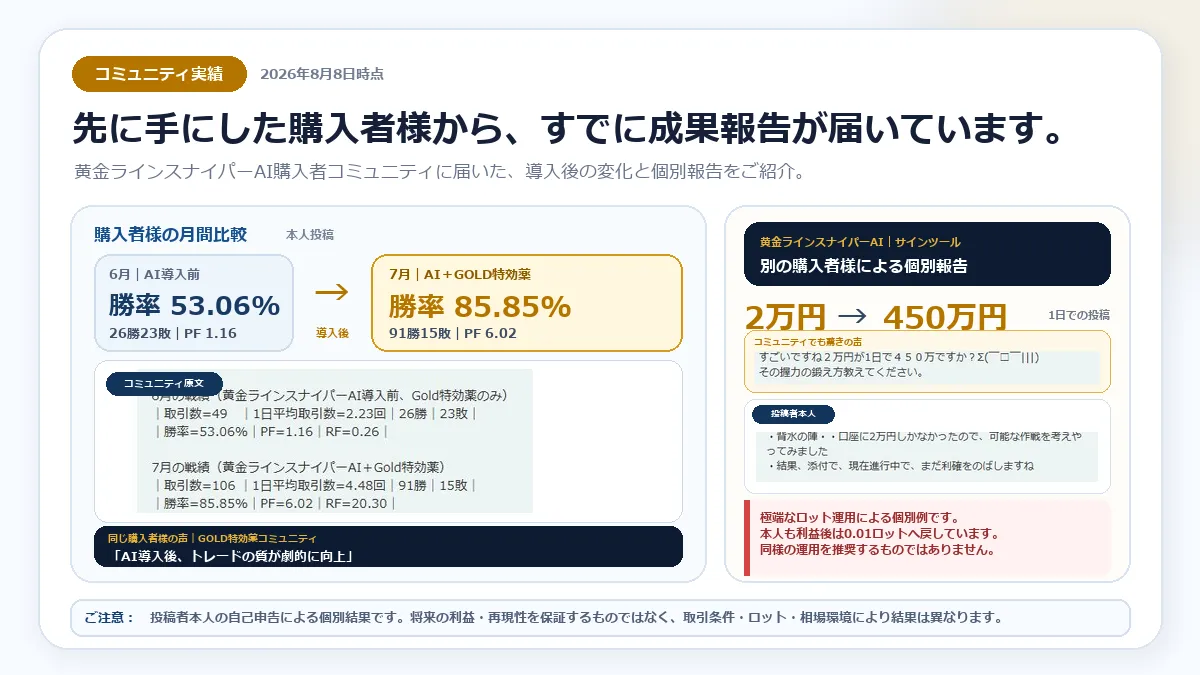
If you want to make the same line appear on both the first and second shots for easier comparison, GOLD Line Sniper AI is one of the options.
This does not decide where to enter or whether to enter on your behalf.
✅ The next recap starts by opening the pre-entry shot before the notebook.
? Tomorrow’s procedure: 【Write one line / Add a mark and take one shot / After finishing, take another shot】
View details of GOLD Line Sniper AI
Thank you again for reading until the end today^^