

Undervalued stocks are less prone to losses. So, what should one do to win?
Value stocks are those whose stock price is low relative to a company’s financials, such as low price-earnings ratio (PER) or price-to-book ratio (PBR). For example, PER of 10x or PBR below 1x. The former is sometimes called “earnings value” and the latter “asset value.”
Value stocks are often “ugly”
Choosing stocks with low PER or low PBR has been shown to outperform the market over the long term. This is called the “value effect.” Benjamin Graham, Warren Buffett’s teacher, proposed it, and subsequent empirical studies have yielded significant results.
【Reference】The Value Effect (Norges Bank)
However, simply picking stocks with low PER or low PBR does not guarantee profits. This is becausethese low indicators reflect investors’ concern about the company.
A representative among low-PBR stocks is Japan’s regional banks. PBRs around 0.2x are common, but facing population decline in rural areas and negative interest rates, their future prospects are unclear. Their stock prices have continued to decline.
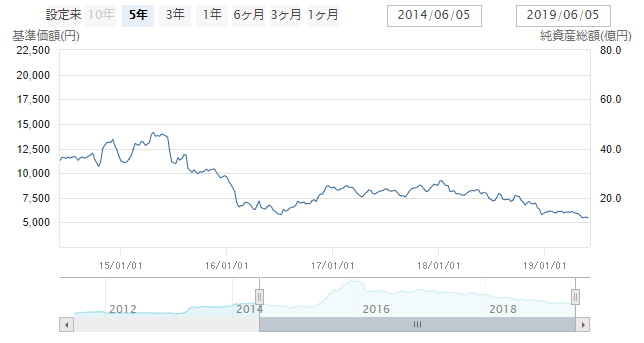
Stocks that are merely low in PER or PBR are filled with such examples. It’s easy to see that they don’t look like profitable bets.
The value effect is realized partly because there are fewer big losses
Nevertheless, the numbers still show that the “value effect” remains. How can a stock that doesn’t seem likely to rise beat the average?
The answer becomes clear when you consider the opposite: stocks with high PER and PBR.
Stocks with high indicators areexpected to have substantial future growth. Therefore, many investors pile in, pushing the stock price up. In reality, there are cases where prices rise sharply in a short period.
However, as prices continue to rise and eventually reach PER of 100x, one by one investors sell off. Meanwhile, others rush in to avoid missing the rapid rise. This becomesa perfect game of Uncle Donkey (Hot Potato).
Eventually, when it becomes clear that growth cannot justify PER100x (many people may already know this), investors rapidly withdraw. Afterward,the stock price becomes brutally unattractive.
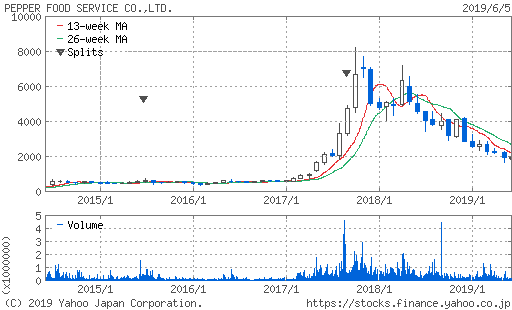
When PER drops from 100x to the more normal 20x, the stock price falls to one-fifth. This is not rare, andsuch sharp declines pull down the average performance of overvalued stocks.
Conversely, for a stock with PBR around 0.2x, even a large decline might only bring it down to about half (PBR 0.1x). In other words,the value effect is realized not simply because the stock grows large, but because not falling much keeps the average high.
Strengthen safety with value, aiming for long-term growth
Investing in value stocks is essentially a defensive strategy. Therefore,seeking dramatic returns is inherently difficult. Still, it can outperform the index, so it’s worth doing.
However, that alone isn’t very interesting. If you invest in stocks, you’d want twofold, threefold, or ideally tenfold (ten-bagger) gains.
On the other hand, you may not want to see the capital you’ve saved decrease. With stories that 20 million yen is needed for retirement, you can’t afford to lose your “treasured assets.”

What I aim for isan approach that pursues both: strengthening safety with value while also aiming for company growth.
The average PER for the stock market is considered to be around 15x. For example, suppose a stock with PER 15x grows earnings by 10% each year. If PER remains fixed, the stock price also grows by 10% per year. At a 10% annual growth rate, you would outperform the market,and with compound interest, it would be 2.6x in 10 years.
If earnings grow, the PER is unlikely to drop that much. A lower bound might be around PER 10x. If growth remains at 10% at that time, you should simply accumulate more shares.
Conversely, if the market improves and PER expectations rise,then if PER rises to 25x in 10 years, the stock price becomes 4.3x.Annual return would be 16%. That would be quite good.
Furthermore,if you could buy when PER is 10x, you could gain 6.5x, with an annual return of 21%. At this point, you’re approaching Buffett-level performance. Buffett has achieved high performance by applying this method rigorously.
Find good stocks and patiently wait for them to drop. Long-term investing boils down to this
This method does not work simply by buying stocks with low indicators. You must find stocks with reasonably low indicators that also have sustainable growth potential.
Growth-oriented stocks tend not to fall easily. Still,they can drop sharply during overall market declines or when negative factors arise. These declines are usually not related to the company’s real fundamentals.
That then becomes a perfect opportunity.From prior observation, buy opportunistically on price dips and simply hold, letting the market recover and the company grow, which should push the stock price higher.
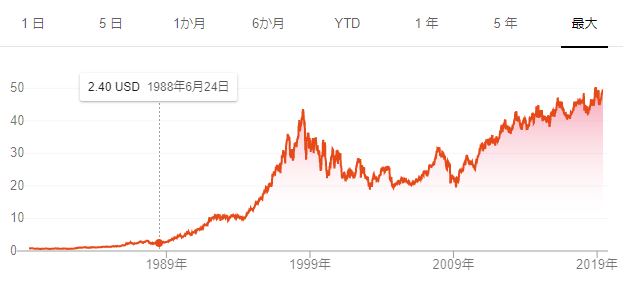
This investing method requires growth analysis, which is not something that can be expressed purely by numbers. Also, even good stocks should not be bought immediately; you need patience to wait for prices to fall.
I aspire to become a “growth-value investor who buys growth stocks at as low a price as possible and analyzes daily. I hope to contribute to your performance, even if only a little.
Key points of growth-value investing
- ① Look for good companies that can continue growing
- ② Wait for the stock price to drop
- ③ Buy when it falls