

RR1: 61.4% win rate at 1 with PF 2.16! Semi-discretion EA, from 5,000,000 to about 8,000,000
Hello, Ikura. This is.
This time is a progress report on the "Challenge to aim from 5,000,000 to 50,000,000 yen" using a semi-discretionary EA.
First, what I want you to note this time is the results with a risk-reward (RR) setting of 1:1, showing a win rate of 61.4% and a PF of 2.16.
And, over 28 trading days from September 30 to November 6, excluding weekends, the cumulative profit is +304,910 yen. Against the starting capital of 5 million yen, that is +61.0%!
RR1:1 with a win rate of 61.4%. Focus on the balance between win rate and profit/loss
When looking at the win rate, it is important to check the balance of the take-profit and stop-loss幅 together.
This time, the operation is a RR 1:1 setting where the take-profit and stop-loss widths are the same. If you do not consider trading costs, a 50% win rate is the tipping point for profitability.
With that setting, the EA screen shows a cumulative win rate of 61.4%.
This is not a setting that tolerates large losses to accumulate small profits; rather, it achieves this win rate with equal take-profit and stop-loss widths, which is what I want to highlight.
However, the RR setting and the actual average profit-to-loss ratio of filled trades do not necessarily match. For actual results, please also review the next PF and trading history.
PF 2.16. The total profit in the aggregate is more than twice the total loss
Another figure to note is PF2.16.
PF (Profit Factor) is the ratio of total profit to total loss. The current display indicates that, for the trades under consideration, profits are about 2.16 times the losses.
Not only win rate but also the profit and loss tally show profits exceeding losses. In these results, I am paying close attention to this aspect as well.
Summarizing the performance shown on the EA screen, it is as follows.
|
Item |
EA screen tally |
|
RR setting |
1:1 |
|
Win rate |
61.4% |
|
PF |
2.16 |
|
Total trades |
57 |
Since there are only 57 trades so far, this alone cannot determine long-term performance. We will continue trading and disclose how this win rate and PF evolve.
※Win rate, PF, and number of trades are displayed values on the EA screen. Since it is not confirmed whether the following cumulative profit and the aggregation period/targets match, they are presented separately.
+304,910 yen in 28 trading days. From 5 million yen to about 8 million yen
The cumulative results of the challenge are as follows.
|
Item |
Actual |
|
Aggregation period |
September 30 – November 6 |
|
Trading days (weekends excluded) |
28 trading days |
|
Starting funds |
500,000 yen |
|
Cumulative profit |
+304,910 yen |
|
Profit rate against starting funds |
+61.0% |
|
Average profit per trading day |
Approximately +10,890 yen |
Starting from 500,000 yen, funds increased to about 800,000 yen.
※The number of active days in the images differs; this article counts excluding weekends. The average profit is the cumulative profit divided by 28 trading days.
All trade history
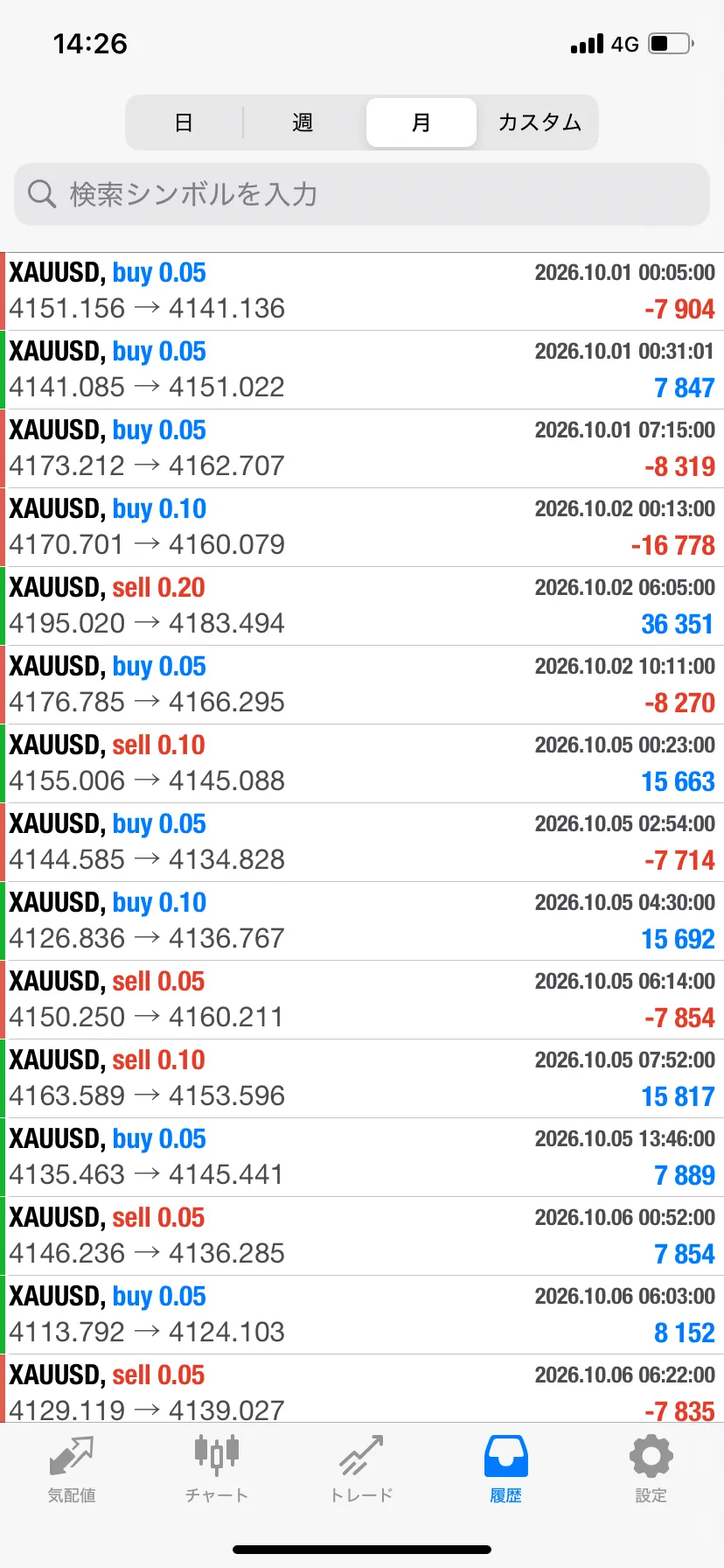
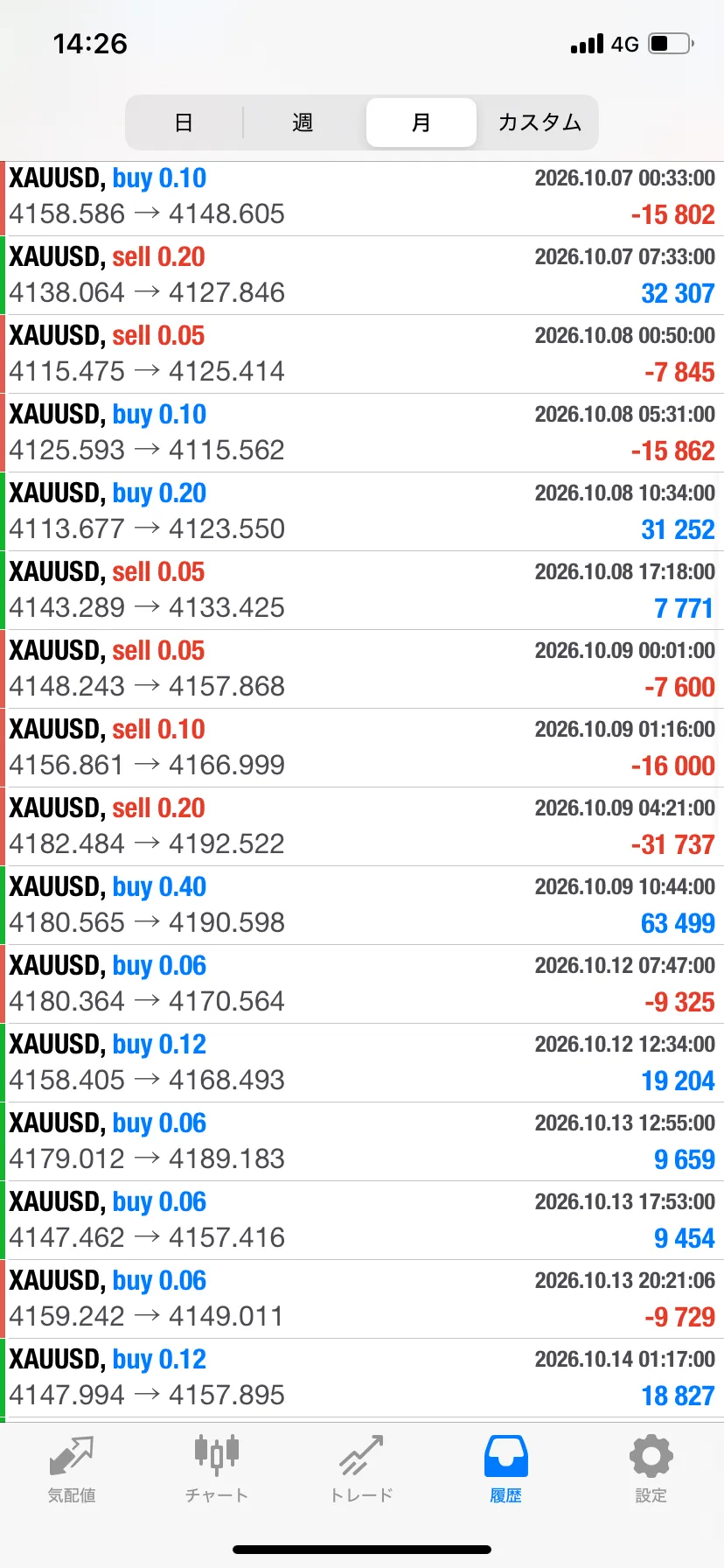
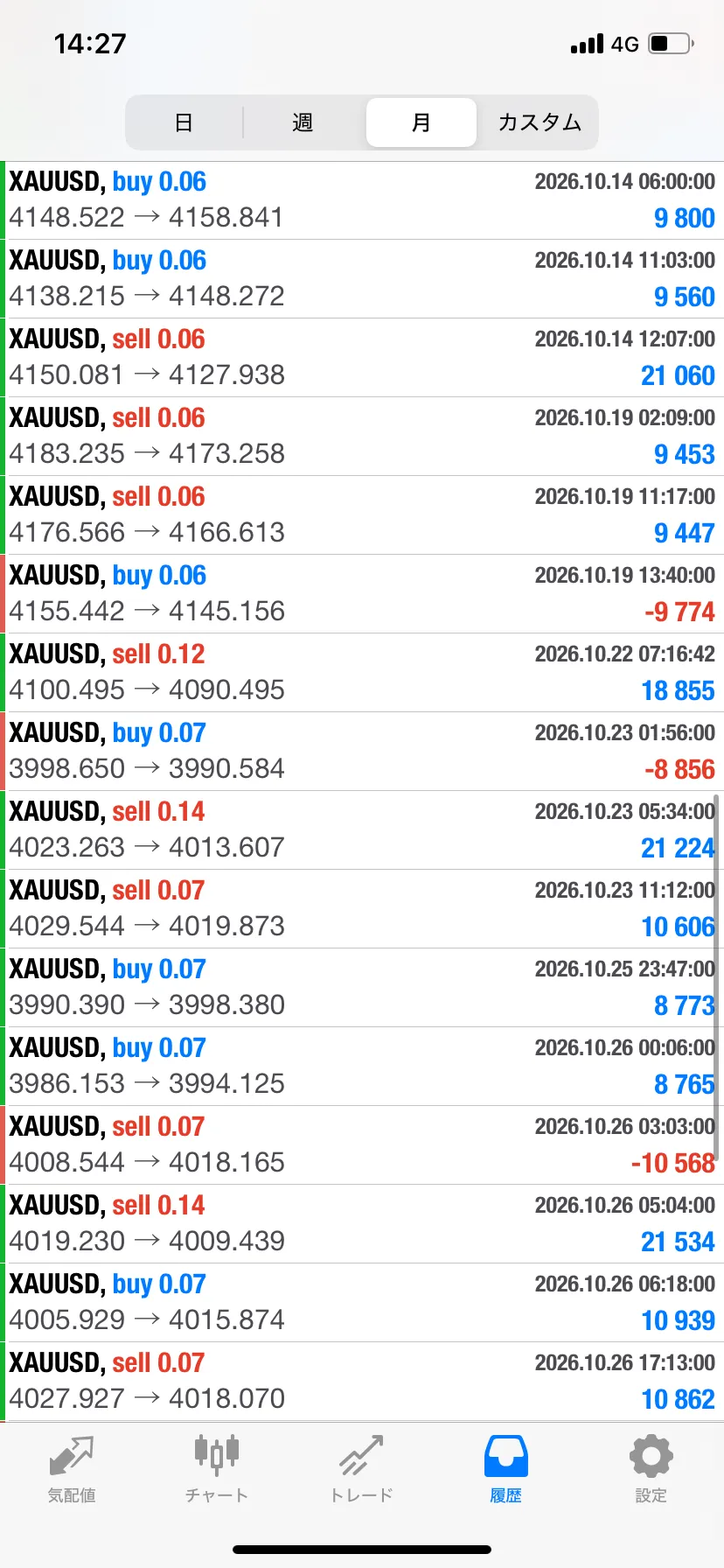
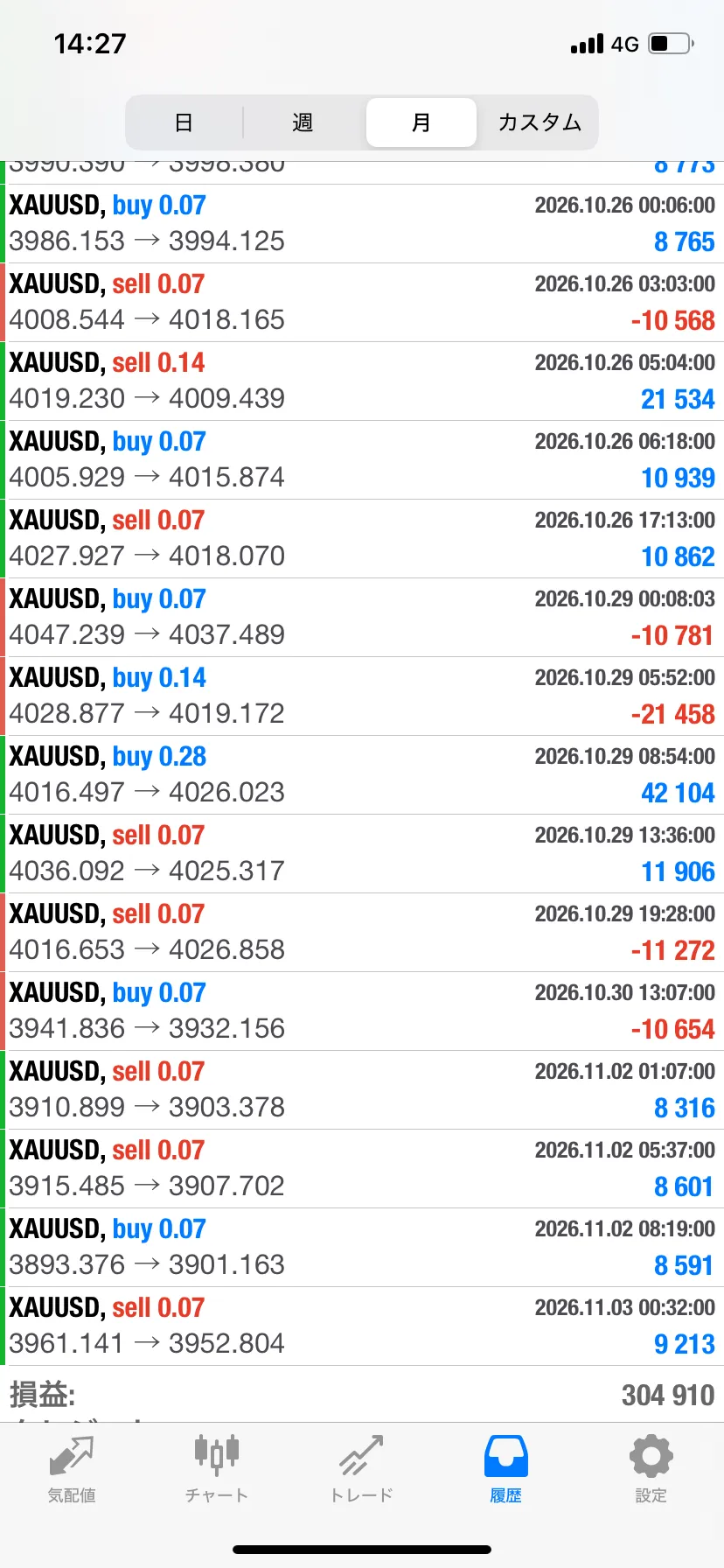
Win rate 61.4%, PF 2.16. To allow you to review the details, I am公開 the entire trade history of this challenge.
Not only profitable trades but also losing trades are included for your review.
▼All trade history here
See how profits and losses occur. Including the magnitude of real profits and losses, as well as the streaks of wins and losses, I hope you use this as a basis for judgment.
※ Settled history alone does not allow viewing the unrealized drawdown of positions still held.
Toward a goal of 5 million yen. We will also track the progression of win rate and PF
The points of interest this time are that a win rate of 61.4% and PF of 2.16 are achieved with RR1:1 settings. And overall, the starting funds have increased by +61.0%.
We will continue operation toward the target of 5,000,000 yen.
Not only the profit amount, but how the win rate and PF will change in the future. I will also share challenging moments, so please check the next report as well!
※The published results are historical results and do not guarantee future profits. Results may differ depending on settings and discretionary judgments.