
[Reason to decide the deposit date beforehand] Procedure for not adding funds on the night you lose
On a night you lost, aren't you opening the deposit screen on your smartphone to try to make up for it?
Why do you end up rushing to place bets the next day with the extra funds you added, out of frustration?
I think many people still haven’t decided what to look at before adding funds.
Good evening!
This is Masashi^^
This time, I’ll write about something outside the charts.
How to decide when moving money to the account.
From one night when I deposited money, I started writing the day to add funds and the conditions on paper.
I’ll write in order about how I stopped hesitating at night.
❌ The night I closed the chart but opened the deposit screen
This is about my old self.
One weekday night, I kept losses, and I decided that day was over.
Each individual loss seemed within the expected range.
I closed the chart, brushed my teeth, and got into bed.
Up to here, everything followed the procedure.
Because I decided to quit and actually quit, I felt a little relieved too.
But before sleeping, I looked at the balance one more time.
When I looked, the number wouldn’t leave my head this time.
Before I realized it, I had the deposit screen on the broker’s page open (;'∀')
Back then, I thought,“If I deposit the missing amount and make it back, I can just take it out the next day.”I believed the logic connected in some way.
So I deposited the amount and added funds.
After adding, I felt a little lighter and slept.
✅ Sleeping wasn’t because the problem was solved.
❌ I did not record the reason I added money, nor leave a note in a paper you can read the next morning.
? The next day, I entered earlier with awareness of the added amount
The next day, the added amount kept occupying my mind.
I entered earlier than usual, and the lot size was a bit larger, I think.
The result was that the added amount decreased and ended.
It wasn’t because the market was bad.
Even reviewing the records, that loss couldn’t be explained.
The previous night’s loss had a reason.
The loss after adding had no reason that could be called a reason.
✅ Not only money decreased, but trust in the procedure also decreased.
? In my records, the loss the day after adding is stored separately from the usual expected losses.
? When you open the records, only the deposit欄 is empty
After a while I reviewed that week’s records.
There is a reason for each entry in one line.
【I confirmed that the higher-timeframe wall stopped right before】like a one-liner.
Even though the place of the stop is written, nothing is written about the deposit one.
When I noticed this, I laughed a little to myself…w
The amount was decided at night, so why I was adding and when I would return weren’t written anywhere.
Before placing an order, I checked it many times, but when moving money to the account there was no confirmation field.
✅ There was no confirmation field for a decision larger than the order.
? When reviewing records, start by looking for the empty欄.
? What was missing wasn’t capital but the balance amount
So, was what was missing that night capital?
Actually, the money to move the next day’s procedure existed in the account.
What I felt was missing was the balance amount I had just been looking at.
I wasn’t trying to add money needed for trades.
I think I was trying to return to a calm number.
Oh, more precisely, I intended to manage funds.
But in content, it was a move to cancel today’s losses.
✅ It was a loss-canceling form of fund management.
? Before adding, to verify whether there really isn’t enough funds to operate the procedure, confirm with the next steps rather than the account’s numbers.
⚠ When adding, it may seem like today’s losses disappear
The amount from here is a hypothetical example for explanation.
Suppose the account balance is 100,000 yen.
The day’s loss becomes 70,000 yen, and 30,000 yen is added.
The screen balance returns to 100,000 yen.
Just looking at the numbers, it might seem there was no loss today.
But your own money moved from somewhere else into the account.
In my case, from the moment I added, those 30,000 yen became “money to recover” in my head.
Then the next trade tends to prioritize recouping the amount over confirming the procedure.
✅ When the amount to recover comes first, checks tend to be delayed.
⚠ The above amount is a hypothetical example. When applying to your own account, do not use it as a guideline for the amount to add.
? It’s a bit similar to shopping when you’re hungry
This is somewhat similar to shopping when you’re hungry.
When you go to the supermarket hungry, you end up putting things in your cart you wouldn’t normally buy.
To prevent it, you don’t need to force yourself to endure on the spot.
After eating, write down the shopping list, and at the store just look at that list.
“No, no, if a paper can stop you, I wouldn’t have trouble!”
Some of you may think this.
I also don’t believe that just writing a sheet will erase my feelings.
What I want from paper is to reduce the time to think at night.
So that the lost-night self doesn’t need to rely on settled judgments; I move the decision time forward.
✅ I trained my decision order rather than my mental state.
? Writing on paper happens during midday on a non-trading week when I’m not looking at the market.
? Decide the day you may open the deposit screen before the amount
The action is simple: write three things on paper.
・The day you may open the deposit screen
・Conditions under which you may add
・Situations not to add
First decide the date before the amount.
Place one day in the calendar for when you may open the deposit screen.
For example, it could be this line.
【Open the deposit screen only on the first Saturday of every month in the morning】
I think the time when the market isn’t moving is best, during daylight hours.
Excluding weekday nights because they tend to coincide with losses.
✅ Separate deposit decisions from losing at night.
? For this week’s end, just fill in the calendar with the date.
✔ Write the conditions for adding and the situations not to
Even if the date comes, if the conditions don’t fit, decide not to add.
What you look at is whether you followed the procedure, not win/loss.
【Last month’s record had no unexplained losses, so add】
【Even after adding, do not change the lot】
Even in months where losses were expected, if the losses can be explained, they fit the criteria.
Situations not to add should also be written first.
【Today I lost / I want to recoup a certain amount / I’m about to put in borrowed money】
If any of these apply, don’t add regardless of the date.
On losing nights, read this paper instead of looking at the balance.
✅ On nights that match “I lost today,” reading the paper ends it.
✔ The paper should be placed in the same place as your trading records. It’s better not to place it on the same device as the deposit screen to avoid easy access.
? Draw a line to living costs and pull from there
Next is the question of which money may be added.
This varies by income and family, so it’s very different for everyone.
I don’t recommend a ratio like “up to a certain portion of living expenses.”
Instead, here’s how I draw the line.
Name money that won’t be moved to the account first.
【Rent / Food / Next withdrawal / Money you won’t touch】
If money has a name, you’ll realize on a losing night that “this money is for rent.”
Money without a name will, by night, look like money that can be moved into the market (;'∀')
When deciding numbers, refer to your household finances records.
If money would disappear and your living expenses for the next month wouldn’t be affected, you shouldn’t move it at that moment.
✅ Draw the line on the daytime when you’re not watching the market.
? It’s okay to set the amount later. At first, just name money on the living side.
⭕ Adding funds isn’t bad, but don’t add when you’ve borrowed
I’ll break down what I’ve said so far here.
This isn’t saying to stop depositing altogether.
On the decided day, confirming the conditions and adding funds is a normal way to move funds.
Conversely, you don’t need to think you must add just because it’s the decided day.
There are moments when you should stop first.
For example, when you’re trying to add with borrowed money such as card cash advances or loans.
Borrowed money has a repayment date.
If you have a repayment date in mind, you’ll tend to move money for that reason up to the stop loss point.
If you’re no longer able to stop, first stop and talk to someone—family or public consultation desks like the Consumer Life Center—before continuing.
✅ Borrowed money should never be added under any conditions.
⭕ The paper is not a schedule for adding funds, but a confirmation sheet to see if you should add. It’s okay to have months without adding.
? What to do on the nights when losing and sleeping is frustrating
I’m sometimes asked why the most frustrating thing is sleeping after losing.
That’s really true, and I felt the same.
But losses are internal costs of the losses we expected.
There’s no need to regain it the same day you incur the cost.
Right now, my nights are simply to briefly record, close the chart, and read the paper.
The record is【Two losses on the chart / both lines before entering】and it’s enough.
Because you don’t have to think about adding, there are nights when you can get into bed even with lingering feelings!
An after-writing difficulty is not to break the usual checks until the next deposit day.
In my case, the number of times I moved between the higher and lower timeframes decreased automatically the day after a loss.
Continuing this check alone every time takes a little effort until you get used to it.
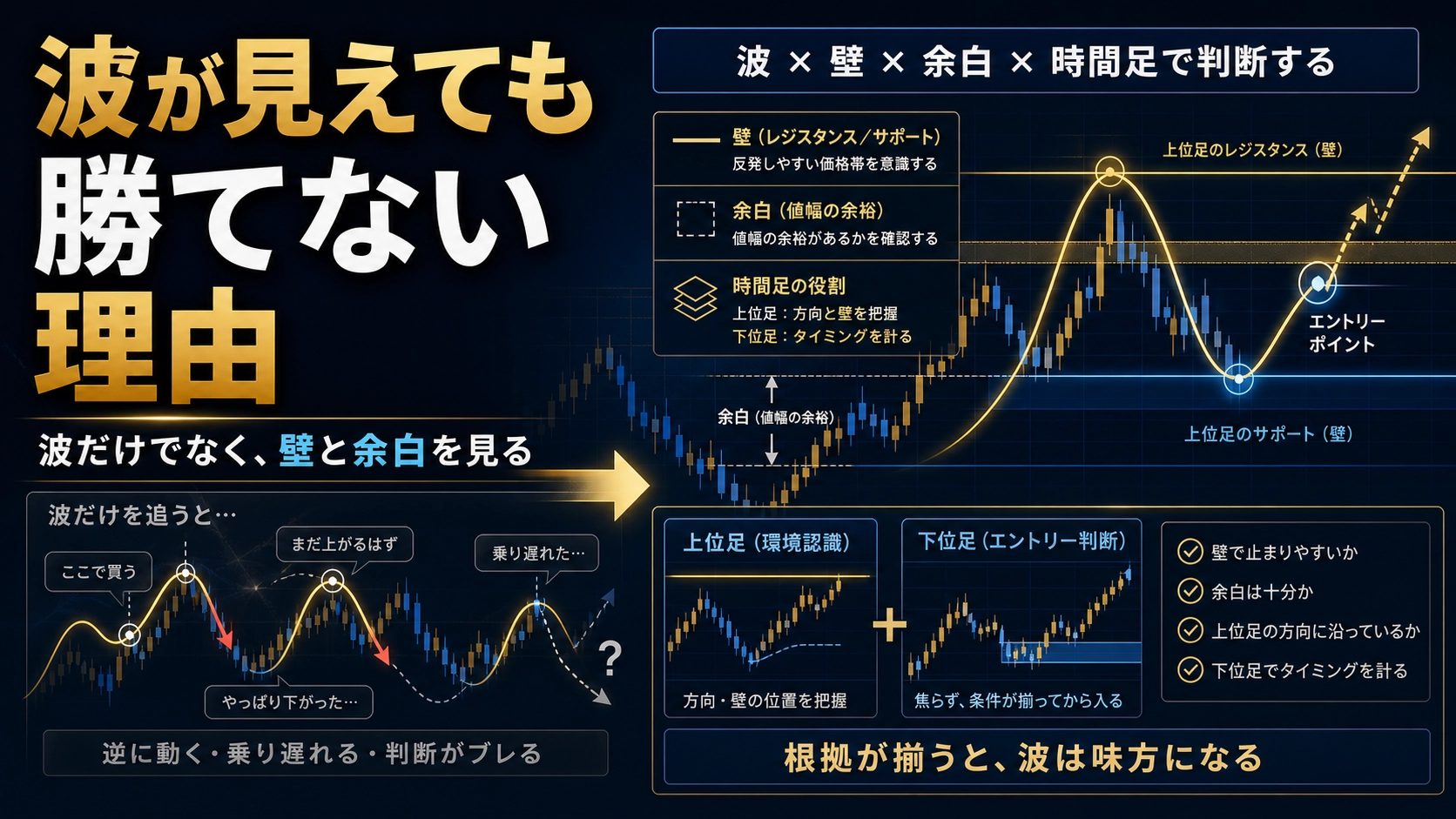
If the wall position is visible on the screen, it’s easier to shorten the back-and-forth checks.
However, tools don’t decide for you.
✅ The decision to add funds is up to you.
? Nightly procedure after a loss: 【Leave one line in the records / Close the chart / Read the paper without looking at the balance】
? GOLD Remedy feature has been featured^^
If you want to organize from the foundation of your decision, please check the contents and limitations.
? Summary: On a losing night, open paper, not the deposit screen
For me, what made me want to add on a losing night was that the balance looked like it had returned to normal.
But adding money didn’t erase the loss; my own money had just moved from somewhere else.
Therefore, decide the day and conditions for adding funds and write them on paper when you’re calm, before you lose.
First decide the date, then write the conditions under which you may add, and finally write the situations not to move.
Name the money that you won’t move to the account as living costs, and pull from there.
Since ratios differ by person, decide after reviewing your own household records.
Borrowed money will never be added under any conditions.
Try writing the day you may open the deposit screen this weekend for just one day on the calendar^^
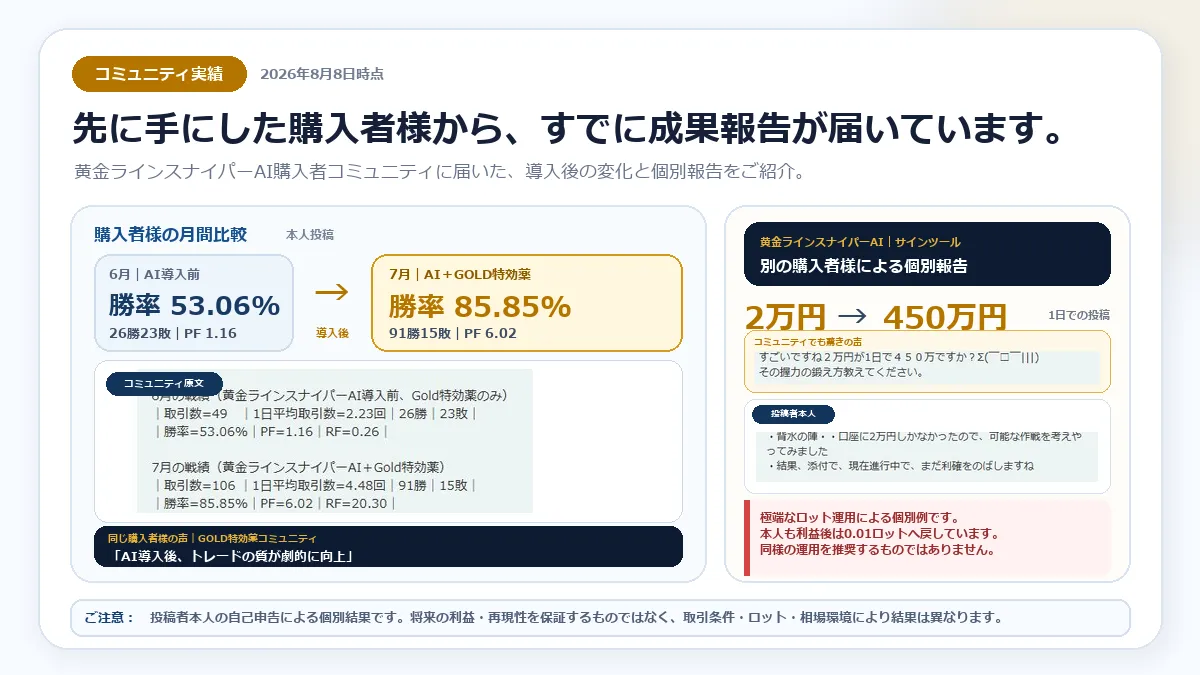
For those who want to shorten the back-and-forth checks, Gold Line Sniper AI is one option as well.
It does not decide whether to enter or whether to add funds for you.
Please use it after confirming the display contents and limitations, with the understanding that ultimate judgment is yours.
✅ On the next losing night, I open the paper before the balance.
? Weekend one-liner: 【Decide a day to open the deposit screen / Write conditions under which to add / Name money that won’t be moved】
View details of Gold Line Sniper AI
Thank you again for reading until the end today^^