

Do not chase other people's profit amounts with gold. Important things when looking at KGS's track record
When you see a large profit report, you may think, "I want to take this much too." I think that feeling is natural.
Recently I introduced the profit and loss report from KGS's early users. In the title, "approximately 52,080,000 yen in Japanese currency," some of you may have paused.
However, after reading that article,it's not that I immediately want you to increase the lot size.
Three things to cover in this article
- Look not only at the amount of profit,but also at the principal and risk.
- Before the desired profit,check the expected loss amount.
- Separate KGS's display from thequantity you decide.
The previous numbers are based on a reference conversion from the user's own compiled table. The confirmed profit in actual accounts has not been verified, and there are conditions such as principal and lot size that are unconfirmed. This does not represent the average performance of all KGS users or profits that anyone can reproduce.
01|Profit amount alone does not convey the size of the trade
“How much did you win?” is easy to understand. But with that number alone, you cannot see how much capital was used or what level of risk was taken.
When you compare the same “loss of 10,000 yen”…
| Trading capital | Loss amount | Percentage of capital |
|---|---|---|
| 100,000 yen | 10,000 yen | 10% |
| 1,000,000 yen | 10,000 yen | 1% |
Even if the amount is the same,the impact on the account can be very different.
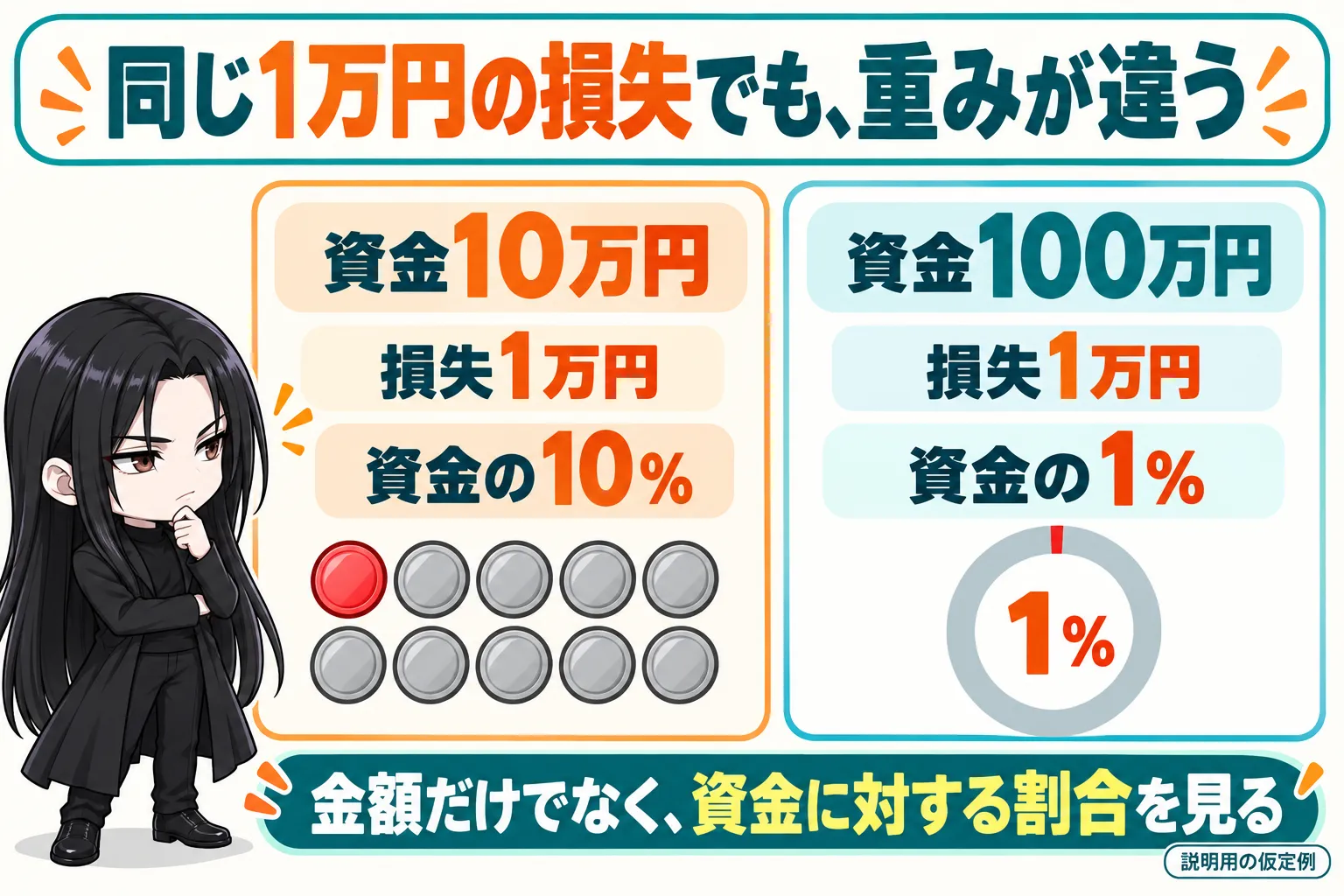
This is a hypothetical example for illustration and does not represent the funds of the previous user. Also, a 1% loss is not a recommendation for safety, nor is a 10% loss something to accept.
So, before you rush to compare someone else’s profit to yours and feel “I have less,” look at what you are doing with your own funds, in that order. Please value that sequence.
02|Do not set the lot size from the profit you want
“Today I want 30,000 yen more, so I’ll raise the lot next time.” “I want to take the same amount as that person, so I’ll increase the quantity.”
If you think this way, the target amount becomes the trigger for your orders rather than the chart.
With the same ticker and the same price range, increasing the quantity also increasesnot only profit but also loss.
First confirm: how much money you might lose.
Check the trading conditions and costs, and verify the loss amount that could occur when moving toward a stop-loss reference point.
If you cannot accept that amount, you may need toreduce the quantity / skip the trade.
Note: The stop-loss amount is not guaranteed.
In sudden market changes, orders may slip, and the anticipated loss and actual loss may diverge.
03|Replace KGS guidance with your own money amount
KURAMA GOLD SIGNAL PRO is an indicator that displays signals for gold entry candidates and guidance for TP (take profit) and SL (stop loss) on the chart.
What I want you to do is not to use those displays to aim for the same amount as others.
Three steps to check before placing an order
- Check the market and the sign.
- Look at the distance from the order price to the stop-loss reference.
- With that quantity,check how many yen of loss will occur.
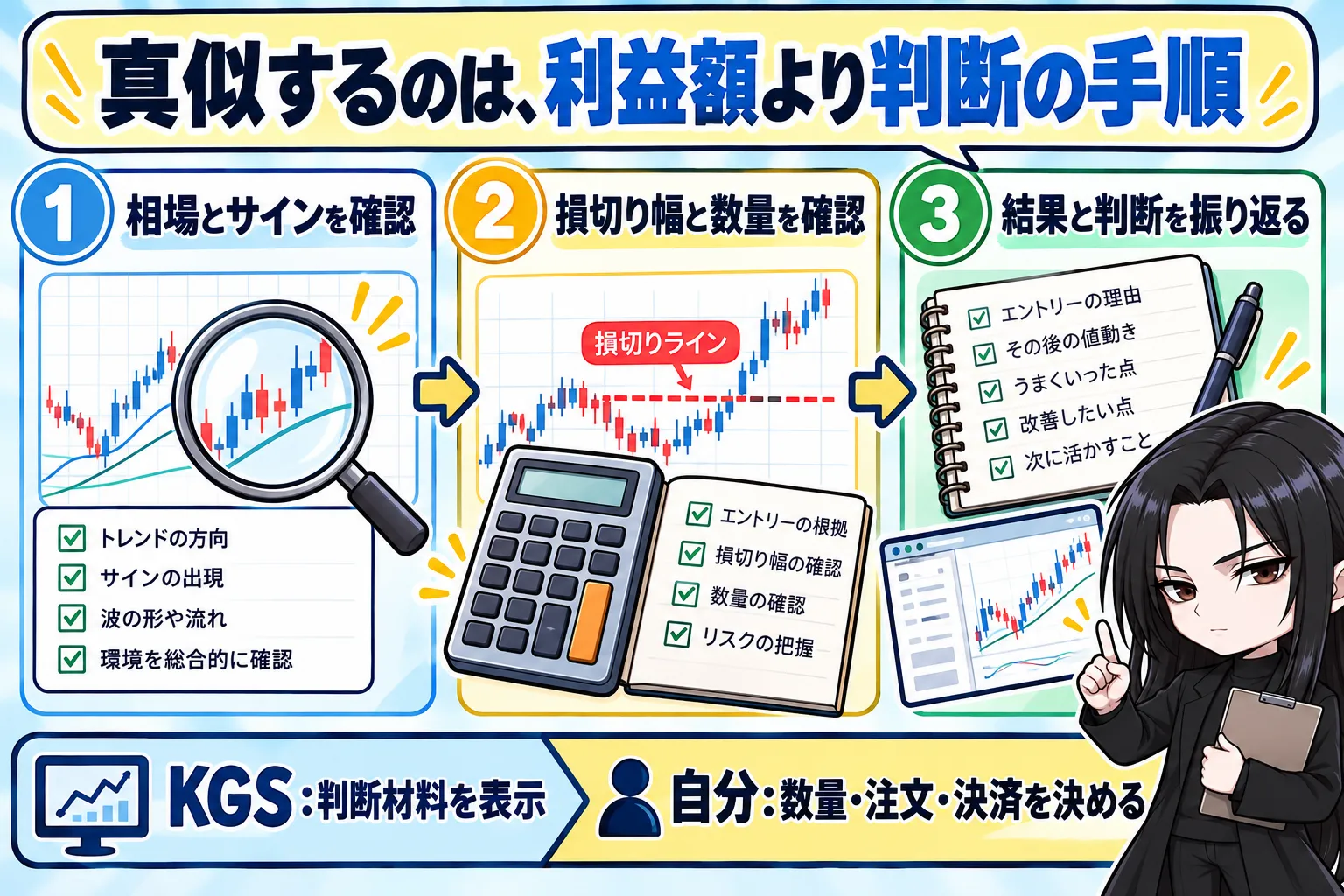
Separate KGS from your own role
- KGS:Displays signals, TP, and SL guidance.
- You:Decide quantity, orders, and settlements.
Having guidance displayed and being able to automate money management are separate things...
Even with the same indicator, if the order price, quantity, settlement method, and trading environment differ, the results will differ. Tools may be the same, but accounts will not be identical.
04|If you bring back actual results, focus on items other than amount
Reading other people's results has meaning. However, do not change your own orders based only on large numbers. If I were you, I would confirm the following points.
- From which period and whether real trading or demo trading.
If there are unknown items, leave them unknown. It is important not to compensate by saying “I won big, so my lot size should be the same.”
Four points I want to keep in my own records
- Entry timeChart image
- PlacedQuantity
- PlannedStop-loss
- Actual reason for settlement.
Not by comparing with others’ profits, but as material to reflect on your own judgment..
05|For those who want to learn how to judge with indicators
It is fine if your interest in KGS started from a user’s actual results. When looking at products from there, please check not only “can I earn the same amount” but also “what I will verify using this.”
If you want to use the signs and TP/SL as judgment materials to organize your trades, please check the product details for KGS.
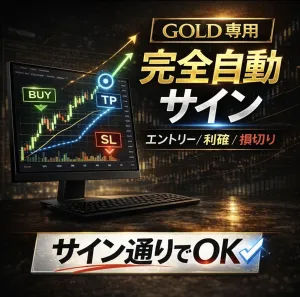 KURAMA GOLD SIGNAL PRO
For those who want to learn both how to use and how to judge
If you want to learn my MA method and chart interpretation as well,a complete set including materials and individual guidanceis recommended.
- Indicator:A material for judging the market.
- MA method / materials:To learn the way of thinking.
- Individual guidance:To confirm usage and questions.
This is for those who want to learn usage and thinking together, not just to end with introducing the indicator.
If you attach a chart image with notes like “I was confused here” or “I want to know how to read this display,” it will be easier to share the situation and for me to explain. Individual guidance is support for learning methods and tool usage, not for giving individual trading instructions or guaranteed profits.
Other people's profit amounts are a trigger to interest. Actual trading should be aligned with your own funds and understanding. We provide tools and an environment for learning for that purpose.
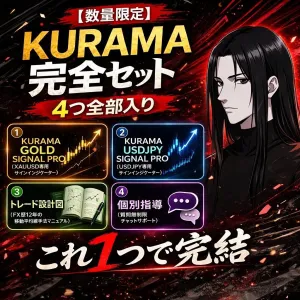 【Developing a Professional Trader】GOLD×USD/JPY indicator + materials + individual guidance
※This article provides general learning information and does not recommend any specific trades or lot sizes. Past reports do not guarantee future results. FX and commodity CFDs involve principal and profit not being guaranteed, and depending on market conditions, losses may exceed the deposited margin.