
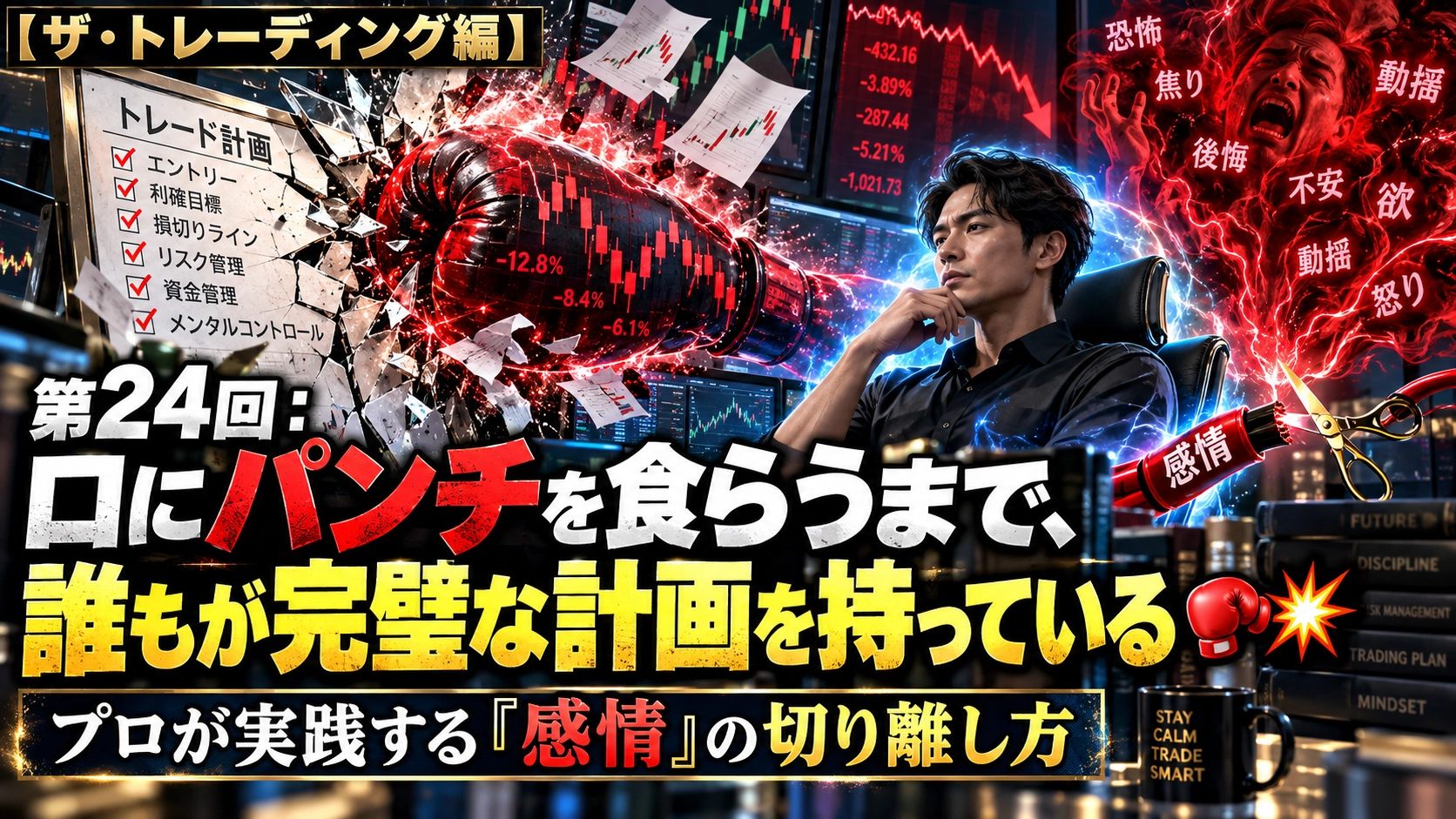
【The Trading Edition】 Episode 24: Until you take a punch to the mouth, everyone has a perfect plan ??

Last time (Session 23), we looked behind the terrifying financial market into the “trap of FX brokers” that eats our orders in a瞬間 with high leverage. What we are fighting is not just a wave of numbers, but a jungle crowded with hunters who will seize funds at any opportunity.
By Chapter 8, we had obtained the “system (weapon)” to read the waves and carefully chosen the “market (battlefield)” to fight. We’re ready to win! …And just as you eagerly plunge into the market, Elder Dr. will pour the biggest cold-water splash in Chapter 9.
This time, you stand at the entrance to the ultimate armor that decides life or death in trading: “risk management (capital management).” Why do most people, despite having wonderful methods, end up bankrupt? The answer lies in our “human nature.”
1. Mike Tyson’s saying and the high-altitude balance act
No matter how well you tailor a trading system to past data, it is impossible to predict the future completely. Unexpected events will occur, and plans that seemed perfect can easily crumble.
Before getting punched in the mouth:Legendary boxer Mike Tyson once said, “Everyone has a plan until they get punched in the mouth.” The same goes for trading: no matter how perfect your system, the moment you actually take an unexpected hit (a loss) from the market, amateurs who haven’t managed risk will panic.
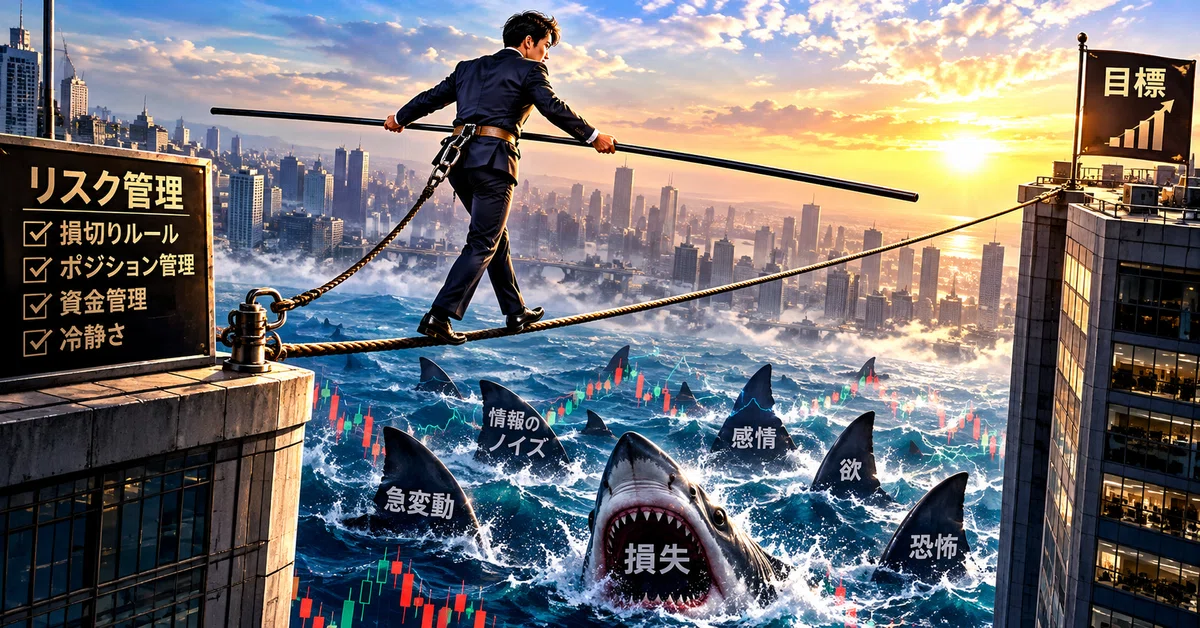
Clinging to a rope without a safety net means death:Dr. Elder likens trading to dangerous high-wire acts. No matter how well prepared and how good your analyses, you cannot avoid sudden mishaps. Therefore, you must absolutely lay out a “safety net” to prevent you from being slammed to the floor.
2. Why can’t we take losses? (Kahneman’s trap)
You intellectually know that cutting losses is important, but when the moment comes, your fingers won’t move.Because humans are programmed that way.
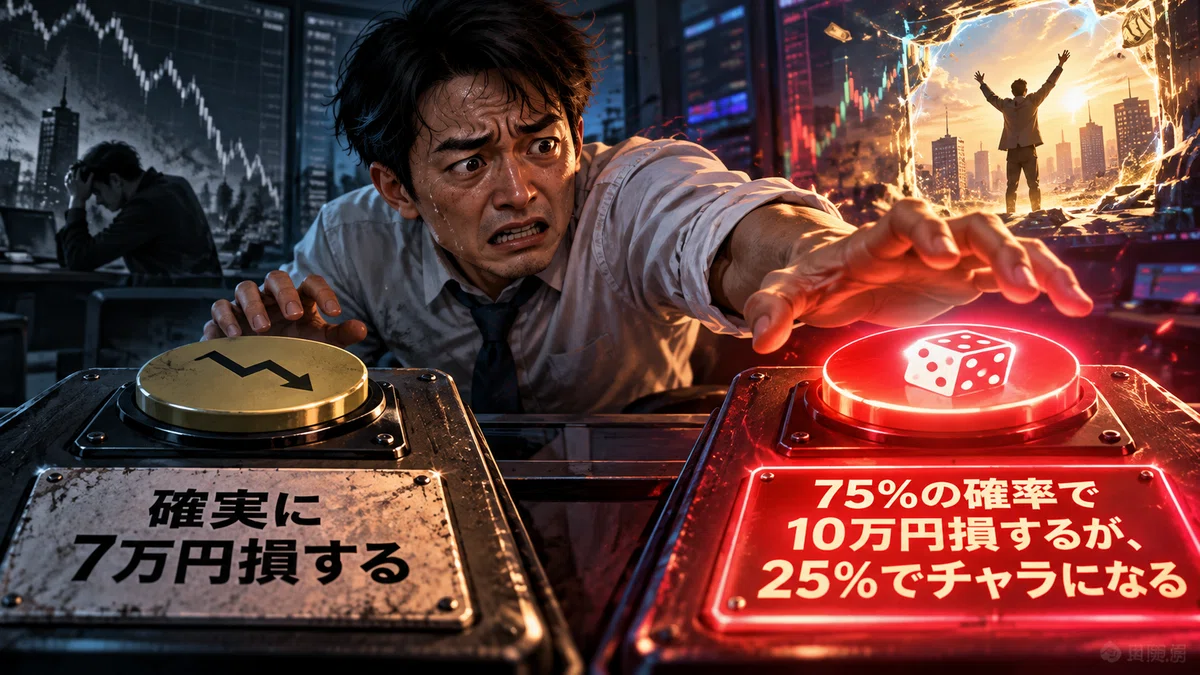
A strong aversion to losses:As shown in Daniel Kahneman’s book “Thinking, Fast and Slow,” winner of the Nobel Prize in Economics, people prefer “certain profits” while reacting strongly against “certain losses.”
When pressed, you become a gambler:Experiments show that when people must choose between “certainly losing $700” and “75% chance of losing $1000 but 25% chance of losing nothing,” the vast majority choose the riskier gamble.
The worst strategy is “prayer”:Beginners, when markets move against them, instead of cutting losses, start praying for a reversal. To avoid the pain of certain losses, they hold on to positions with desperate hope. As a result, losses that should have been small turn into “fatal blows” that wipe out the account.
3. Those who compute money during trades die
A decisive difference that separates professional market survivors from amateurs who exit quickly is whether you think about money during trades.Whether you are thinking about money in the middle of a trade.
Money fuels emotional frenzy:Money stirs strong emotions in people. Beginners may daydream about what to buy with unrealized gains before they lock in profits, or freeze with worry about paying for unrealized losses.
Pros don’t count the amount:Dr. Elder says he trained himself to stop thinking in terms of dollar amounts for positions during trades. Just as a dieter won’t reach for food even with plenty of treats nearby, calculating “how much you’re winning or losing now” during trading is a ruinous habit.
A surgeon’s metaphor:The mindset of a pro trader resembles that of a surgeon performing an operation. Surgeons don’t think about how much money they’ll make while the patient’s abdomen is open and blood is flowing. By focusing fully on the task at hand (managing the trade), money follows afterward.
4. The risk a pro accepts as a businessman
So, how do professionals face losses? They don’t view losses as “their failure” or a “character flaw.”