
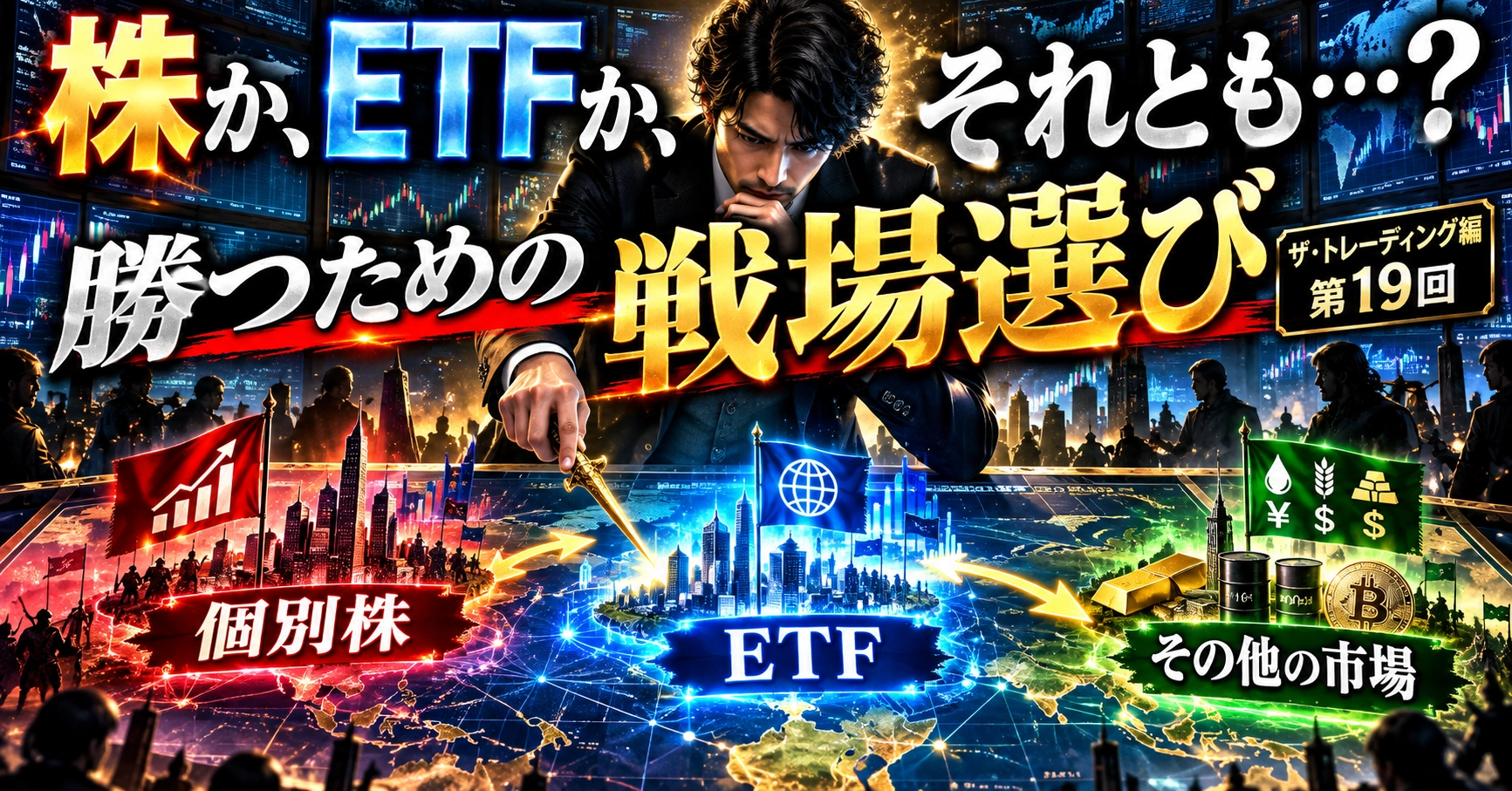
[The Trading Edition] Episode 19: Stocks, ETFs, or something else... Which does the pro choose for the battlefield of winning (trading instruments): the ultimate strategy ⚔️?️

Until the previous article, we have built powerful trading systems to read market waves, such as Dr. Elder's "Triple Screen" and "Impulse System."
However, once the system is finished, there is inevitably a wall you will encounter next.
“So, exactly, what should we trade?”?
From Chapter 8, we will tackle this eternal question! There are countless products in the world, such as stocks, ETFs (exchange-traded funds), options, FX, futures, etc. They all look the same on charts, but each has its own "completely different advantages and disadvantages," and the risks awaiting you differ dramatically.
This time, we will bare the true nature from a professional perspective of the two that we see most often: "stocks" and the increasingly popular“ETFs,”
? Minimum condition: Is the sea deep and the waves high? (Liquidity and volatility)

Regardless of which product you trade, there are two fundamental premises that must always be met.
Liquidity (average daily volume):Ease of trading. Illiquid stocks (low volume) cannot be sold when you want to, and when the time comes, you suffer big losses from invisible fees called “slippage” (the difference between order price and execution price). Dr. Elder’s friend once bought 6,000 shares of a low-volume stock and struggled for days to unwind them during a decline. Fight in major markets where daily volume exceeds at least 1 million shares.
Volatility (degree of short-term variation):Trading opportunities (height of the waves). No matter how high the liquidity, if the price stops moving and remains flat (low volatility), there is no chance to gain trading profits.
If a product lacks these two things, no matter how good the news, you should immediately rule it out as a trading target.
? The light and shadow of “stocks”: The trap of fundamentals

Stock investing is the most popular, but there is a trap for beginners. It is that you end up “liking” the company itself.
When you like the company’s future so you buy its stock, even if the price enters a downtrend, you justify to yourself, “This is a good company, it will rise someday,” and you become unable to cut losses. For long-term investing (years), the company’s profitability (fundamentals) matters. However, for trades aiming at days to weeks,“the crowd’s expectations (psychology)” are what move prices..
“Mr. Market’s mood is easily influenced by others and can trip us up. That is, when Mr. Market is depressed, people want to sell, and when he is manic, people want to buy. To succeed in trading, you must stand apart from the crowd and stand alone.”
If you trade stocks, you need a cool, professional perspective that chooses not because “I like that company,” but purely because “it has liquidity, high volatility, and technical indicators are signaling,”
? The reality of “ETFs”: Is it the strongest spear or a pile of costs?
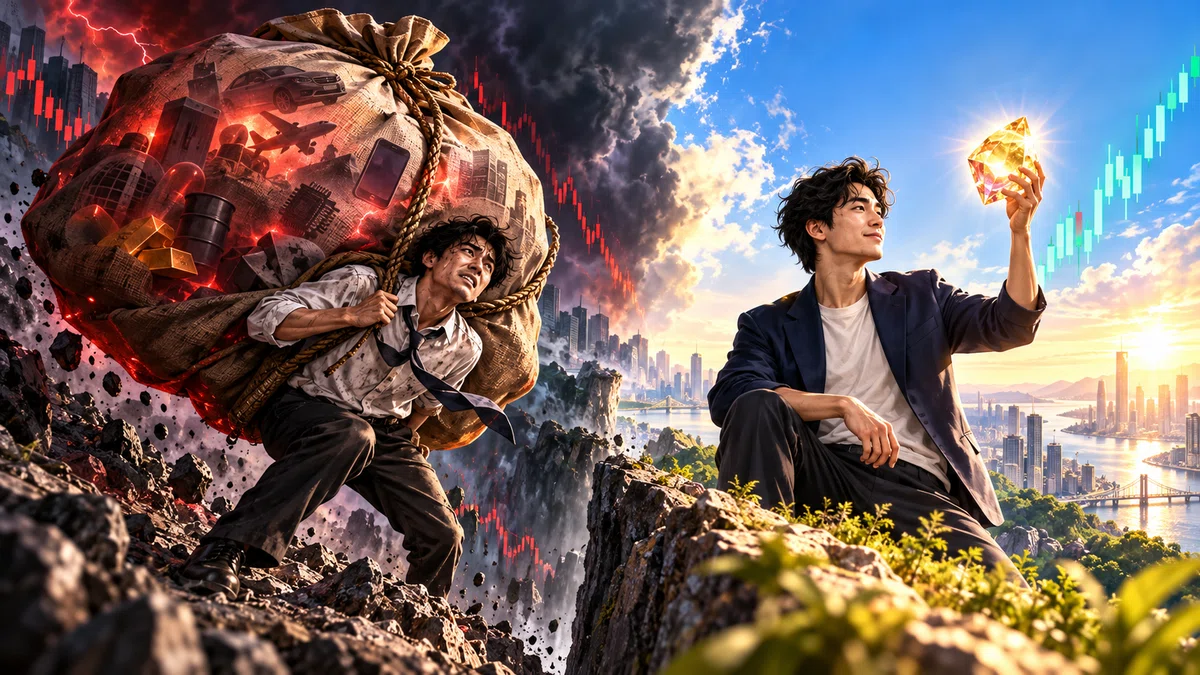
In recent years, ETFs (exchange-traded funds) have gained explosive popularity. An ETF is a fund that can be traded in real time like stocks and can track indices such as the S&P 500 or contain a bundle of stocks from a specific sector (IT, finance, etc.).
The greatest advantage of ETFs is that you can avoid the “idiosyncratic risk” of individual companies. Individual stock trades’ biggest fear is a sudden scandal or a misstatement in earnings causing a halt in price the next day, but with ETFs you can dramatically diversify that risk.
However, Dr. Elder also warns about the traps of ETFs.