
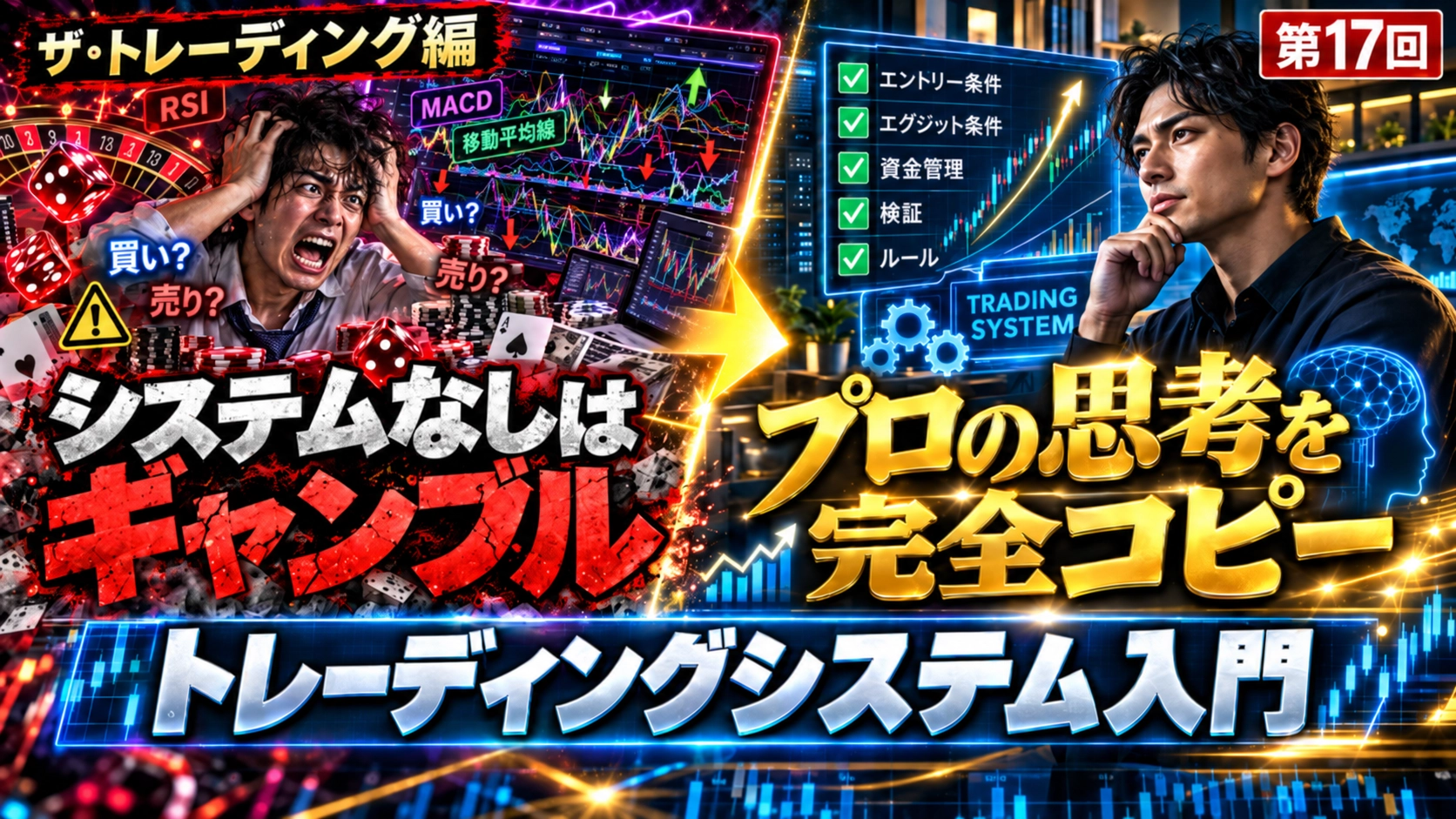
[The Trading Chapter] Episode 17: Trading without a system is gambling? An introduction to the "Trading System" that fully copies professional thinking?️?

In previous installments, you have acquired a truly powerful set of tools: trend indicators (such as moving averages), oscillator indicators (like RSI), and broad market indicators (NH-NL), among many others!
But the most important part starts here.
“How do you combine and use these tools?”
No matter how excellent a tool (indicator) is, using it alone or displaying everything blindly will just create noise. In Chapter 7, which begins now, we will explain the professional construction method to assemble disparate tools into a single “trading system” and evolve your trading from “feeling” to “business.”
?️ There is no magical tool. The traps of indicators
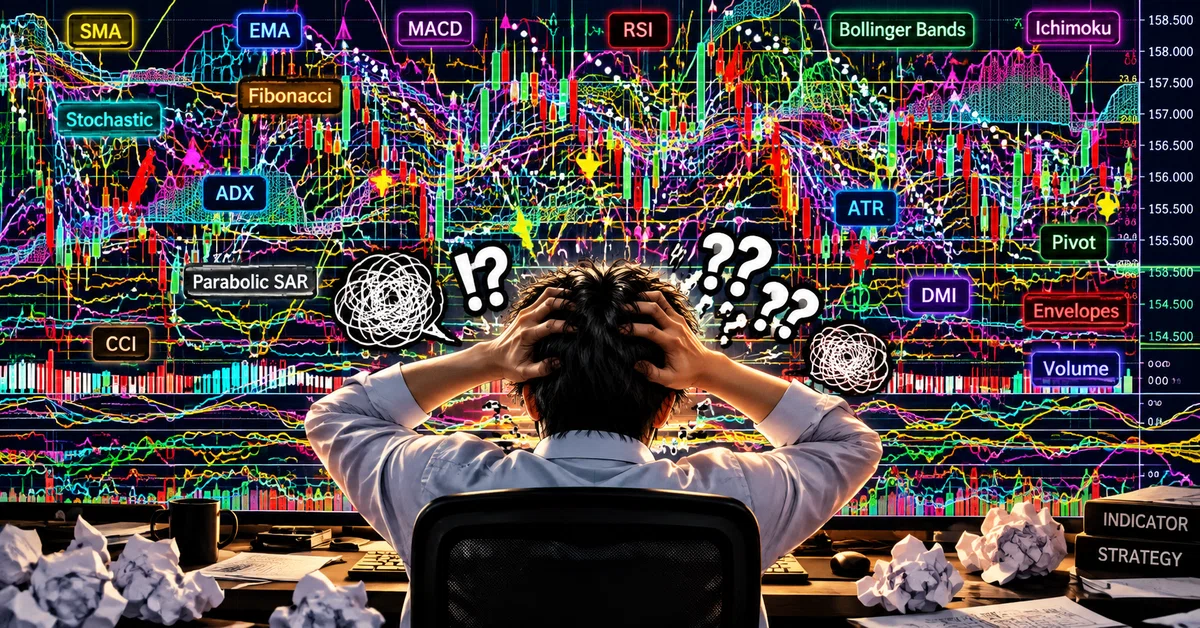
Beginners often search for an indicator like a magical bullet that will surely win in the market. If a tool they happened to use wins once, they come to believe it’s magic. However, when that magic stops working (as market conditions change), they immediately discard the tool and set off to find another magical tool.
As long as you are conducting this “holy grail search,” you will never become consistently profitable.
Because,the market is not simple enough to be analyzed by a single indicator. So, is it enough to combine many indicators?
There is another trap here. Trend indicators (like MACD) are powerful when there is a trend, but in range-bound markets they produce many “false signals.” Conversely, oscillator indicators (like RSI) produce excellent signals in range markets, but when a trend develops they give signals that are too early and get swallowed by large moves.
In other words,all technical indicators have “markets they excel in” and “markets they struggle in,” and using them alone will inevitably fail somewhere.
? The strongest system uses “contradictions”
So, what do professionals do? They deliberately combine indicators with different strengths to create a “system that compensates for each other’s weaknesses.”
One of the most famous systems, associated with Dr. Elder, is the “Triple Screen Trading System.” ※The specific how-to of this system will be explained in detail in the next sections!
In Triple Screen, trend indicators and oscillator indicators are combined in a way that intentionally creates contradictions.
Screen 1 (Trend):First, use a trend indicator to find the “big wave (long-term trend).” Here you decide the general direction to buy or sell.
Screen 2 (Oscillator):Next, use an oscillator to find the “reversal” of the small wave (short-term trend).
Enter only when the larger wave is indicating an uptrend (buy) and the smaller wave indicates “overbought”/sell signal.
Riding a big wave (trend) is easy, but the safest and most profitable timing to ride a big wave is when the wave recedes slightly (pullback) — the safest moment to maximize profits.
It is the contradictions between trend and oscillator indicators that reveal the best timing.
? The three promises you should write before trading