
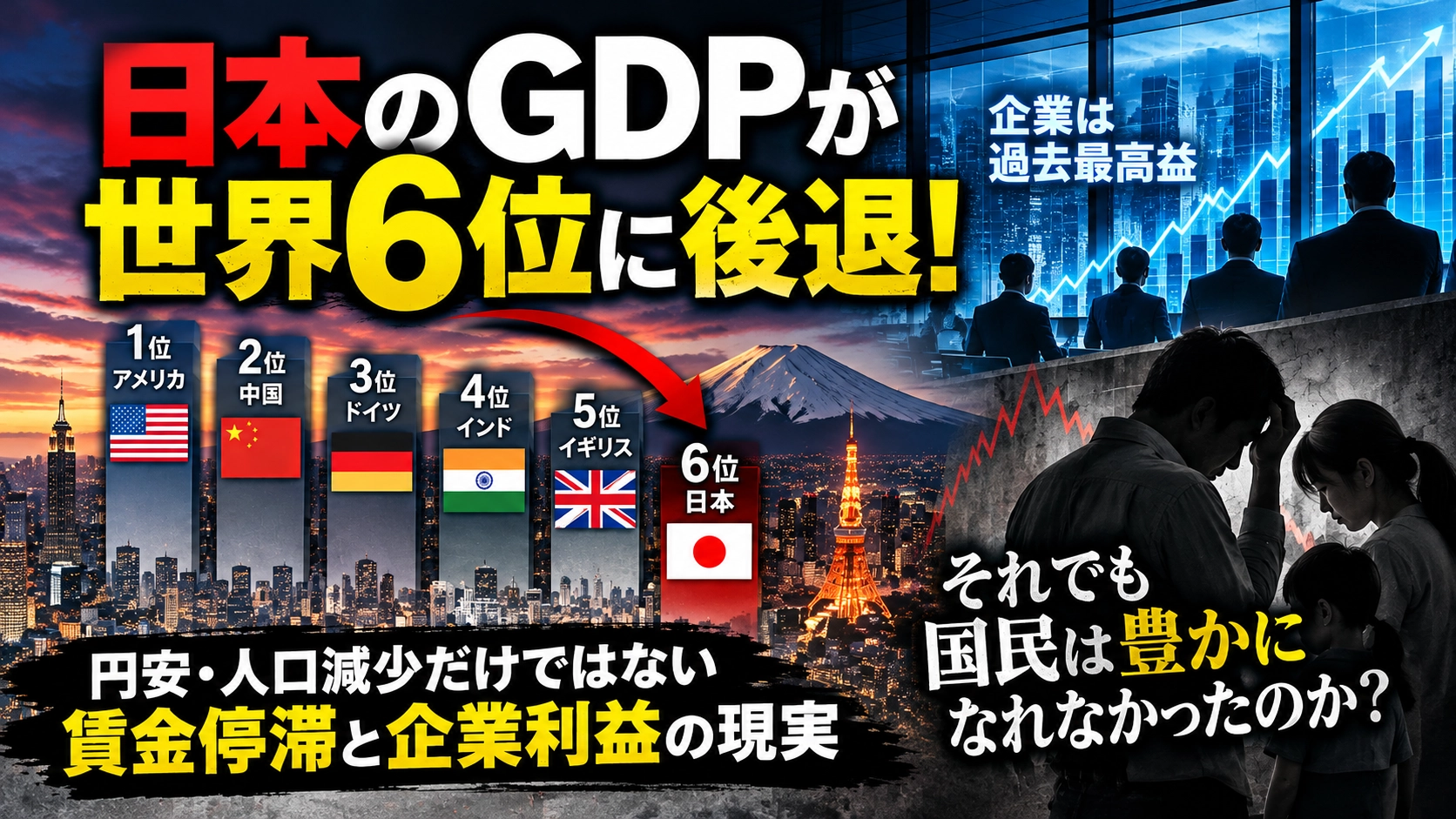
Japan's GDP is forecast to drop to 6th place in the world by 2027. Companies are increasing profits, but did the citizens still not become prosperous?
?This article was posted on October 16, 2026=>Latest related articles?
Japan's nominal GDP is forecast to fall to 6th in the world in 2027 according to IMF's latest outlook. It is currently 4th in the world. What is happening to the Japanese economy, which once boasted the second-largest in the world?
A weak yen, depopulation, and low growth are major factors. But can they fully explain it? While corporate profits have improved, wages have remained stagnant and the expansion of non-regular employment has long been a challenge.
Even though the economy is moving, the feeling of being rich is limited. However, at the moment, there are some slightly different movements.


? Shock of being 6th in the world! Yet the ranking is close
In IMF's latest World Economic Outlook, Japan's nominal GDP in 2027 is projected to be $4.4676 trillion, below India's $4.5211 trillion and the UK's $4.4889 trillion, dropping to 6th place.
Growth rate is forecast to be 0.7% in both 2026 and 2027.(Source: IMF World Economic Outlook (October 2026), Jiji Press, Xinhua)

What stands out is the small difference. The gap between Japan and the UK is about 0.5%, and the gap with India is only about 1.2%. In dollar terms, the effect of the yen’s depreciation is large, and a little movement in the exchange rate can swap the rankings.
Even if the ranking drops, Japanese living standards do not automatically decline.
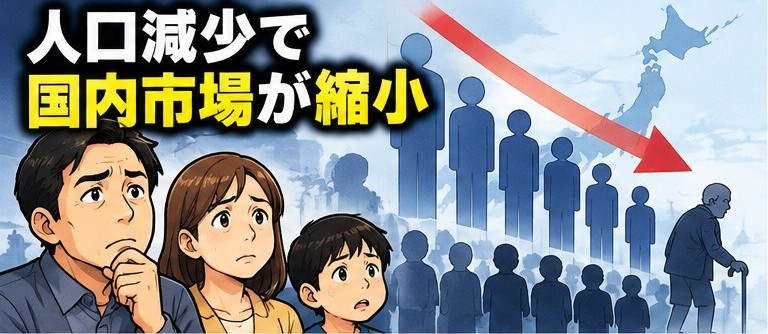
On the other hand, depopulation reduces the number of workers and consumers, making the domestic market prone to shrinkage. In a shrinking Japan, is there no choice but to accept contraction?

? Companies are increasing profits, but the people did not become richer?
Over the past 30 years, Japanese companies have emphasized shareholder returns and executive compensation, and workers’ wages have long lagged. The increase in non-regular employment has led many to feel that the sense of “the whole nation as middle class” has faded.
Even if a company gains profits, if that result does not go to wages or domestic investment sufficiently, household purchasing power will not strengthen. If consumption does not rise, company sales will also struggle to grow, and overall economic growth will slow.
Current corporate profits are strong. In the April–June 2026 quarterly corporate statistics, current profits for all industries (excluding finance and insurance) rose by 24.6% year over year, marking seven consecutive quarters of profit growth.
However, one must be careful about the composition of the profit increase. Under a weak yen, non-operating income such as dividends from overseas subsidiaries has risen, which has been a contributing factor to the rise in profits.The increase in profits does not necessarily mean a strengthening of domestic earning power.

? Signs of change are beginning to appear in wages and income
There are bright signs in wages. The Ministry of Health, Labour and Welfare announced on October 7 that the Monthly Labour Survey (August preliminary) showed real wages up 1.5% year on year, marking eight consecutive months of increases.
Furthermore, real total cash earnings for April–June 2026 reached an annualized 289.3 trillion yen, a slight surpassing of the pre-COVID peak of 288.1 trillion yen in April–June 2019.
It has taken about seven years to return to pre-COVID levels.

However, there are careful points. Real wages are based on preliminary figures, and due to changes in the surveyed establishments in January 2026, there is an estimated difference of about 0.5% in total cash earnings. (Source: Ministry of Health, Labour and Welfare “Monthly Labour Survey,” Ministry of Finance “Corporate Statistics,” Monex Securities)
Whether this is a temporary movement or will lead to a broader expansion of household consumption is the next focus.

? An economy where the people prosper is more important than GDP rankings
What Japan needs is not just to reclaim its GDP ranking.
Companies must grow, and the fruits should be returned to wages, boosting consumption, which in turn fuels further corporate growth.
Even with a continuing population decline, if purchasing power per person rises and domestic demand expands more than the decline in population, there is still economic potential.
For investors and traders as well, it will be a hint to assess Japan’s next growth: whether corporate profits alone or wages and consumption have truly recovered.