Financial Instruments Business Operator Kanto Finance Bureau Director (Kinsho) No. 1960 / Membership Association Investment Trusts Association, Japan Membership No. 012-02323Go to GogoJungle Home
Born in Tokyo in 1957.
After graduating from the Civil Engineering Department, School of Engineering, Waseda University, he worked for a major general contractor and joined Nomura Asset Management (formerly Nomura Trust & Banking) at the age of 31.
After handling stocks, bonds, futures and options trading, he was seconded to Nomura Research Institute, where he excelled as a strategist. In the year he was seconded, he ranked as a strategist in the Nikkei Financial Newspaper (at that time) "Popular Economists Ranking."
After returning to Nomura Asset Management, he worked as a fund manager, with his assigned funds being ranked No. 2 in Toyo Keizai’s annual performance list. In addition, as the person responsible for operations, he successfully established and listed Japan’s first listed investment trust (ETF), the "Nikkei 300 Leveraged ETF," and in 1996 became Nomura Asset’s first professional contract fund manager.
Since then, for more than 20 years, he has gained experience in various investments including stocks, bonds, derivatives, venture investments, and real estate-related investments at Nomura Asset Management and other major asset management firms and banks. He also filed a business model patent in the mutual fund industry.
Alongside investment operations, during his secondment to Nomura Research Institute, he has also worked as a critic and strategist.
In addition to writing for economic magazines such as Weekly Diamond and Toyo Keizai, he has given numerous talks at management conferences and employee training sessions for listed companies, including the Economic Friendship Association (Keizai Doyukai) and the Japanese Securities Dealers Association.
In addition, he has been involved in the launch of venture companies, funding guidance, management consulting, private placement debt refinancing guidance and execution, and other activities to start and cultivate venture businesses and support management.
Representative, LLC Another Stage
Regular commentator on Tokyo MX2 "WORLD MARKETZ" (Wednesdays)
Instructor at Waseda University Extension Center
Senior advisor for a certain real estate tech company
◆ Activities
- Financial-related courses and seminars
- Media appearances
- Writing activities
- Management consulting services, including broad financial matters
- Fundraising: planning schemes and fundraising
- Guidance on third-party allotment capital increases and selecting fundraising destinations
- M&A support services
- Real estate transaction support
- Startup support
◆ Media appearances, etc.
- NHK Special – "Tokyo Black Hole III 1989–1990: The Palace of Temptation and Sin of the Bubble" (NHK)
- "Viking," "Good Day," "New News 2001" (Fuji TV)
- "Hatori Shinichi Morning Show," "Good Morning" (TV Asahi)
- "TIME LINE" (TOKYO FM), and more
- Kyodo News / Nikkan Gendai
- Shukan Bunshun / Shukan Post / Playboy / Friday / Monthly Entame
- Gendai Business, etc.
◆ Publications
- “An Approximately Forty-Single, On-the-Brink OL Studies Investing” (Shuwa System)
- “The Inconvenient Truth of Abenomics” (United Books)
- “1989 Nikkei Average 38,915” (Kawade Shobo Shinsha)
- “202X Financial Asset Disappearance” (K.K. Best Seller)
Single article
$3.80
Reference price (JPY): ¥600 (taxed)
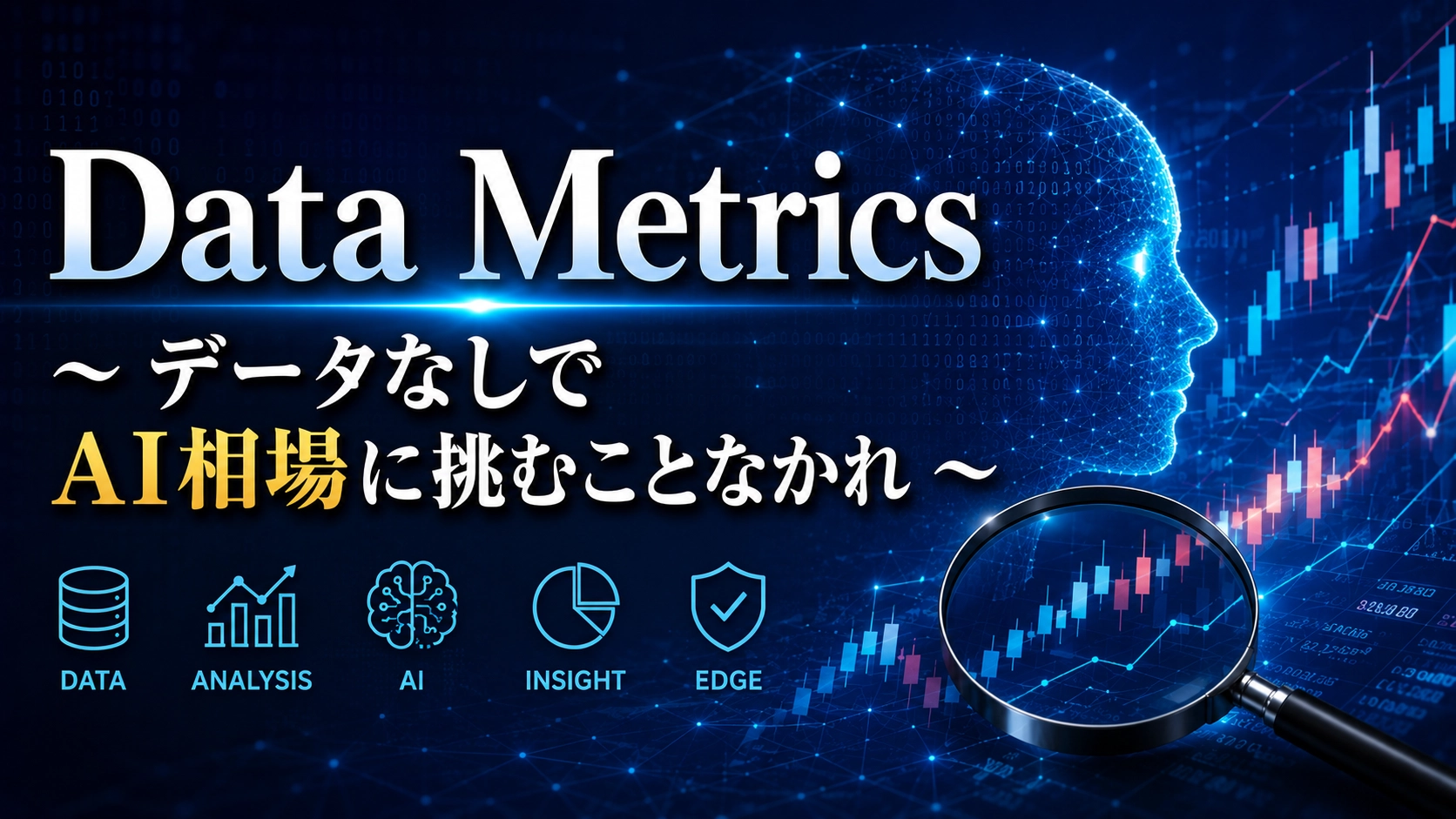
Data Metrics 2.2 (October 5 baseline) ~ Do not challenge the AI market without data
Data Metrics 2.2 (as of October 5). Includes the fund inflows/outflows for the "4.3x Bull" and the "expected average cost" for the "4.3x Bull".
"Data Metrics 2.2" has two parts.
The main focus is to estimate buy/sell signals for each via short-term CTA with a shorter analysis period and the long-term CTA with an analysis period of about two months, by estimating position sizes.
Evaluates the 225 Nikkei Stock Average constituents using the same standard as the Nikkei Stock Average, lists the short-term and long-term estimated buy/sell signals for the top 10 constituents by index weight, and lists 20 constituents for which signal changes are expected to be close, in an "IDC".