
About the fractal nature of the market ~ What is multi-timeframe analysis? ~【MTF Analysis Intro Part #1】
Hello! This is SAKU!
Previous articleUntil now, we have delivered a basic course on technical analysis in several installments, but
Starting this time「MTF Analysis (Multi-Time-Frame Analysis)」I plan to write a three-part introductory series about this analytical method!
In the first installment, we will cover the concept of “Fractal” which is a key idea when learning MTF analysis.
MTF analysis may be a field that takes time to understand, but it can also be a powerful tool, so let’s study it properly!
What is MTFA Analysis (Multi-Time-Frame Analysis)?
First, let’s talk briefly about what MTFA Analysis is.MTF Analysis refers to an analysis method that considers multiple timeframes (higher and lower timeframes) such as higher and lower timeframes in order to analyze.
“You should pay attention to the situation of the higher and lower timeframes!”
If you are learning technical analysis, you may have heard statements like the ones above.
This analysis method, which takes into account multiple timeframes (multi-timeframe) such as higher and lower timeframes, is calledMTF (Multi-Time-Frame) Analysis.
Before getting into concrete MTF analysis, let’s look at the concept you should know first: “Fractal Structure.”
What is Fractal Structure?
Have you ever heard ofFractal Structure?
A fractal is said to be a shape with self-similarity and fractional dimensions, a term coined by Benoit Mandelbrot.The word fractal itself was Mandelbrot’s coinage, but its etymology comes from the Latin fraktus (Fractus); in English, it carries meanings like Fraction, fragment, partial, or piece.
A fractal-containing structure has the characteristic that parts resemble the whole (self-similarity or recursion).(self-similarity or recursion).
For example, natural phenomena such as clouds, plants, snowflakes, coastlines, and the double helix structure of DNA often exhibit fractal features.
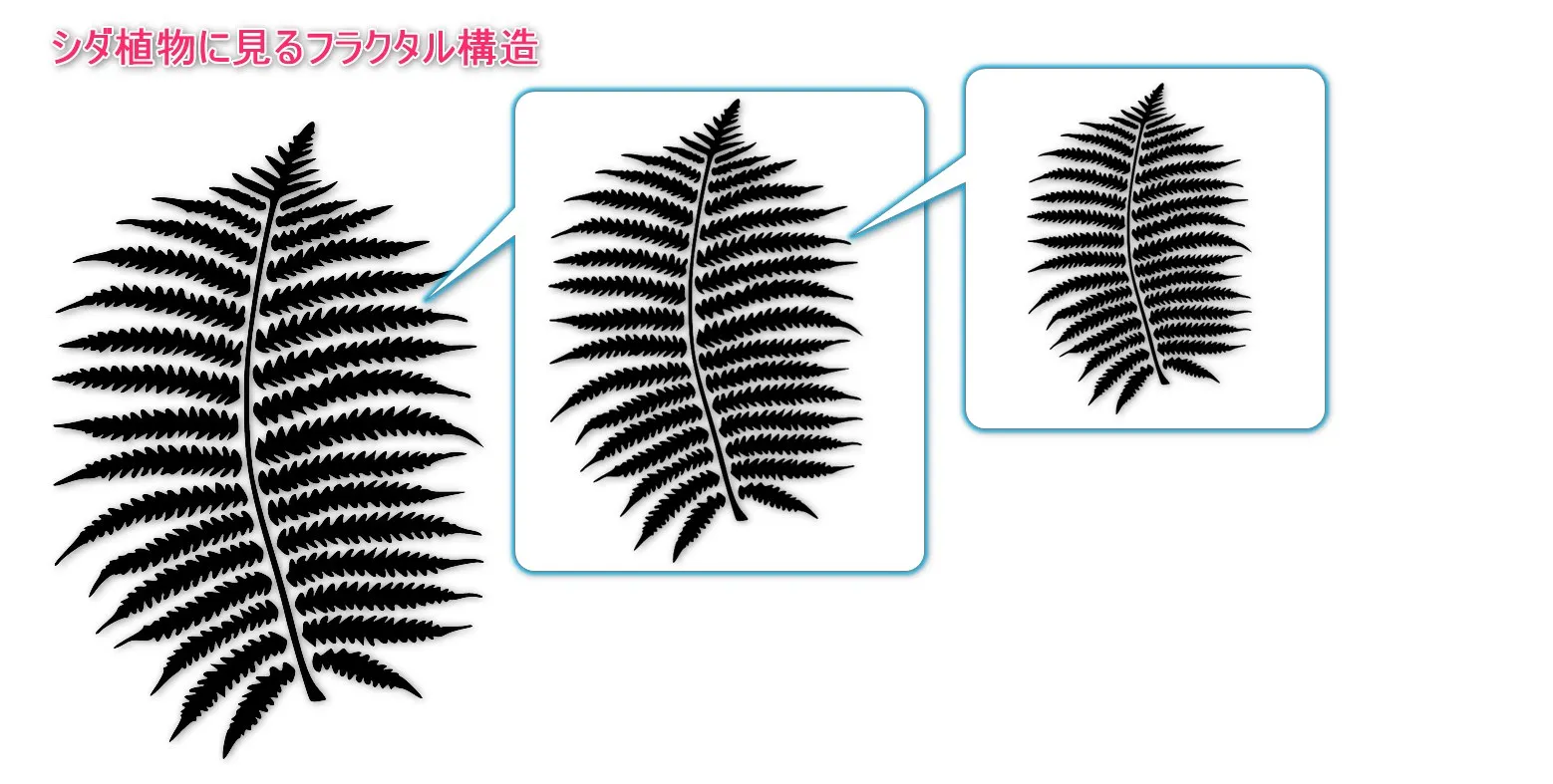
This means that enlarging a part of it yields a similar shape.
Fractal> Until the concept of fractals was born, these spontaneously formed irregular and complex shapes were not given deep meaning (they were called incidental forms or automatic patterns).
However, with the concept of fractals, these unpredictable phenomena can be given objectivity.
Even in the world of art and design, one could see increasingly complex and arbitrary shapes, but artists expressed them unconsciously.
Incidentally, the mandala often said to represent the universe, and the Taijitu (yin-yang symbol) also shows self-similarity and self-recurrence.
What is Market Fractality?
“I get that fractals are amazing, but aren’t we going to talk about trading?”
If you’re thinking that,
the reason I’m bringing this up is…
Yes! The market also exhibits fractality!
Please look at the chart below.
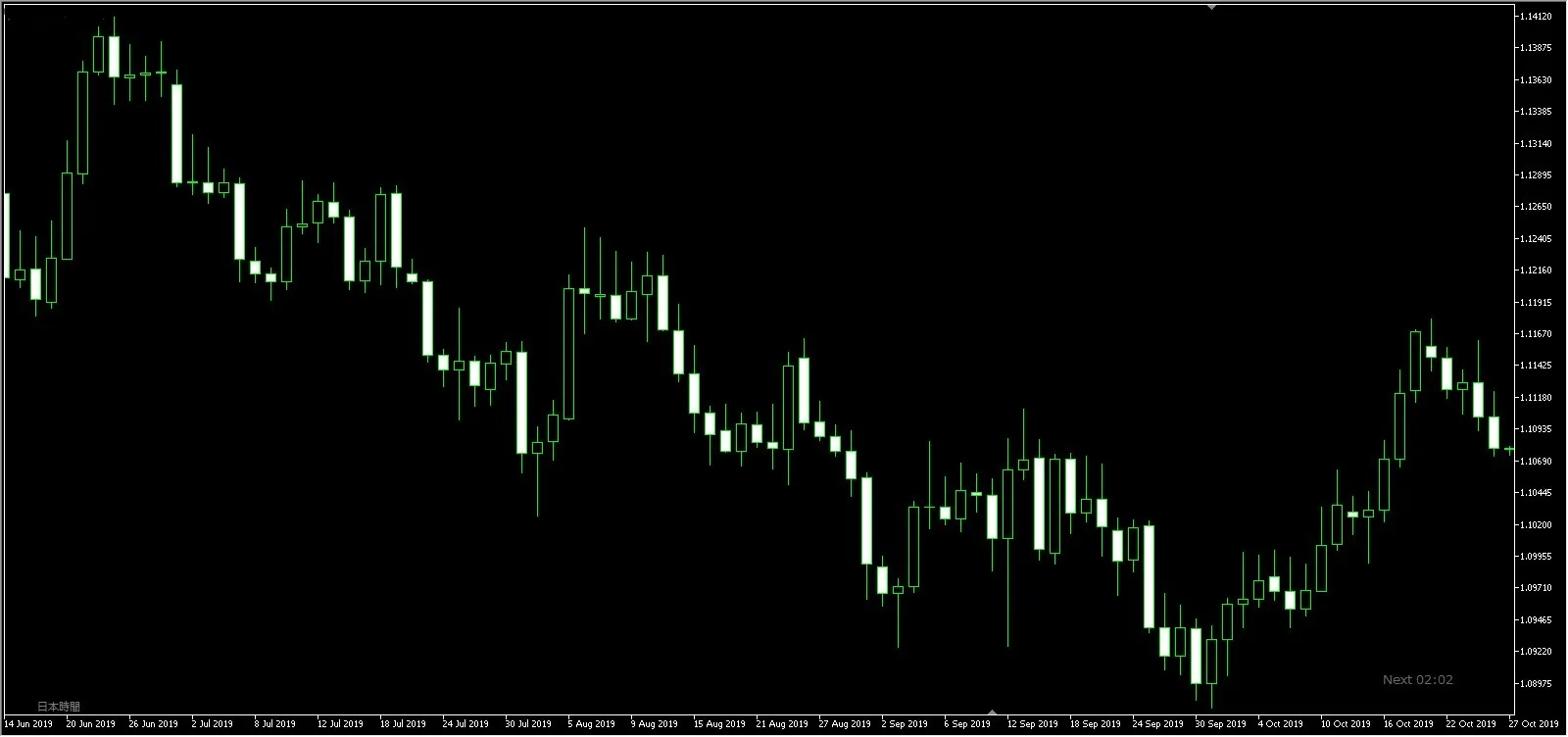
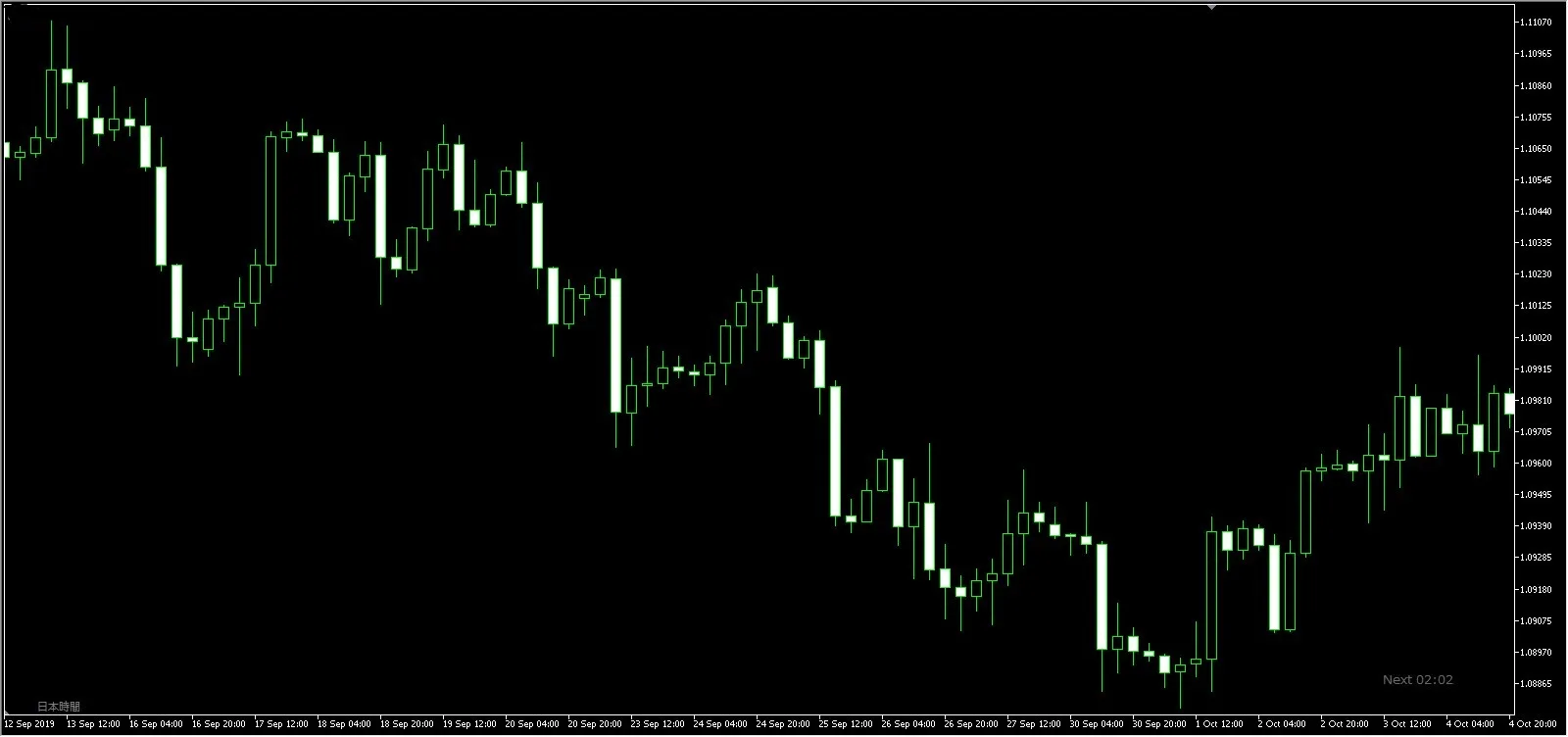
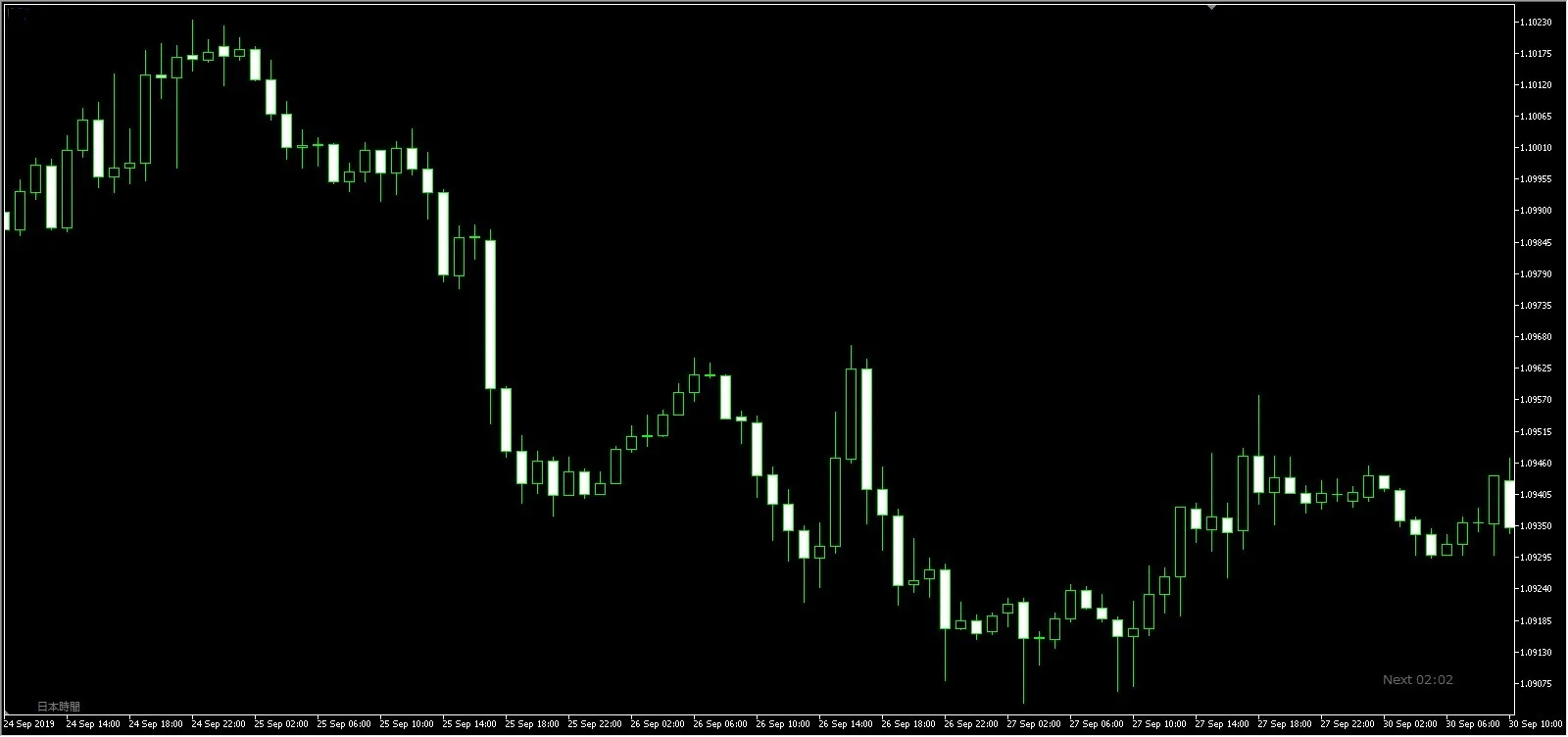
It looks somewhat similar, doesn’t it?
In fact, these are a daily chart from the top, then 4-hour, then 1-hour!
So, here’s what it means.
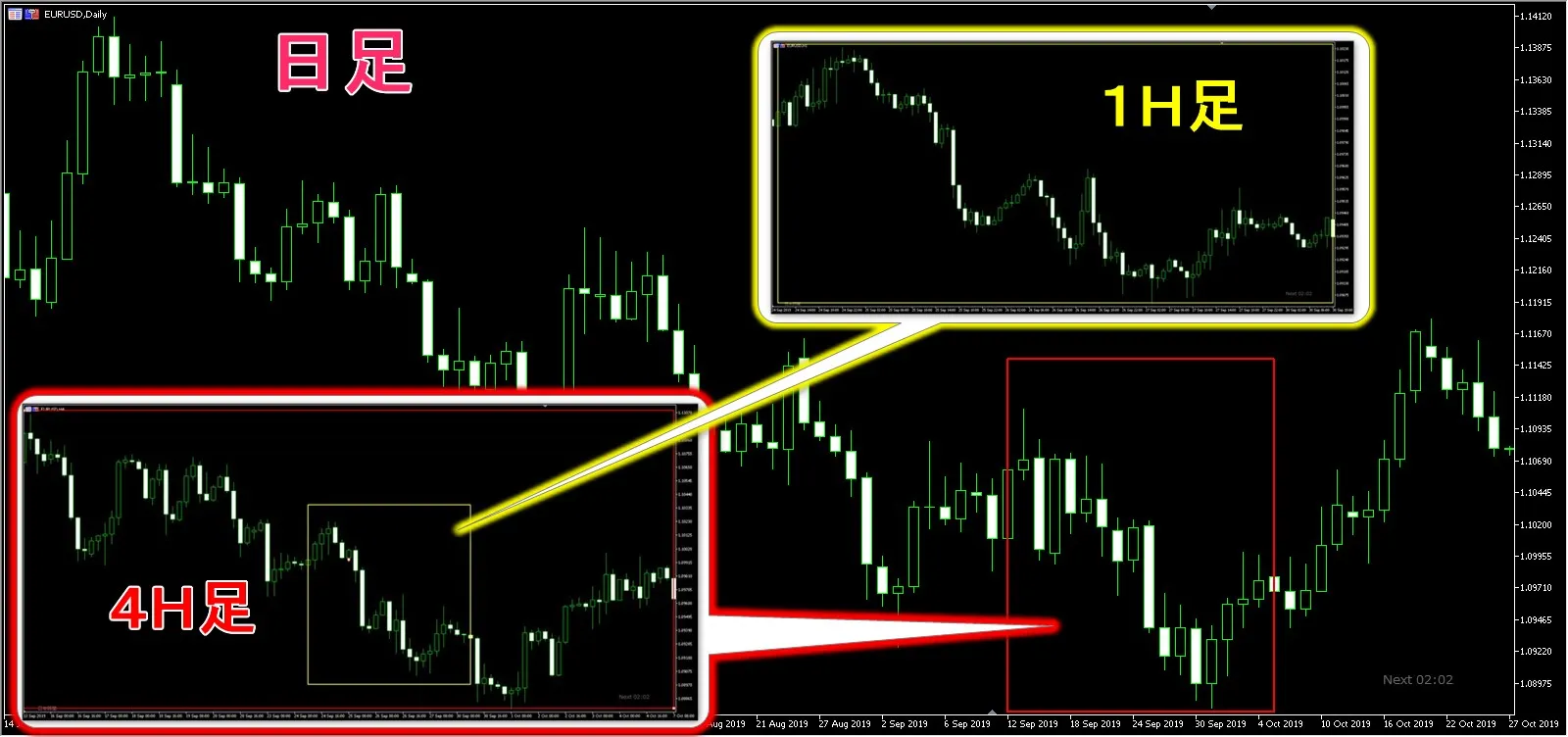
How is it?
Even though the time frames are different, if you downscale a part to the lower timeframe and enlarge it, you’ll see a similar scene, right?
In other words,the market also has self-similarity.
This is the fractality of the market!
When reviewing past charts, you will often find similar price movements across different timeframes.
In other words,what happens on higher timeframes can also happen on lower timeframes, and vice versa.
This is what creates reproducibility in technical analysis.
Knowing this market fractality is very important when performing MTF analysis!
With that, for now I’ll stop here!
In the next installments, we will dig deeper into actual MTF analysis, so until then, practice by looking for similar scenes on each chart’s timeframe andexplorethe fractality of the market!
By the way, as figures with fractal structure, there are Koch curves, Sierpinski triangles, Cantor sets, and other interesting shapes to look up!
The next article is here↓
What are the roles of each timeframe in Multi-Time-Frame Analysis? (MTF Analysis Intro #2)
By the way, in the e-book I wrote (see the link below),there is plenty of content to deepen your understanding of MTF analysis and to trade at a higher level.
Practices to learn MTF analysis, setup (entry patterns) and trigger conditions, as well as how to cut losses and take profits, with the underlying reasoning and principleswithout omissionin detail, and it is expected to contribute to improving your trading skills, so please check it out if you’re interested!
For details of the author’s MTF trading method, see below
→MTF Multi-Time-Frame Analysis Secrets (a free preview version is also available)
【Limited-time campaign ends 11/1 (Sun)!】
If you found this article helpful, please give it a like or a♡. It would be励みになります!