
FX hedging
2026 Latest Version!!
View the interview VTR with GoGoJyan President Hayakawa and me here
There are also free gifts available.
Good morning to everyone.
What you may call last week’s “obon holiday period
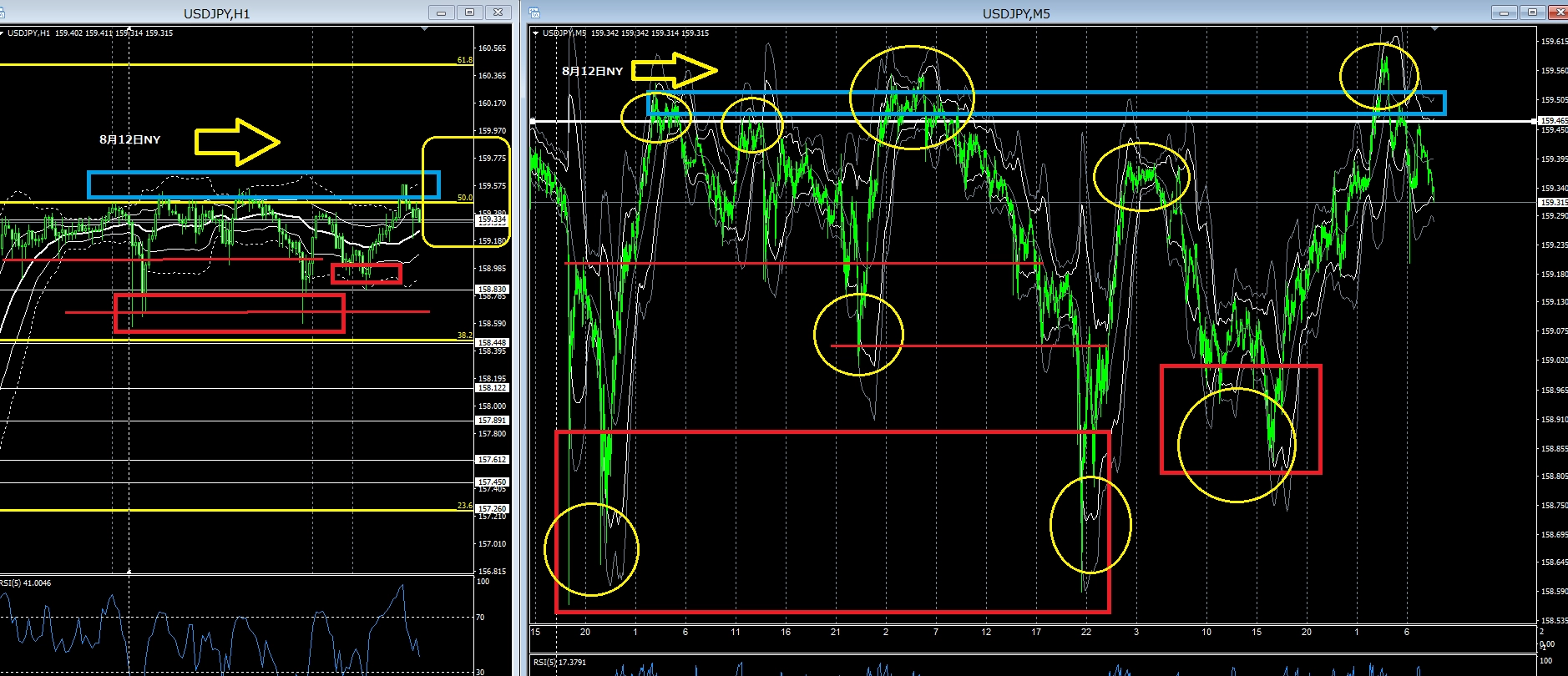
After the recent intervention of the U.S. and Japan, USD/JPY has retraced about 50%.
Left 1-hour chart
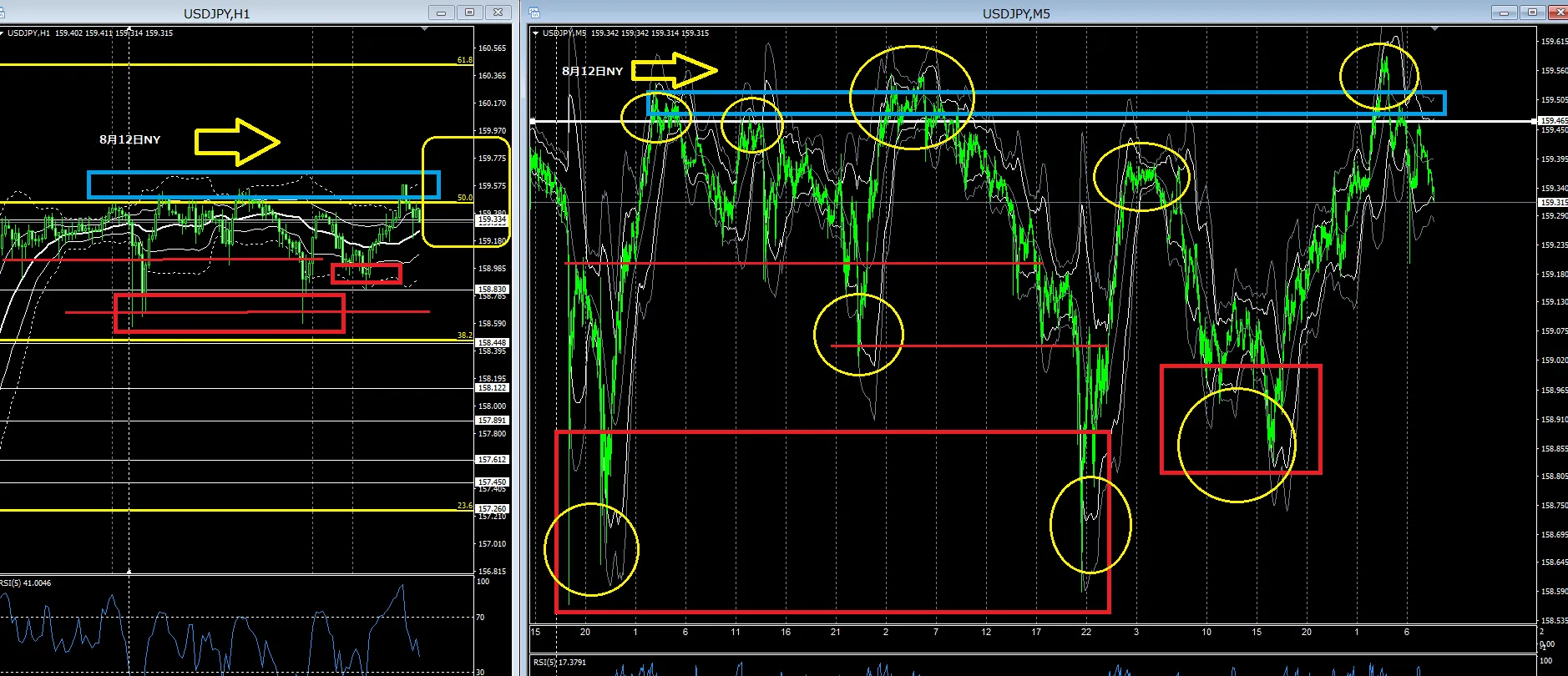
Yellow □ is the 50% Fibonacci zone.
Generally, it rebounds in the blue □ and then declines, rebounding in the red □.
Because it’s a range, it would have been good to go for counter-trend at the range highs and lows from the 13th, but looking back later, you might have thought, “Should I counter-trend here?” when you were watching the chart.
But just thinking that is not enough to act
・If you buy, it goes down
・If you sell, it goes up
In other words, there are many situations where you don’t take a position because you’ve had losses before, are scared to act, or don’t understand, among other reasons.
In the first place, “I don’t understand” applies to all timeframes.
Only God knows whether it goes up or down...
This applies not only to FX but to Nikkei, Gold, Oil, and all cryptocurrencies.
In such times, I especially place hedges by opening both sides during sharp fluctuations or at high/low price ranges where the price tends to rebound inward.
How to place the positions
Unusual double-position trading in FX
is.
I adjust the number of lots and the counter-position entry points in various ways, keeping it from the manual standard.
This double-positioning does not care whether prices go up or down.
If it’s a win, take profit as is; if it’s a loss, wait and see, so mental burden is lighter.
A recent decline from high price zones and the subsequent rebound
I think positions around the rebound from the lower side are particularly good.
In an hourly chart like the image,predict the rebound location and take positions when it comes.
The details are reviewed on a 1-minute chart for profits, but generally decisions to take positions are made on the 1-hour chart.
However, when you ask AI about hedging...
Hedging in FX is a trading method that involves holding both a “buy” and a “sell” position for the same currency pair at the same time
It says so.
This explanation is not new; it has been written and said for a long time.
At that time, I was researching and testing hedging, so I wondered whether it was true or whether customers profited from it and said so, testing with various doubts.
I understood the theory, but did it really have no meaning?
I focused on testing, but by removing the theory, I began to feel, “What’s this?” and after repeatedly testing in a demo, I found that it could be done.
Back then the spreads were wider, and there were many spread losses, so I narrowed the investigation to larger rebound moments like the 1-hour chart to resolve spread losses.
As domestic firms’ spreads narrowed, I thought this could work and progressed with hedging.
In particular, I chose highs/lows during Tokyo time and economic indicators, aiming for moments when spreads would not widen, and I joined from the London session.
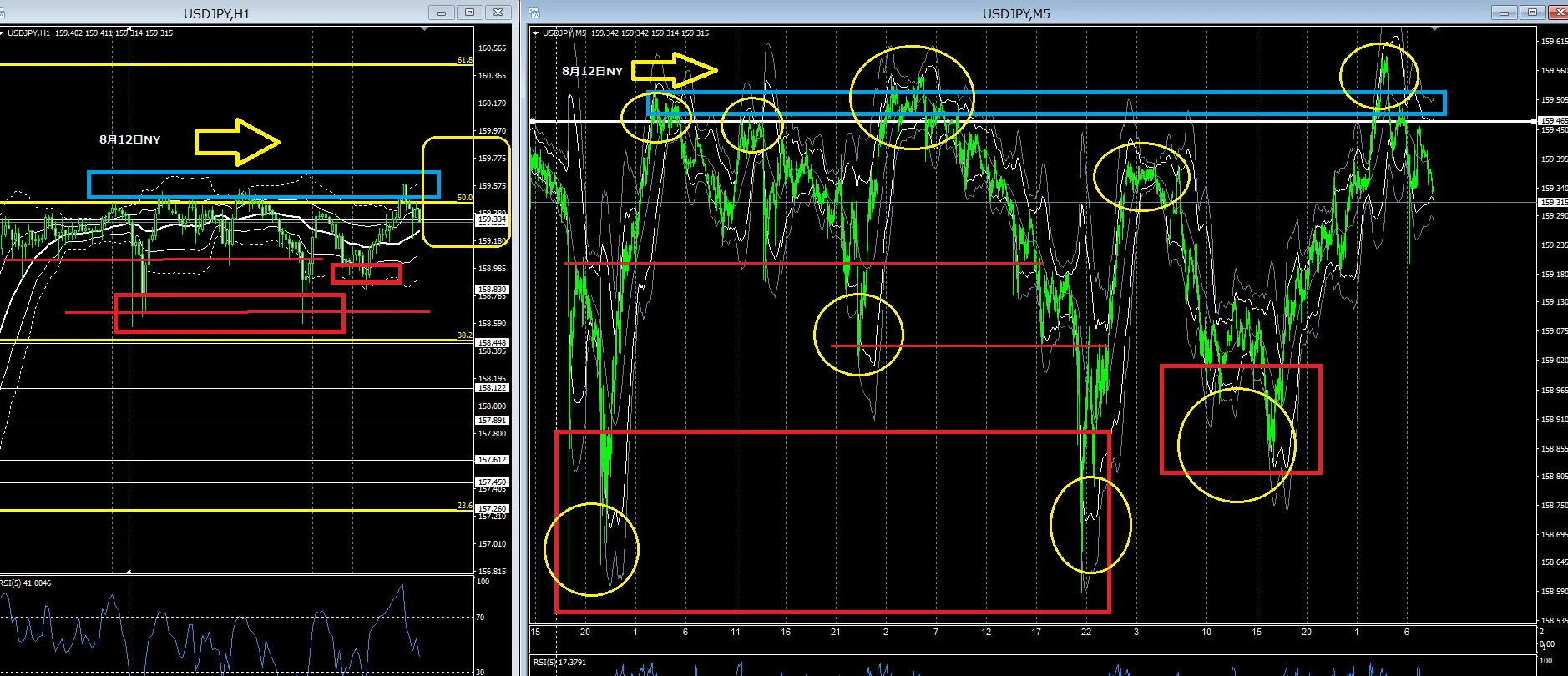
As shown in the image, rebounds can generally be predicted from the past.
Generally, the speed of declines and rises leading to rebounds can tempt you to sell on a drop and buy on a rise, but in reality you end up buying when it goes down and selling when it goes up, often losing.
That was also my initial experience.
But after adopting this contrarian approach, my mind shifted to a contrarian trading mindset, so I began hedging by buying on dips and selling on rallies.
FX is more speculative than investment, so it is a short-term game.
In the long term, it would be a trend-following approach, but in scalping and short-term perspectives, I consider it a contrarian trend-following strategy.
With that perspective, hedging became usable for me, and like other OTC FX providers, I wonder if somewhere someone gains when clients profit?
That is my belief.
When carefully considering and testing hedging, even if you use the hedging as others say, you end up trading as AI earlier indicated.
So, it’s not ordinary—it’s not normal
Hence
has become the approach.
I think users have already understood its advantage and trade, but in the current market environment, you never know what will happen.
But it is moving.
Even if you miss an opportunity and think “Next time!!,” you may end up losing confidence if it goes the opposite way...
This is the trade result after missing opportunities.
At least that’s how it was for me ^^
This hedging trade came from considering if there might be a better method.
For billion-traders, watching the one-minute downward price action that may reverse to selling/buying, on the hourly chart and Billion Trader line, you can catch the initial move by contrarian entry.
Thank you for your continued support today as well.
For traders who desperately want to succeed in trading and think it would be excellent to earn a living through trading, this is the trading technique that can be learned on your own: