

Know about price movement waves! ~ How to read charts part ② ~ Technical Analysis Basics Course #4
Hello! I am SAKU!
Continuing from the last time, today as well I will talk about how to read charts!
The previous articleWe explained how to read candlesticks, but this time we will look atthe price movements formed by a sequence of candlesticksand how they move in waves!
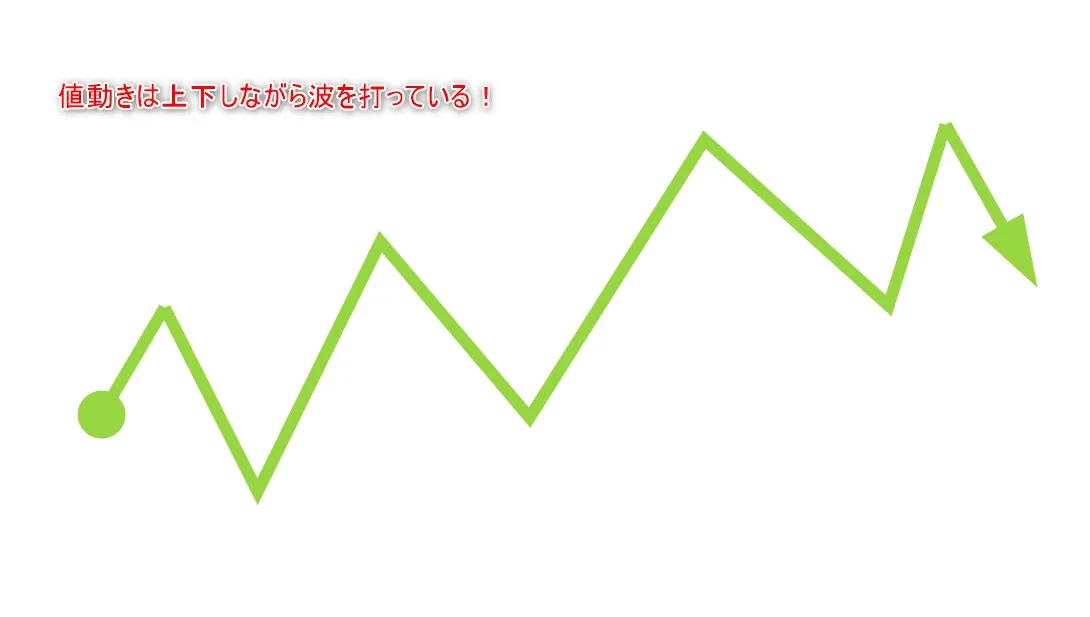
Price movements form waves
In actual charts, price moves are not a one-way straight line; various candlestick shapes—bullish and bearish—move up and downexpressing price movement in a jagged, wave-like form.
Riding these waves of price movement well is, arguably, essential for making profits in trading.
Why do price movements form waves?
You understand that price movements form waves, but thenwhy does the market form waves in price movement?
Pop pop pop...
Ding!
The answer is simple: because there arepeople who sell and people who buy, you see.
When more people are buying, prices rise; when more people are selling, prices fall.
Thus,the tug-of-war between sellers and buyersshapes the waves of price movement.
It may seem simple, but reading the power balance of buying and selling from price waves is extremely important in technical analysis.
Try drawing waves on the chart (wave recognition)
Now that you understand that price movement forms waves and why, let's practice visualizing it by drawing waves on a chart for clarity!
First, please look at this chart.
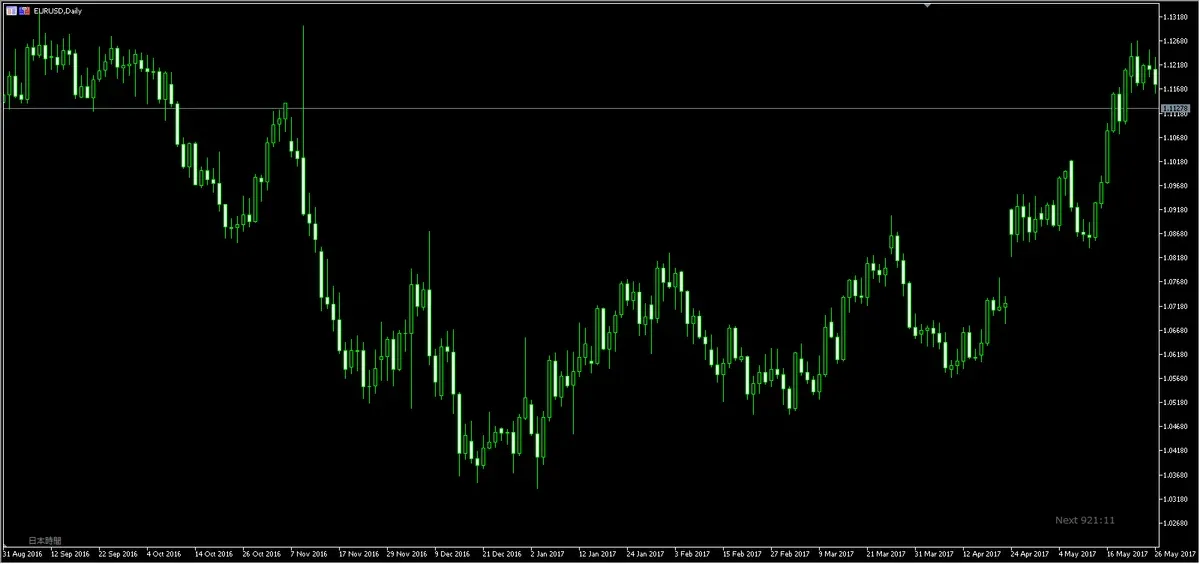
When you draw waves on this chart, it looks like this.
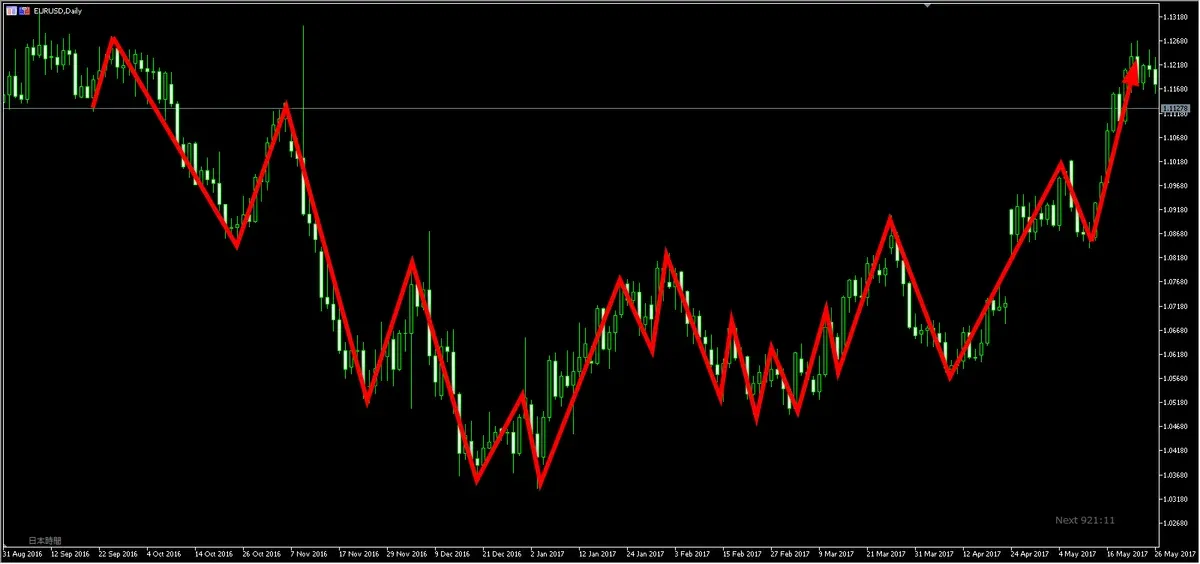
How is it? By actually drawing waves on the chart, the price movement feels easier to grasp, doesn’t it?
It may seem easy, but in practice, it’s quite challenging until you get used to it...
However, being able to interpret this wavewith a certain standard and intentionis an essential skill in discretionary trading, so please practice a lot on your own!
Wave-drawing tips
・First, practice drawing waves at a consistent interval!
If you draw with large waves at times and small waves at others, your focus keeps shifting and you won’t be able to conduct consistent analysis. Start by creating your own criteria or scale for waves and practice drawing waves on as many charts as possible until that becomes natural!
・However, wave recognition is quite subjective
Wave recognition has a lot of subjectivity and varies from person to person, sothere is no absolutely correct way to draw waves.
It’s normal if you don’t get it right at first; practice a lot and develop your own sense.
・Very long wicks can be ignored
As seen in the previous chart, there are wicks that extend quite far, right?
I ignore these overly long wicks when drawing waves.
・Re-drawing waves on the same chart later can be effective
If you re-draw waves on a chart that you drew waves on before and you do it slightly differently, your wave-drawing criteria may still be vague.
Keep practicing until you can draw waves consistently every time!
This wave-drawing is a fundamental part of technical analysis, but because it can influence the content of your analysis and your judgments when analyzing a chartit is extremely important
to understand and capture the price waves before moving on to specific technical analysis methods.
There are methods to draw waves, such as printing the chart and drawing by hand, capturing the chart and drawing with drawing tools, or using tools (indicators) that draw lines continually.
Try practicing with whatever method suits you!
In closing
In the previous and current posts, we discussed the basic way to read chartsthe candlesticks and the price wavesand how to interpret them!
Although very basic, rather than finishing quickly, we chose to cover them in depth in separate articles because they are soimportantthat you should not gloss over them; as soon as you see a chart, practice repeatedly until you can mentally picture the candlestick information and waves!
Next time we will discuss something crucial in technical analysis“Dow Theory”next!
If you found this article helpful, please like or give a heart—it means a lot!
For more details on the author's trading method, click here ↓
【Limited-time campaign!】 MMS Trading Encyclopedia—Market microstructure analysis that reveals the “structural traps” individual investors fall into and the footprints of big players— (There is also a free trial version)