

Cryptocurrency Market Analysis [August 11]
■ Today's Cryptoc Asset Market Price Trends (2026 year 8 month 11 date)
Today,2026 year 8 month 11 day主要 cryptocurrencies (virtual currencies) price movements show a generally soft trend across the market. In particular, the downturn is intensifying around the leader Bitcoin (BTC) and Ethereum (ETH), and other top-cap coins are also exhibiting risk-off behavior due to macroeconomic caution.
The approximate prices and movement cues for the main coins at this time are as follows.
Bitcoin (BTC)
The current price range is about63,900 to64,300 dollars. Over the past24 hours, the price change has generally been a drop of around1.5% to2.1%.
The opening price today is about63,912 dollars, and during trading hours there were moments when it was bought back up to around64,200 the buying pressure remained limited, and overall the trend remained soft.
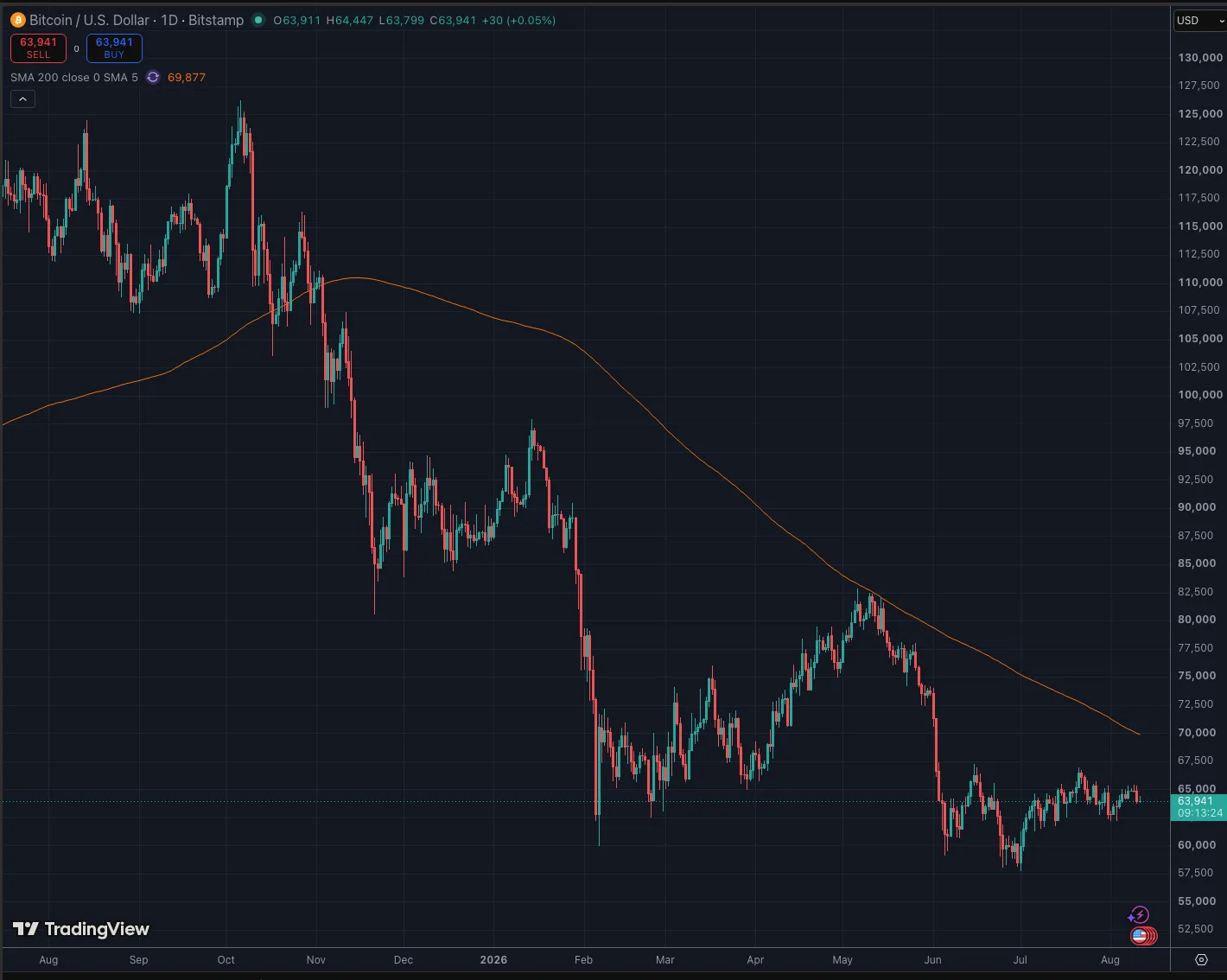
Bitcoin daily chart
Ethereum (ETH)
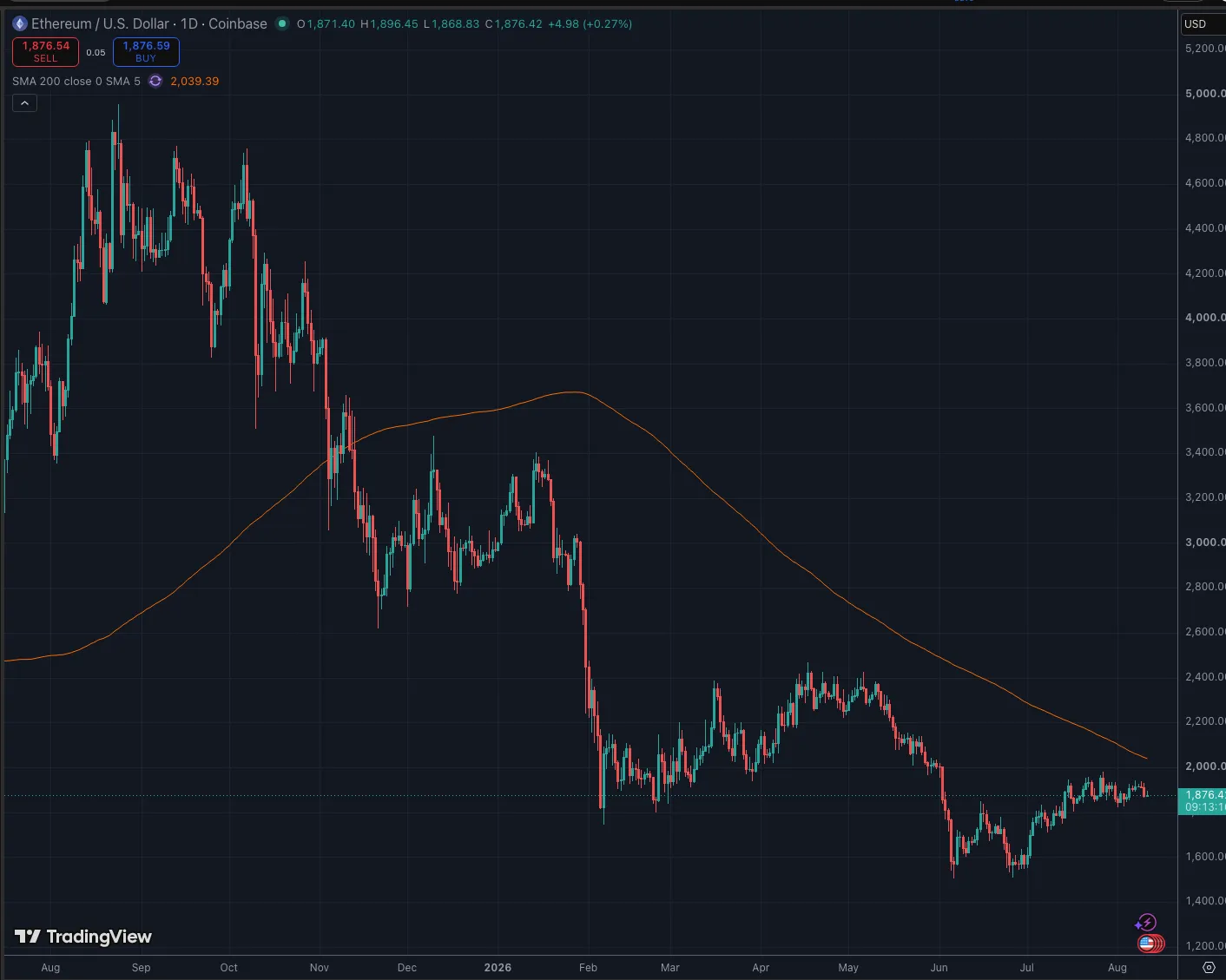
The current price range is about1,870 to1,890 dollars. Over the past24 hours, it has fallen about2% to2.8% among major coins, showing a slightly larger decline.
BNB
The current price is around599 dollars, with a day-on-day change of around0.5%—relatively small fluctuations. It appears comparatively sturdy among major coins.
XRP
The current price range is around1.00 to1.01 dollars, with a decline of about2%. Investors are watching whether the psychological threshold of1.00 dollars can be maintained.
Solana(SOL)
The current price is around75.8 dollars, with a decline of about24 hours, around1.5% to1.7%.
Other coins and the overall market
In other cryptocurrencies,TRON(TRX) shows a slight rise, and various stablecoins generally maintain pegs and stay stable.
The market overall has a slightly contracted total market capitalization, with selling pressure prevailing across a broad range of coins. However, looking at volumes, active trading is observed in major coins like Bitcoin and Ethereum, suggesting active trading even amid price declines.
■ Key background and factors behind today’s price movements (macro factors and news)
The main background to today’s downtrend is not specific to individual crypto projects, but rather heightened investor caution toward macroeconomics.
First factor: as important inflation indicators such as the US Consumer Price Index (CPI) announced this week approach, investors have been reducing risk positions preemptively.
Second factor: volatility in geopolitical risk. Tensions related to Iran led to expectations of reopening the Hormuz Strait diminishing, pushing crude oil prices higher. Higher oil prices again raise global inflation concerns, applying selling pressure to risk assets including crypto.
Third factor: after last week's underwhelming US employment data, markets briefly rose, but the upward trend did not sustain, leading to profit-taking at highs and forced liquidation of excessive long positions.
Furthermore, as a clear supply-demand data point, on the previous day (8月10日), Bitcoin spot ETF saw net outflows of about $1.446 billion. This cooled investor sentiment as institutional buyers that had supported the market paused.
Overall, today's downturn is not caused by a single asset-specific negative factor, but rather macroeconomics and geopolitical risk-driven broad risk-off movements.
■ Price trends and movements over roughly the past week
Looking back over the past week, the crypto market did not see sharp trends; it stayed in a range, generally flat to slightly up.
Bitcoin weekly performance was around positive 0.7%, approximatelyover the last seven days, it hovered near $64,000, with periods testing the $65,000 level but not breaking higher, pulling back to around the $64,000 area. Early in the week, weaker US jobs data triggered expectations for rate cuts and a temporary upward trend, but by the weekend into Monday it moved into a correction.
Ethereum's weekly performance also hovered around plus 0.7%, following a similar trajectory to Bitcoin. The $1,900 level remained a focus, but resistance held and progress stalled.
For other coins,Solana(SOL) remained comparatively sturdy on a weekly basis, whileXRP traded near $1.00 with softness, posting weekly negative performance.
Overall summary: there are currently no clear signs of a major trend reversal in the market. Bitcoin trading within a clear range of about $63,000 to $65,500 continues. Support lines are seen around63,000 dollars for Bitcoin and around1,850 dollars for Ethereum as strong psychological levels.
■
A key indicator for institutional trading, the cash flow in spot ETFs shows very strong inflows through last week, but momentum has cooled in the most recent data.
Looking at last week (roughly from August 3 to August 7), Bitcoin spot ETF saw net inflows of about8e95,000000 dollars (highly large). Ethereum spot ETF also recorded net inflows of about2e83,0000000 dollars. Combined, inflows reached about11e90 dollars, the strongest weekly inflows since April this year. Specifically, inflows into Bitcoin ETF continued for five consecutive business days, highlighting active institutional buying.
■ Regulatory push: Financial Services Agency and National Police Agency requests to curb outflows
The FSA and National Police Agency have asked crypto asset exchanges to strengthen restrictions on external withdrawals of crypto assets to minimize damages from rising various frauds such as phishing and other crimes.Internal sources from exchanges suggest the number of fraud cases affecting users is at a very serious level. In particular, when a user’s Google account is compromised, linked exchange accounts and authentication data are also compromised, leading to funds being fraudulently transferred—this is not a rare occurrence.
The involvement of government agencies like the FSA and NPA reflects these grave issues, and unless this cycle of unauthorized outflows is fundamentally resolved, regulatory tightening and usage restrictions for crypto trading are likely to become stricter.
■ Bitcoin (BTC) related notable news
Coinbase CEO Brian Armstrong on the essence of Bitcoin
The CEO of major crypto exchange Coinbase, Brian Armstrong, commented on the essential value of Bitcoin (BTC) as a store of wealth that does not lose value due to fiat currency inflation. He recently stated that “economic security is directly linked to national security,” advocating clear and transparent regulation of crypto assets in the United States.
Strategy公司 selling BTC and buyback of its own stock (STRC)
Strategy公司 disclosed that it sold 1,690 BTC for about $1.86 billion to fund the buyback of STRC shares, almost reaching $100 million in value. These repurchases were conducted under a $10 billion share repurchase program, while the company’s $12.5 billion in USD reserves were not touched.
Michael Saylor explains the true intent behind Strategy’s BTC sale
Strategy's founder Michael Saylor explained the real reason behind selling Bitcoin. He cited the market belief that “the largest holder, Strategy, if it sells Bitcoin, the price would crash,” as a dogma they aimed to dispel by actually selling. The sale did not crash the price; instead, it rose, demonstrating market resilience. The company’s break-even rate is set at an annual growth of 3.2%. The fact that Strategy, the world’s largest corporate holder of crypto assets, can sell BTC without the market collapsing is a positive sign for Bitcoin’s fundamental strength.
Scott Melker's views on Bitcoin’s role
Known as the “Wolf of All Streets,” analyst Scott Melker stated: “Bitcoin is not a tool to make buyers rich overnight,” but rather a best defense against the risk that personal assets erode over time due to inflation.
[Paid subscription notice]
In the paid subscription area, we provide deeper, valuable analysis of select individual assets.
“I want to invest in the next big profit beyond Bitcoin and Ethereum.”
“I want to understand the fundamental flows and future of the crypto market and surely ride the wave.”
If you think this way, please consider subscribing. Consistent high-quality research is the key to great success.
(This report has been delivering market-leading insights since its launch in2016.)