
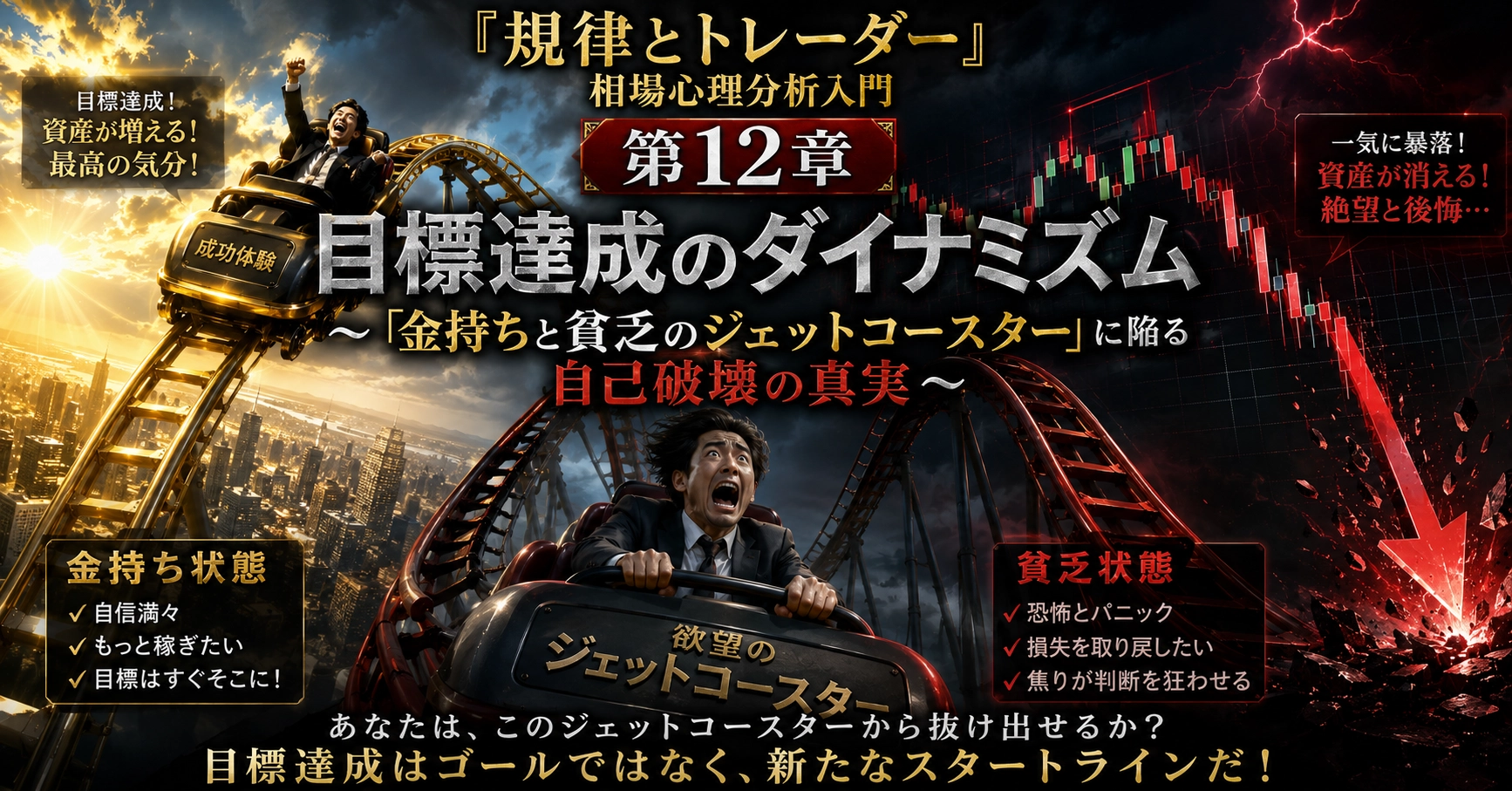
"Discipline and Traders" Introduction to Market Psychology Analysis Chapter 12: The Dynamism of Achieving Goals ~ The Harsh Truth of Self-Destruction Falling into the "Jet Coaster of Rich and Poor" ~
? Mark Douglas’s “Discipline and the Trader” Complete Visual Guide series dives into the practical depths of psychological transformation【Chapter 12: The Dynamics of Goal Achievement】 delivering now!?
In previous installments, we learned that the market has no fixed form, and non-physical energies such as memories and beliefs rule our judgments.
This time, we approach the biggest contradiction that many traders suffer from the most…“If you want to make money, why do you keep repeating self-destructive actions that slowly win but then blow the entire balance in one go?”—the mystery!??
“Breaking the stop-loss rule and praying,” “immediately after a big win, somehow blowing all capital with reckless high-leverage trades.”
These phenomena do not mean you are stupid. There is a fatal‘friction of energy’ between your conscious mind (goals) and your subconscious (self-evaluation).
Why do people ride a roller coaster of poverty → wealth → poverty? How can you erase inner conflicts and profit naturally? We dissect the core points thoroughly!?
This series continues next withChapter 13, Chapter 14… an actionable curriculum to elevate your trading mindset to the highest level and will be uploaded sequentially. Please like and follow to install the “Winner’s Discipline” together! ?✨
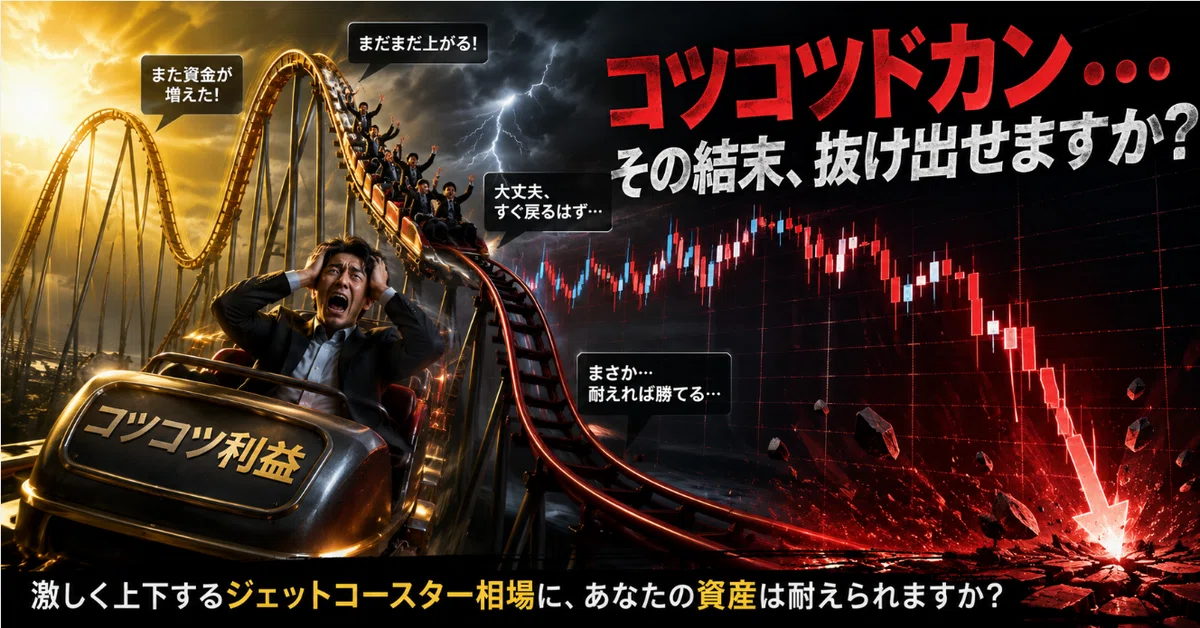
?1. A chart is a mirror that reflects the market participants’ inner conflicts and beliefs
First, the author redefines the true meaning of the“chart (price waveform)”we daily scrutinize.
Whether the chart is created by ordinary investors or professionals like CTAs (commodity trading advisors) who move huge sums of money, there is no difference in their essence or the ability to read its signals.
Because all charts (support lines, resistance lines, pushes, and retracements) are“a mirror that reflects the total mental state, conflicts, and beliefs of all traders participating in the market”and nothing more.
Therefore, once you start trading and take a position, the profits and losses you realize will be“a direct reflection of your own heart’s state and self-evaluation”.
The market, without any deception, confronts elements inside your heart with the numeric balance of your account.
⚖️2. Your net income is determined by subtracting negative self-evaluation from positive self-evaluation
Then why do people, wanting to earn, end up with losses?
It is deeply related to the“net self-worth (aggregate self-evaluation)”in our minds.
Inside our brains, there coexist the “positive components supporting trading (confidence, willingness to learn, goals)” and the “negative components hindering trading (fear, trauma, guilt).”
The author asserts that over a given period, your account’s net balance (profit minus loss) will“exactly match the net self-evaluation, i.e., the positive energy minus the negative energy in your heart”.
☀️Positive evaluation > Negative evaluation:The account balance naturally rises to the right.
⛈️Negative evaluation > Positive evaluation:No matter how much you study the method, you unconsciously make mistakes and end up losing overall.
Even if you think, “I deserve success,” if deep inside you have negative energy like “I can’t forgive past mistakes” or “I’m not worthy of handling a large sum,” the market will make you lose money as you deserve.

?3. The tragedy of riding the poverty → wealth → poverty roller-coaster
This is the soreness you’ll hear the most about in Chapter 12, yet it is the core you must know!?
What happens to traders who, without raising their own self-evaluation (capability), happen to win big due to luck or high leverage in the market?
They become temporarily “wealthy,” but there is no emotional support (the self-evaluation that they deserve this wealth) accompanying it.
Then fierce internal friction arises: “It’s scary to win so much,” “I’ve acquired more money than I’m worthy of,” a subconscious clash (negative force) erupts.
As a result, what happens?
Unconsciously, they engage in reckless gambling trades, give back the large winnings to the market, and revert to the previous ‘poverty’ state, a self-destructive action!?
This is what many people experience—the true form of the despairing jet coaster “poverty → wealth → poverty.”
To consistently extract more money from the market and protect it, you must first build a strong inner support (self-worth) that you deserve to receive such vast sums.
⏳4. Time cannot heal inner wounds, and the trap of alcoholism
“I used to suffer a huge loss, but time has passed, so I’ve forgotten.” That thinking is dangerous.
The author states“Mental wounds do not fade with time like physical ones.”This was reviewed in Chapter 9. In the mental world there is no time, so the fear energy of past issues frozen away will resurface the moment you see a similar chart.
The conflict between the conscious goal (to win) and the unconscious fear (to avoid losing) is likened by the author to the suffering of alcohol dependence and quitting smoking.
Even with willpower alone, if old beliefs remain in your mind, you’ll instinctively reach for “just one more… (one more rule-breaking n-pin)” the moment you let your guard down.
To stop self-destructive behavior, you must begin by facing your immaturity and fear squarely—acknowledging, without excuses, your true starting point (the real base of your self-awareness).
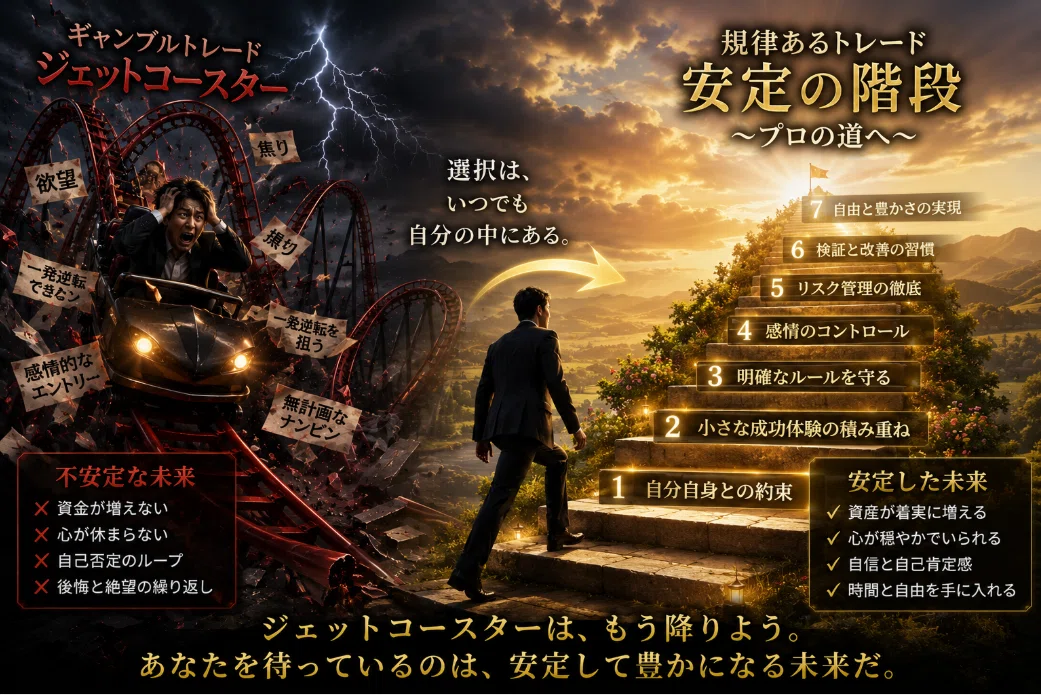
? [Next Preview: Continuing to Chapters 13 and 14, the climaxes of mental transformation!]
“Charts reflect your heart, and money beyond your self-evaluation is thrown away subconsciously.” The lessons of Chapter 12 perfectly解明 the mystery of our pattern of steady wins and big losses!
And the series now moves into the climax of this book, the super-practical section on precisely how to erase those stubborn old beliefs and plant new professional beliefs!
?Next: [Chapter 13: Techniques to Change Beliefs]
“You can’t teach an old dog new tricks” is a myth! We will openly reveal practical steps to rewrite the energy of fear and self-denial that are deeply rooted in our minds into a professional winner’s mindset!?Next: [Chapter 14: Managing the Energy of the Mind]
And toward the culmination! A comprehensive guide to energy management that enriches not only trading but life itself, the path to success!
Leading you to the “Unbeatable Professional Mind”A journey through all 14 chaptersis finally reaching its peak! Please don’t miss the next update, and in the meantimelike & followfor support! ?✨
“After a big win, why does the next week end up completely losing the money?”
That isn’t bad luck; it’s a sign you’re hitting the “self-evaluation barrier (roller coaster).”
?What were your experiences with the “big win followed by a big loss” or the “steady wins followed by a dramatic loss” jet-coaster? Please share in the comments to laugh off your painful past and publicly acknowledge your current inner capacity—that recognition is the strongest first step to stop self-destruction and move toward true wealth! ??