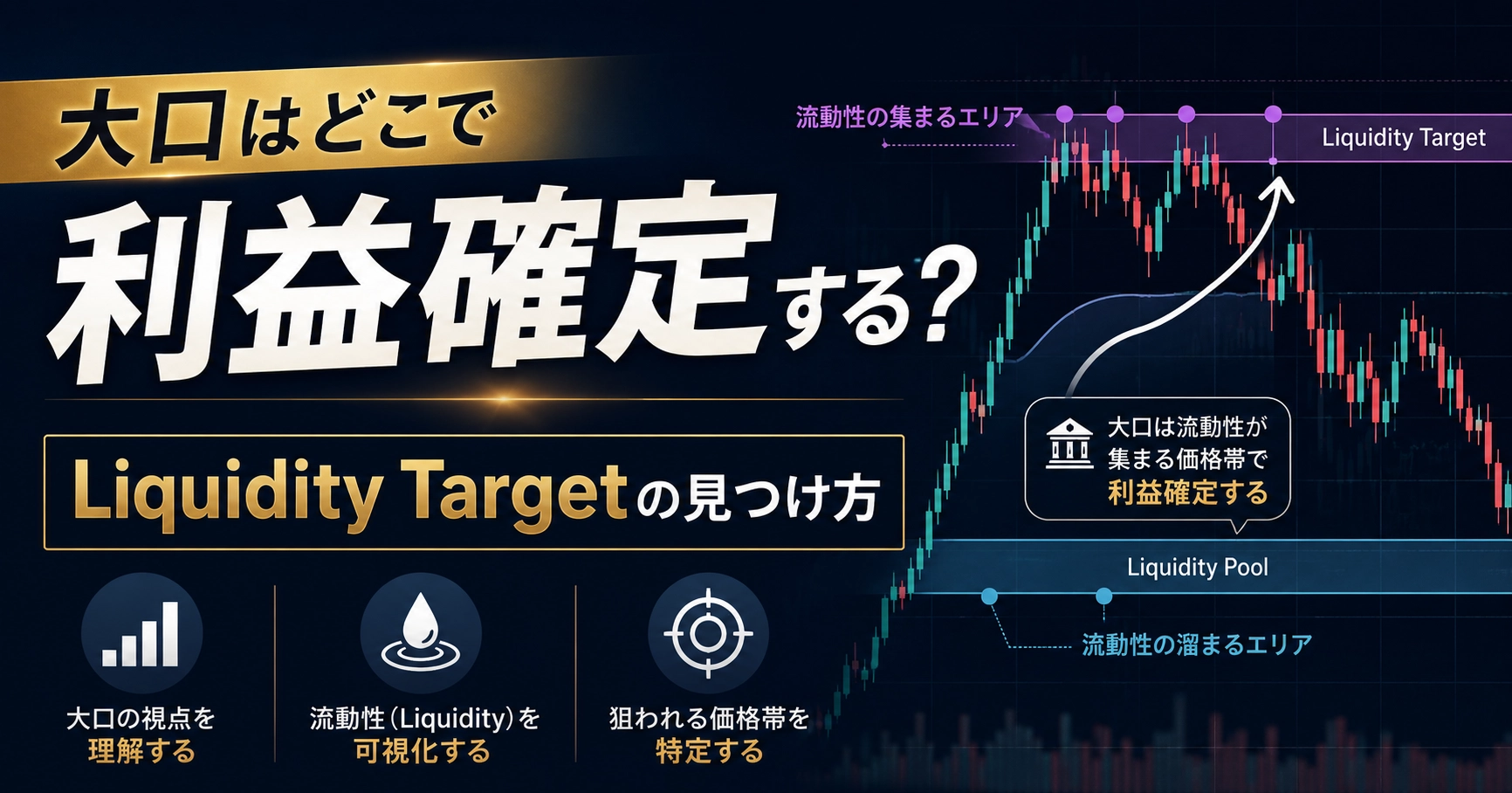
Where to take profits? How to find Liquidity Targets
“Reversing right after a stop-out” isn't a coincidence. Your SL was a big fish's “feast” for securing profits
Introduction
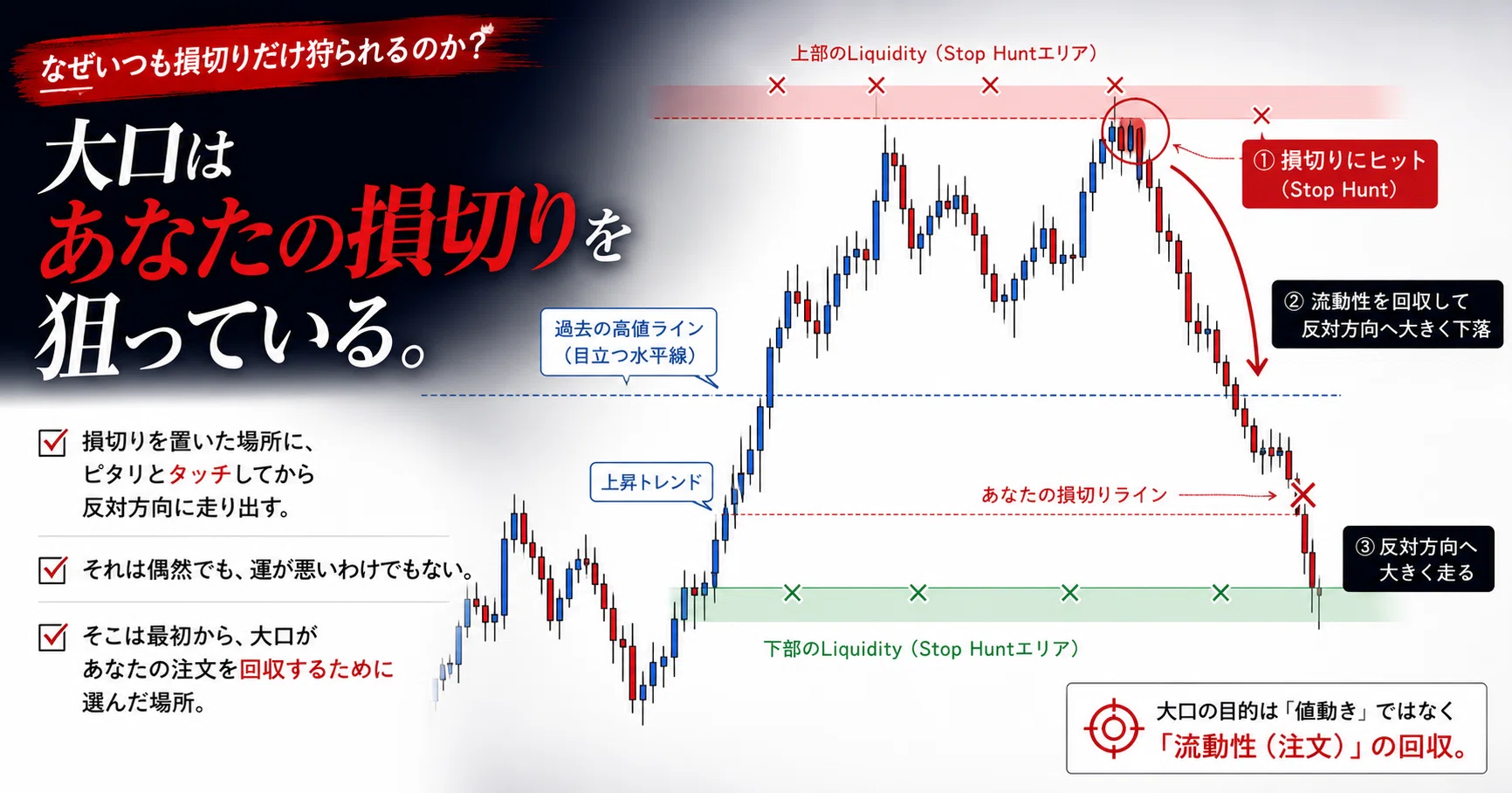
“It touches exactly where you placed your stop and then heads in the opposite direction.”
“Here we go again,”
“Why is it always my stop that gets hit?”
If this sounds familiar, please give it a little time.
It isn’t just luck or misfortune. From the start, the big players chose that place to sweep your orders.
I have 20 years of FX experience, and as a former engineer I wandered a long way to understand “why you get hunted there” from the mechanics.
As long as you dismiss it as intuition and call it a fluke, you will be hunted again and again at the same spot.
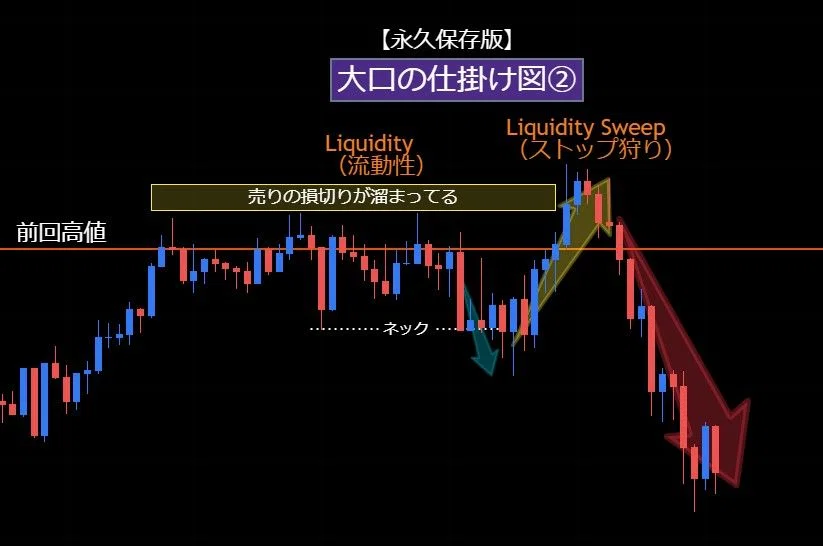
Today, I will explain as practically as possible the true nature of that “hunting ground”—Liquidity Target
Reversing right after a stop-out can be explained by “hunting”
Beginners to FX tend to think this way.
“If I hadn’t hit the stop, I would have been saved later.”
I have experienced this countless times.
No matter how aware you are, it kept happening again and again.
Experiences of moving in the predicted direction right after placing a stop, or surviving by holding without stopping loss. Both leave strong memories, making you quick to conclude that “stops are wrong.”
However what really matters is
the question of why that spot was the hunting ground in the first place.
Numbers like 100,000 yen or 110,000 yen—clean round figures. Recent highs and lows. The places where many people think “this is safe” for placing a stop are astonishingly aligned.
And the big players
know this.
They use the places where individuals tend to set stops as a feast, drawing in orders.