

What should be evaluated when investing in companies that have reached the "growth plateau"?
Stock investment is about harvesting the fruits of a company's growth. On the other hand, if you buy at a price that does not match the growth, it can be difficult to reap those fruits.
In other words,to succeed in long-term investing, you must buy growth-oriented companies at a price that is equal to or below their growth potential. Among many stocks, finding such candidates is the charm of long-term investing.
Why I can hold undervalued growth stocks for the long term
One moment when growth and price become unbalanced isthe “growth plateau”.
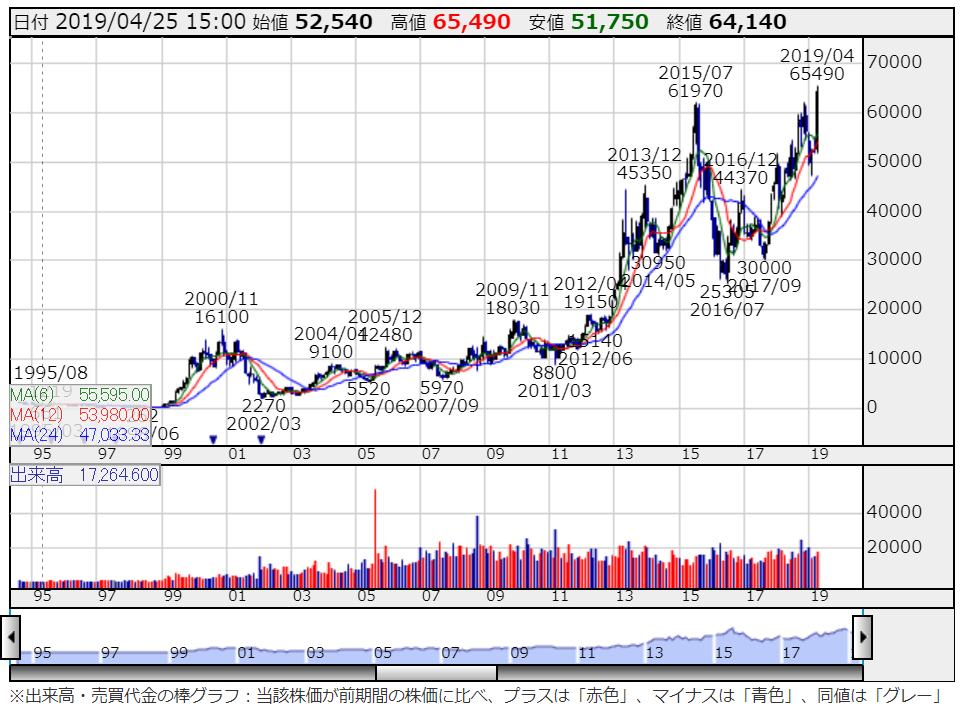
When investors determine that the growth of a stock that has continued growing is faltering, the price that had been rising may suddenly turn downward.
Once it starts to fall, the momentum is hard to stop. If PER goes from 50x to 30x, that can be understood as a correction of overpricing, butit can also fall to 20x, 10x.
Even if growth slows, for stocks that are still growing, this figure is undervalued. If growth continues as is, it will be judged as too cheap and the stock price will turn upward again.
It may take some time, butin that interval, if profits double and PER rises from 10x to 30x, the stock price can grow 2×3=6 times.
Also, even if growth does not resume, if you can buy at PER 10x, the downside is limited (compared to stocks at PER 30x). That is whyI have no hesitation in holding undervalued growth stocks for the long term.
【Source】Shukan Stock Research
Whether you can escape the plateau is something even the entrepreneur himself doesn’t know
So, can a company on the growth plateau be assessed for whether it will continue to grow afterward?
In short, I think it is difficult. This is because I, too, run a small business, and I say this from my experience.
My own business has tasted the startup phase and the woes of the plateau. Of course, you try to break out of it, but it does not go as you wish. At this time,there is no confidence that things will go well.
If the business owner has no confidence,can investors from outside judge that possibility?I think the answer is almost certainly NO.
Expanding peripheral businesses at the expense of core business would be a disaster
Even so, to break through hardship, one must struggle. The actions that management of a plateau-struck company might take include the following:
- Expand into peripheral businesses (including M&A)
- Return to the core business and struggle on
- Be complacent with the current situation
The first option is straightforward. By leveraging the know-how and customer base cultivated up to that point, expanding around the periphery could potentially grow corporate value.
However,to increase the likelihood of success, it is necessary to leverage the core business; otherwise, you may end up wasting money. (NTT Docomo (9437) often takes this kind of action.)
Docomo’s M&A has been a string of bitter experiences. In the 2000s, it invested about 2 trillion yen in AT&T Wireless and faced a roughly 1 trillion yen loss before retreating. Investments in Tata Group’s telecom in India also ended in failure. “Overseas investments are effectively frozen” (Docomo-related), and instead the future growth pillar became domestic cross-industry acquisitions.
【Source】Nikkei Business (February 14, 2018)
The symbolic case was the acquisition and sale of 60 million yen in net terms for the acquisition of deishu. Docomo, which revealed poor outcomes from M&A, wonders how long it will keep paying the price of learning.
But simply failing is not the issue; rather, for companies that still lack sufficient resources, clinging to new businesses mayneglect the core business. If that happens, it is a disaster. Reclaiming what was lost is not easy.
In the end, it depends on the entrepreneur’s willingness!
2 and 3 are difficult to discern. If peripheral businesses fail, the company will pursue growth by returning to its core, familiar business.
But at the same time, that can lead togiving up on growth and losing appeal as an investment, and it is not uncommon for it to become unattractive as an investment target.
Ultimately, to escape the plateau and continue growing,the entrepreneur’s willingness to growmatters. If the entrepreneur loses the will to grow, that company is finished.
To assess whether the entrepreneur is motivated, refer to the mid-term management plan targets as well asthe briefing video and interview articles. If by watching them you think, “This entrepreneur can still push hard,” then investing is worthwhile.
【Reference】“NET-IR” investor information site
Please also try to find your own favorite entrepreneur.