

What is the "U.S. 10-year Treasury yield" you often hear in the news? An explanation of its deep relationship with USD/JPY
What is the “U.S. 10-Year Treasury Yield” you often hear in the news? An explanation of its deep relationship with the USD/JPY
When you look at FX market news,
you often see statements like
“The U.S. 10-year Treasury yield rose, so dollar buying advanced.”
However,
“Why do bond yields affect the exchange rate?”
isn’t something you’ve wondered about?
In fact, this long-term interest rate is one of the important factors that moves the USD/JPY market.
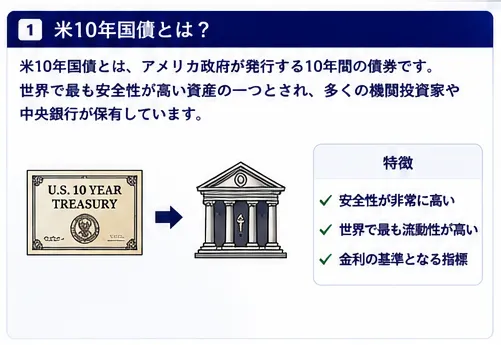
First, the U.S. 10-year Treasury is a bond issued by the U.S. government with a 10-year maturity.
It is considered one of the safest assets in the world, and is held by many institutional investors and central banks.
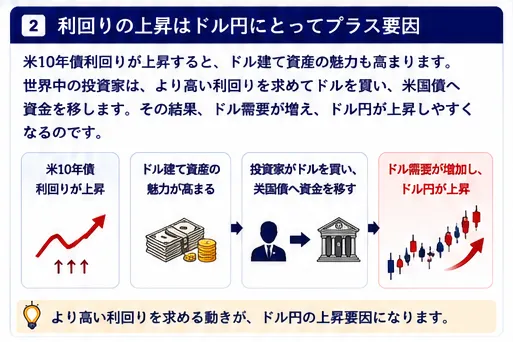
And when the yield on this bond rises, the attractiveness of dollar-denominated assets also increases.
Investors around the world seek higher yields, buying dollars and shifting funds into U.S. Treasuries.
As a result, demand for the dollar rises, and the USD/JPY tends to rise.
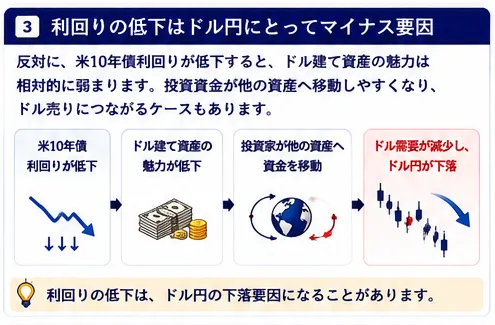
Conversely, when U.S. 10-year yields fall, the relative attractiveness of dollar-denominated assets weakens.
Investment funds may move to other assets, leading to dollar selling in some cases.
In other words, the movements of long-term interest rates reported in the news are not mere numbers; they reflect flows of money around the world.
In the current USD/JPY market, this long-term rate is also a very important indicator.
Various factors such as the Federal Reserve’s monetary policy, inflation rate, and economic trends influence the U.S. 10-year yield.
Market participants judge these collectively to forecast future interest rate levels.
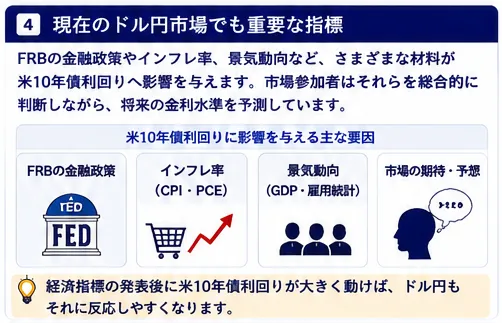
That is why if the U.S. 10-year yield moves significantly after the release of economic indicators, USD/JPY is likely to react accordingly.
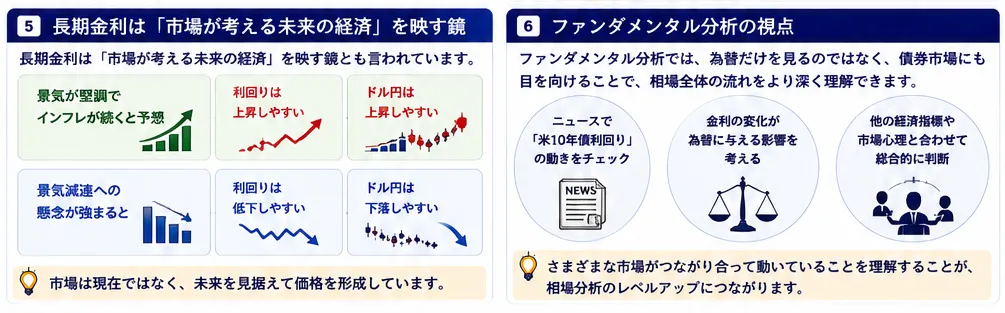
Moreover, long-term interest rates are said to reflect “the market’s view of the economy’s future.”
If strong growth and persistent inflation are expected, yields tend to rise.
On the other hand, if concerns about an economic slowdown grow, demand for safe assets increases and yields may fall.
In other words, the market prices in the future, not the present.
In fundamental analysis, looking not only at currencies but also at the bond market helps you understand the overall market flow more deeply.
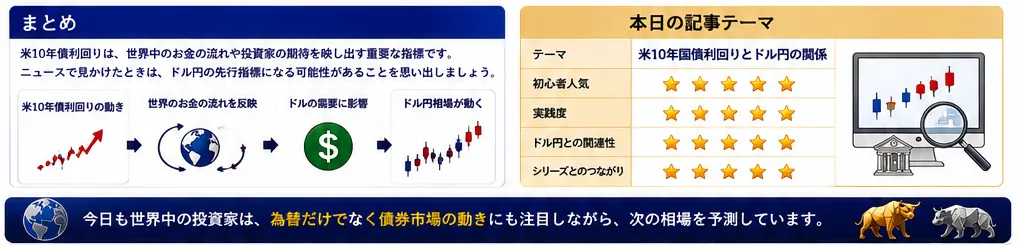
If you see the term “U.S. 10-year yield” in the news, remember that it can be a leading indicator for the USD/JPY.
The market moves as various markets are interconnected.
Understanding this relationship is the first step to deeper learning in fundamental analysis.
Today, investors around the world are watching not only the currency market but also bond market movements to anticipate the next move in markets.
★ URL:https://www.gogojungle.co.jp/users/186761?via=indicators_detail_users