
What is the difference between the new weapon from Japan, the "Three-Currency Parity Analysis Tool," and others?
What makes the new weapon from Japan, “Three-Currency Parity Analysis,” different from others?
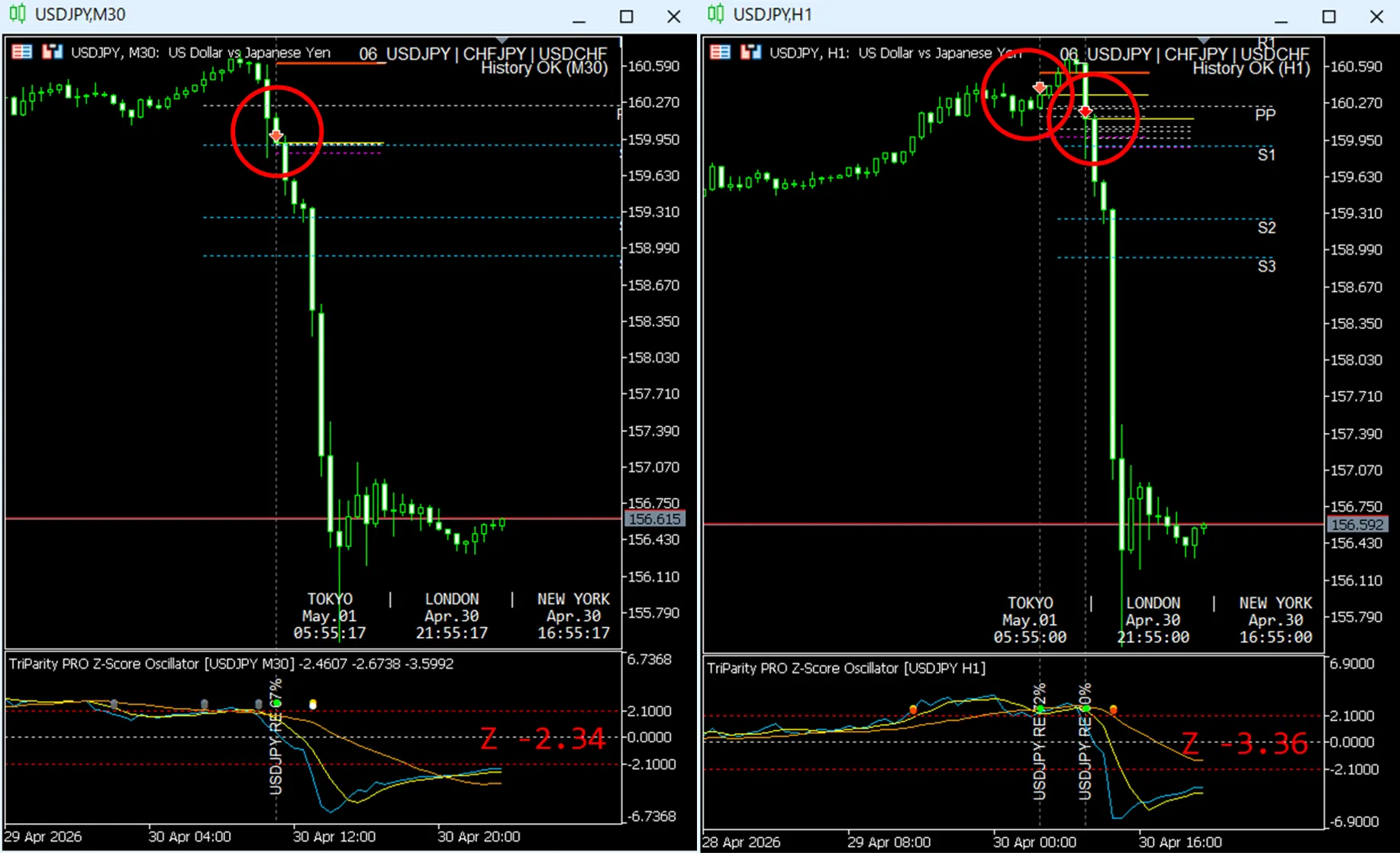
From a user’s case capturing the sharp movement caused by yen-buying intervention on April 30, 2026, we organize the essence of Three-Currency Parity Analysis.
Intervention Aftermath PRO is the world’s first MT5 indicator developed to statistically observe the “distortion between currencies” that is hard to see from a single chart’s up and down movements.
A user captured the yen-buying intervention phase on April 30, 2026
In the memorable date of April 30, 2026, the USDJPY fell sharply from the 160 yen range due to yen-buying intervention, causing a rapid movement.In this phase, a user who was using Intervention Aftermath PRO reported a very happy result.That person checked the Intervention Aftermath PRO Catcher and captured the rapid decline of USDJPY.
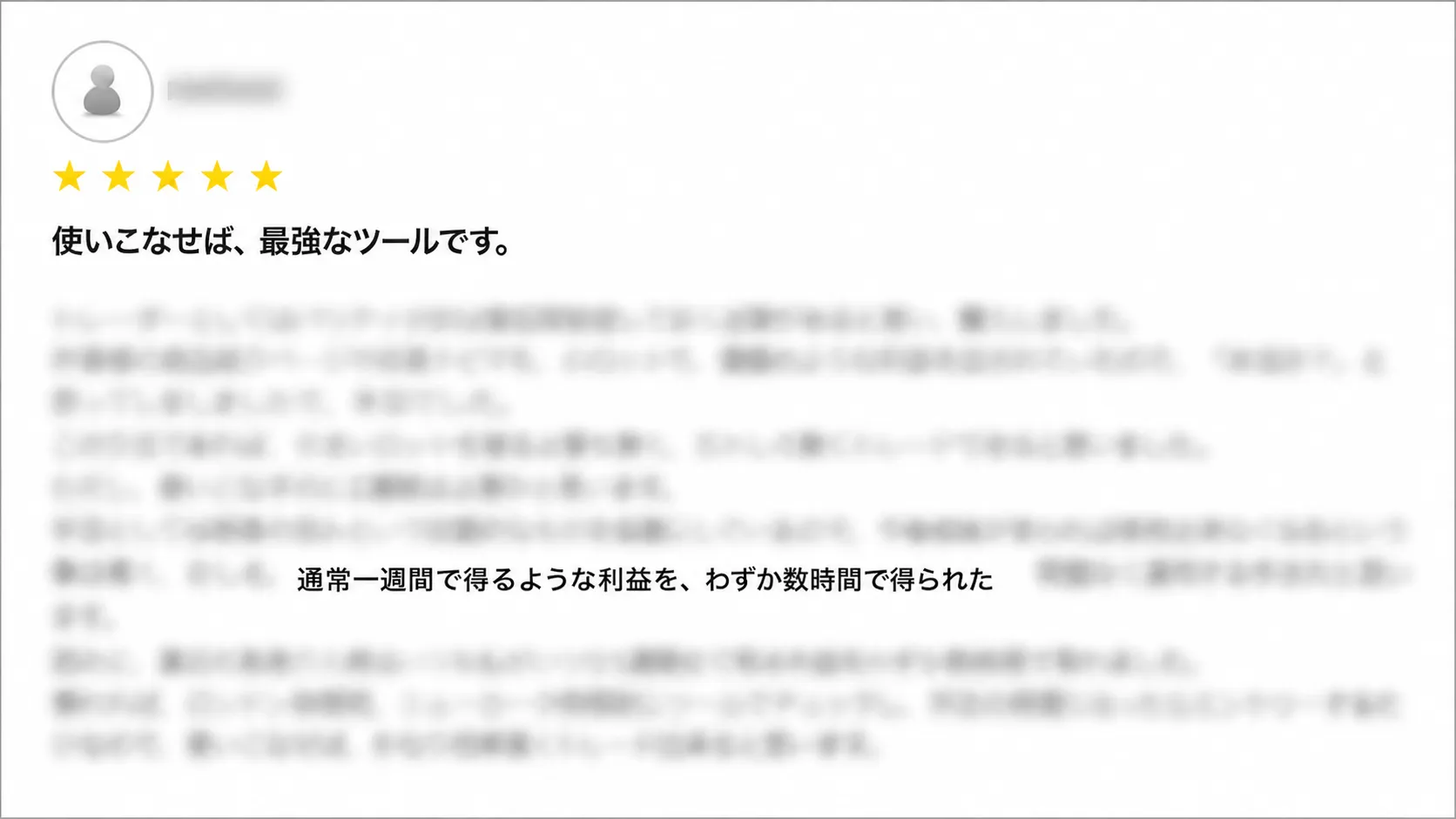
“If you master it, it’s the strongest tool.”
“What would normally take a week to profit from, I earned in just a few hours.”
This case is very helpful in understanding what Three-Currency Parity Analysis observes.
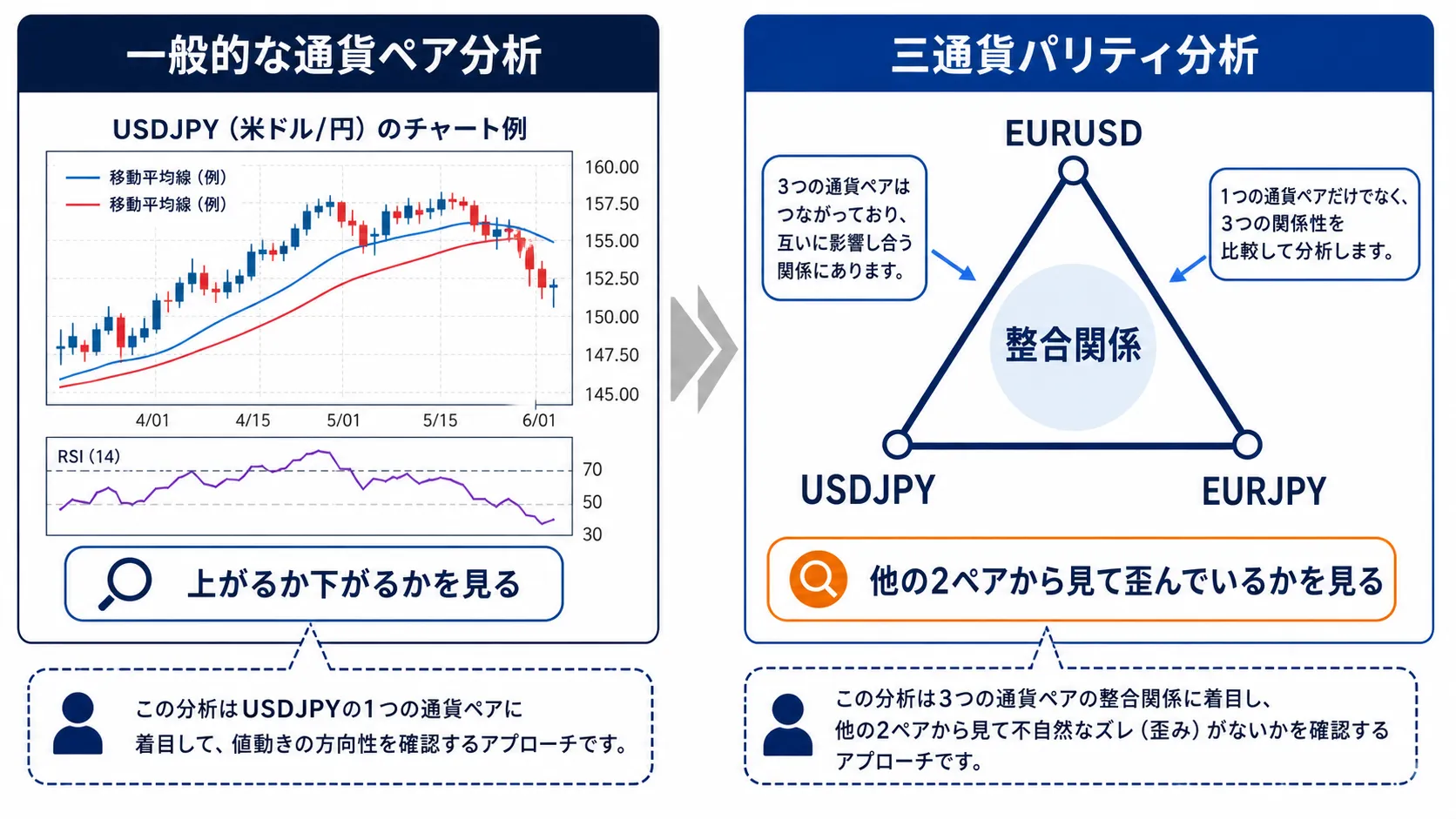
General analyses look at whether prices go up or down.
Three-Currency Parity Analysis statistically looks at whether the prices are distorted.
In FX analysis, you often look at charts of a single currency pair such as USDJPY, EURUSD, or GBPJPY, using candlesticks, moving averages, RSI, horizontal lines, and trendlines—techniques that are indeed crucial. However, many common currency-pair analyses essentially ask:
On the other hand, at the core of Intervention Aftermath PRO, Three-Currency Parity Analysis changes the question.(Targeting three currency pairs composed of three currencies.)
What is Three-Currency Parity Analysis
For example, if you only look at USDJPY, you can only see USDJPY’s price movement.
However, in the foreign exchange market, currency pairs do not exist in isolation. EURUSD, USDJPY, and EURJPY are interrelated. (As shown below, the three currency pairs are composed of three currencies, so this kind of equation holds.))
In actual markets, spreads, tick update lags, liquidity, and broker differences mean prices do not match exactly. However, by looking at the relationships among the three currency pairs, you can sometimes see distortions in price relationships that are hard to observe from a single chart alone. Three-Currency Parity Analysis is a method to observe this distortion and to analyze whether it is returning to its normal relationship or expanding further.IMPORTANT POINT
This is not only about official currency intervention
The April 30, 2026 case was a large abrupt movement likely caused by yen-buying intervention. However, what Three-Currency Parity Analysis can help with is not limited to special cases like large official interventions by governments or the Bank of Japan. In the forex market, when price relationships overshoot or become inconsistent, large participants in the interbank market, liquidity providers, hedge funds, real demand flows, and algorithmic trading can cause distortions to be corrected by demand and supply. To avoid confusing with official interventions, this article refers to it as“Distortion correction by large flows”.
It is not about predicting the intervention itself, but observing distortions that appear in price relationships, overshoots, leading-pair biases, and signs of regression or expansion that may occur afterward.
What’s important here is that Intervention Aftermath PRO did not predict the intervention. MT5 indicators do not read news. They do not know the government’s or BoJ’s planned actions. They do not interpret authorities’ intents.
What they observe is simply the price.
However, they do not only look at a single USDJPY chart. They holistically observe the coherence of the three-currency relationships, three-currency residuals, Z-scores, regression/expansion states, current environment, leading pairs, costs, and distance conditions.
Why is Three-Currency Parity Analysis not well known?
Why is this kind of analytical approach not widely known? (The following is technical, so those with math aversion may skip. Once you understand chart-reading, you can master it.)
The reason is simple: this practical analysis framework, Three-Currency Parity Analysis, was developed by me as the creator and implemented in Intervention Aftermath PRO. However, please don’t misunderstand: I did not invent completely new mathematical theories.
What exists are well-known concepts such as triangular arbitrage, synthetic rates, price coherence, Z-scores, statistical distortion measurement, regression and expansion.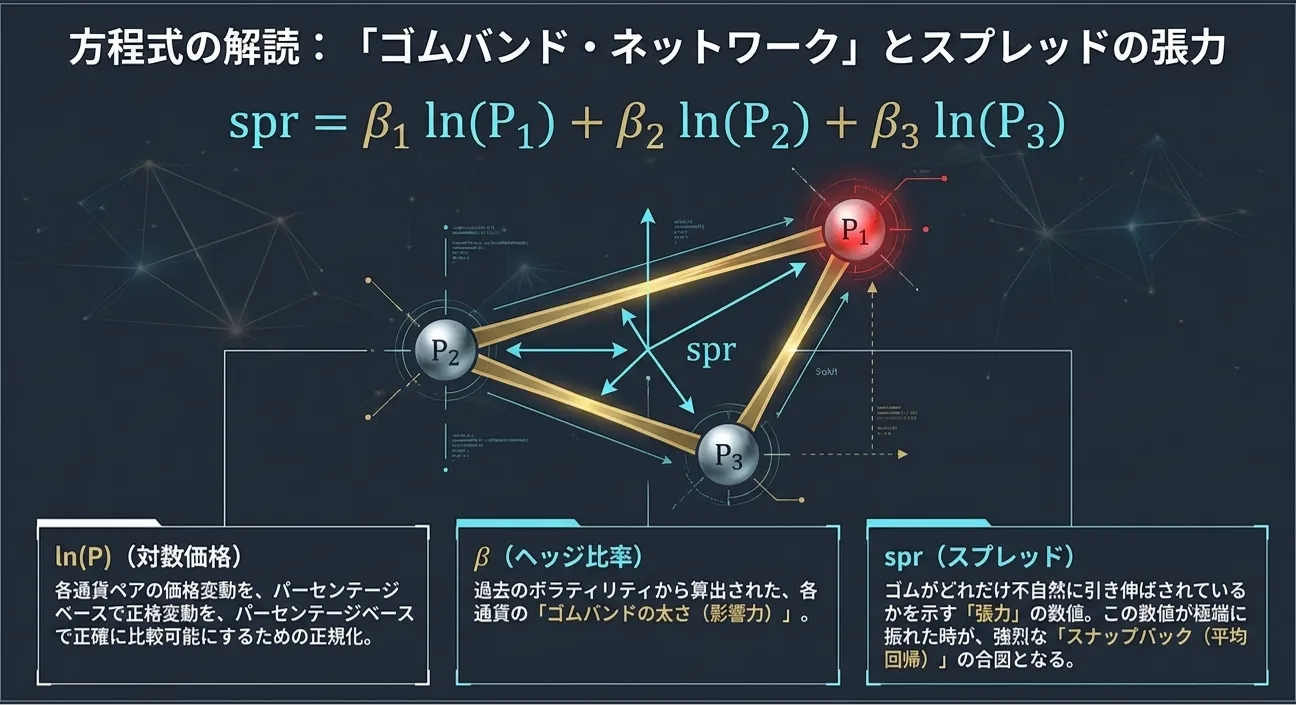
What I did was assemble these so that FX traders can actually observe them on MT5, design them as algorithms, and test and optimize them repeatedly with an expert advisor for verification.
In other words, the novelty lies not in the theory itself but in how existing logic is combined, which conditions are applied or rejected, how noise is reduced, and how observations are visualized as practical signals. This accumulation leads to the high-quality observational performance of Intervention Aftermath PRO.
The comment I received, “If you master it, it’s the strongest tool,” has great meaning to me. However, “strong” here does not mean guaranteed victory, nor does it mean predicting the future.
To me, the meaning of “strong” is that it allows you to view the market not just with a single chart’s up and down, but structurally observe three-currency coherence, distortions, regressions, expansions, leading pairs, and environmental conditions. In other words, it becomes a powerful analytical framework for viewing the market in a more dimensional way.
Arrows appear. Z-scores appear. Signals appear. This is the usable state.
What truly matters is what comes next.
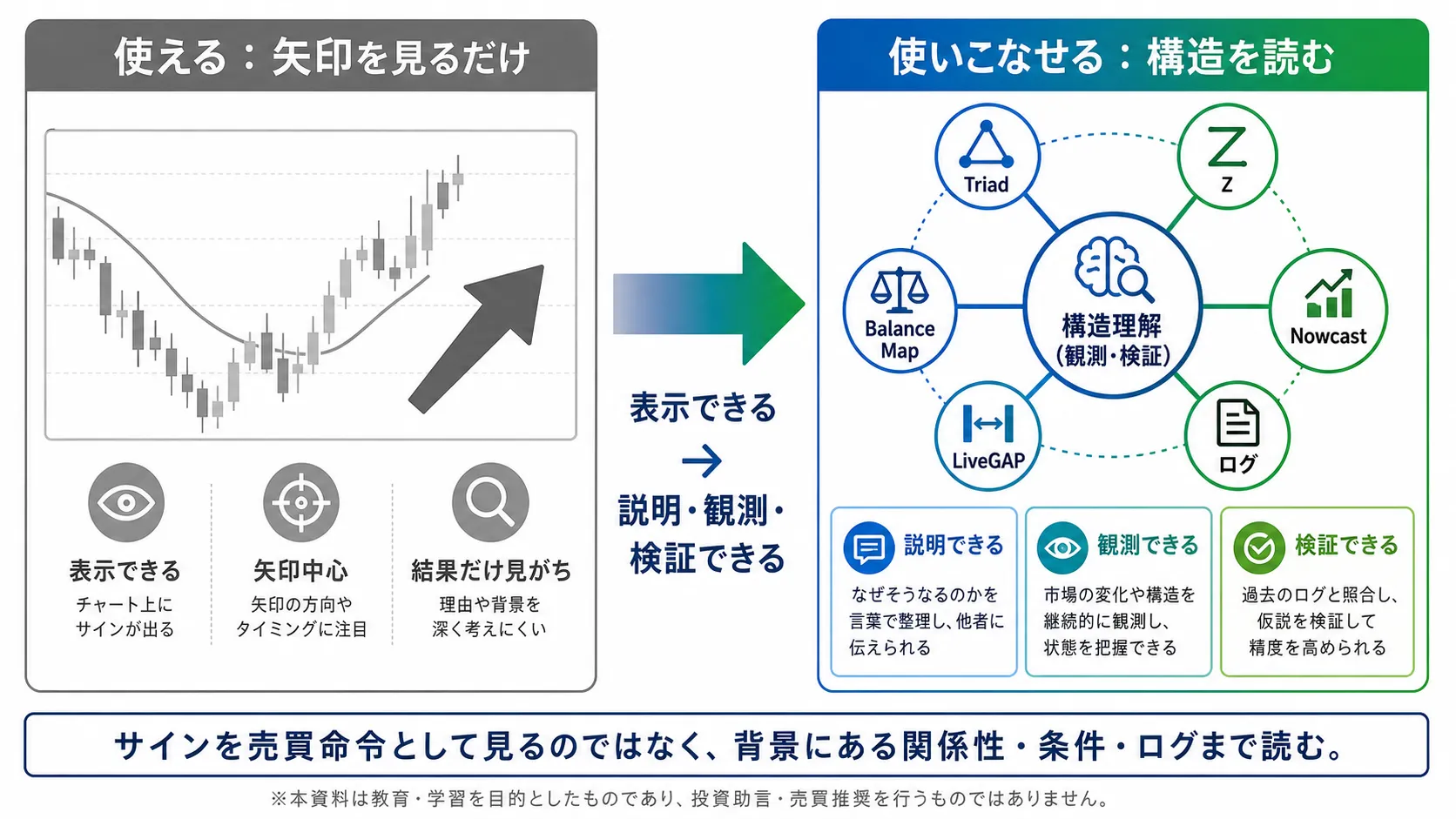
We Released Materials to Master It
This review prompted me to reflect deeply.
What I understand may not be understood by users in the same way. A bad habit of mine is to unconsciously assume that what I understand is already conveyed to others.
However, Three-Currency Parity Analysis differs in its concept from general technical analysis. Therefore, I felt the need to organize the logic background, mindset, reading method, and recording method into proper教材.
A教材 to understand distortions from their essence and to observe, record, and verify them. It’s designed so Intervention Aftermath PRO is not just a signal-viewing tool but can be understood from the essence of Three-Currency Parity Analysis.
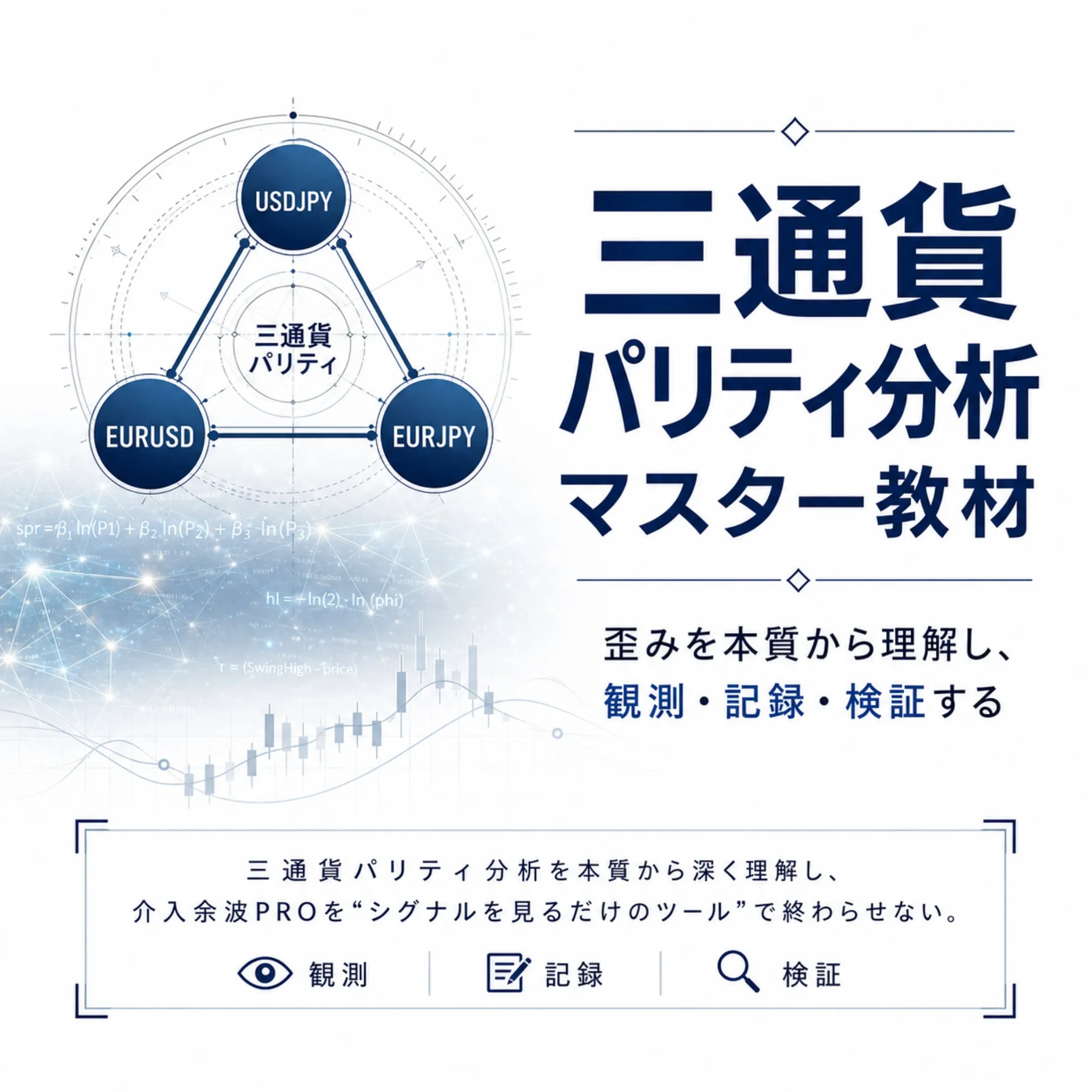
Visualize currency interrelations with Intervention Aftermath PRO
Intervention Aftermath PRO is an MT5 indicator centered on Three-Currency Parity Analysis, designed to observe intervention phases, sharp movements, and distortion corrections that may arise from large flows.
It structurally helps confirm price relationship distortions that are hard to see from a single chart, using Z-score, regression/expansion, leading pair, and environmental conditions.
The rapid movement on April 30, likely due to yen-buying intervention, was a very symbolic example for understanding the value of Three-Currency Parity Analysis.
Intervention Aftermath PRO is not a tool to predict interventions. It does not guarantee profits just by following signals.
However, observing distortions in price relationships that are hard to see from a single chart and viewing the market in a more dimensional way is a powerful analytical framework, as you can see from the user case.
“If you master it, it’s the strongest tool.”
I don’t take this to mean guaranteed victory, but I do take it as a strong weapon to structurally observe market distortions, form hypotheses, record, and verify.
Learn the essence with教材 and observe distortions in actual markets with Intervention Aftermath PRO. By combining these two, you’ll more easily move from simply “seeing” to “reading the structure.”
※User reviews, past charts, signals, statistics, and case studies do not guarantee future results or profits.
※“Distortion correction by large flows” refers to the supply-and-demand and adjustment flows of market participants other than official interventions and does not imply the actions of any particular entity.
※In actual trading, results may differ due to spreads, liquidity, slippage, execution conditions, data quality, broker differences, communication environment, regulations, etc.
※This article is for educational purposes and is not intended as investment advice, trading recommendations, or solicitation of specific trades. Please make your own final decisions responsibly.